Carrara marble comes from the Apuan Alps in Tuscany, Italy. The area has a long history of quarrying and is associated with architecture, sculpture and interior stonework. The International Union of Geological Sciences describes its geological setting and heritage.
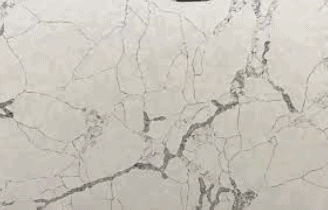
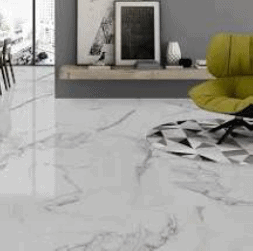
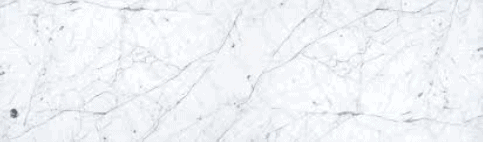
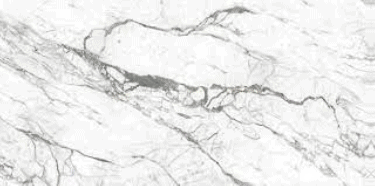
Carrara is a broad commercial name, not a single uniform appearance. White Carrara, Statuario, Calacatta and Arabescato are among the names used for varieties associated with the Apuan marble region. Colour and veining differ between blocks and slabs.


From quarry to finished stone
Marble is extracted in blocks, then cut and worked into slabs, tiles or other pieces for its intended use. The stone’s appearance varies across the Apuan Alps, so a named variety is only part of choosing a slab for a project.
Commercial names such as Calacatta and Arabescato reflect long-standing quarrying and trade terminology. Tuscany’s Apuan marble database describes these as commercial varieties rather than strict geological categories.
Choosing a Carrara marble variety
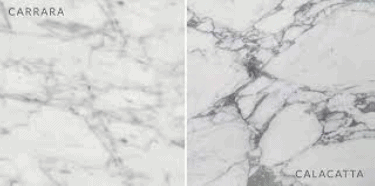
White Carrara is often associated with a light background and grey veining. Statuario, Calacatta and Arabescato are names for other distinctive appearances in the wider Apuan marble tradition. Individual slabs can differ considerably, even within the same named variety.
For a worktop, floor or wall, view the actual slab and consider its colour, veining, finish and intended use. Prices and availability change by quarry, selection, thickness and supplier, so request a current quotation for the particular material.
Restoration and reuse
Marble already installed in a building does not always need replacing when it becomes scratched, stained or dull. Cleaning, local repairs and refinishing may allow suitable stone to remain in use. The best option depends on the material and the extent of damage.

Carrara marble care and restoration
Marble is calcium-based and can be etched by acidic substances. Use a suitable non-acidic cleaner, remove grit that may scratch the surface and ask a specialist to assess deeper scratches, chips or etched areas. The Natural Stone Institute’s care guide explains these points in more detail.
Professional treatment may include cleaning, local repairs, honing or polishing, depending on the stone’s condition and the finish required. An impregnating sealer may improve resistance to some stains, but it does not make marble stain-proof or prevent acid etching. A site assessment is needed before deciding how much surface work is appropriate.
For help with an existing Carrara marble floor, wall or worktop, contact Stone Rescue.

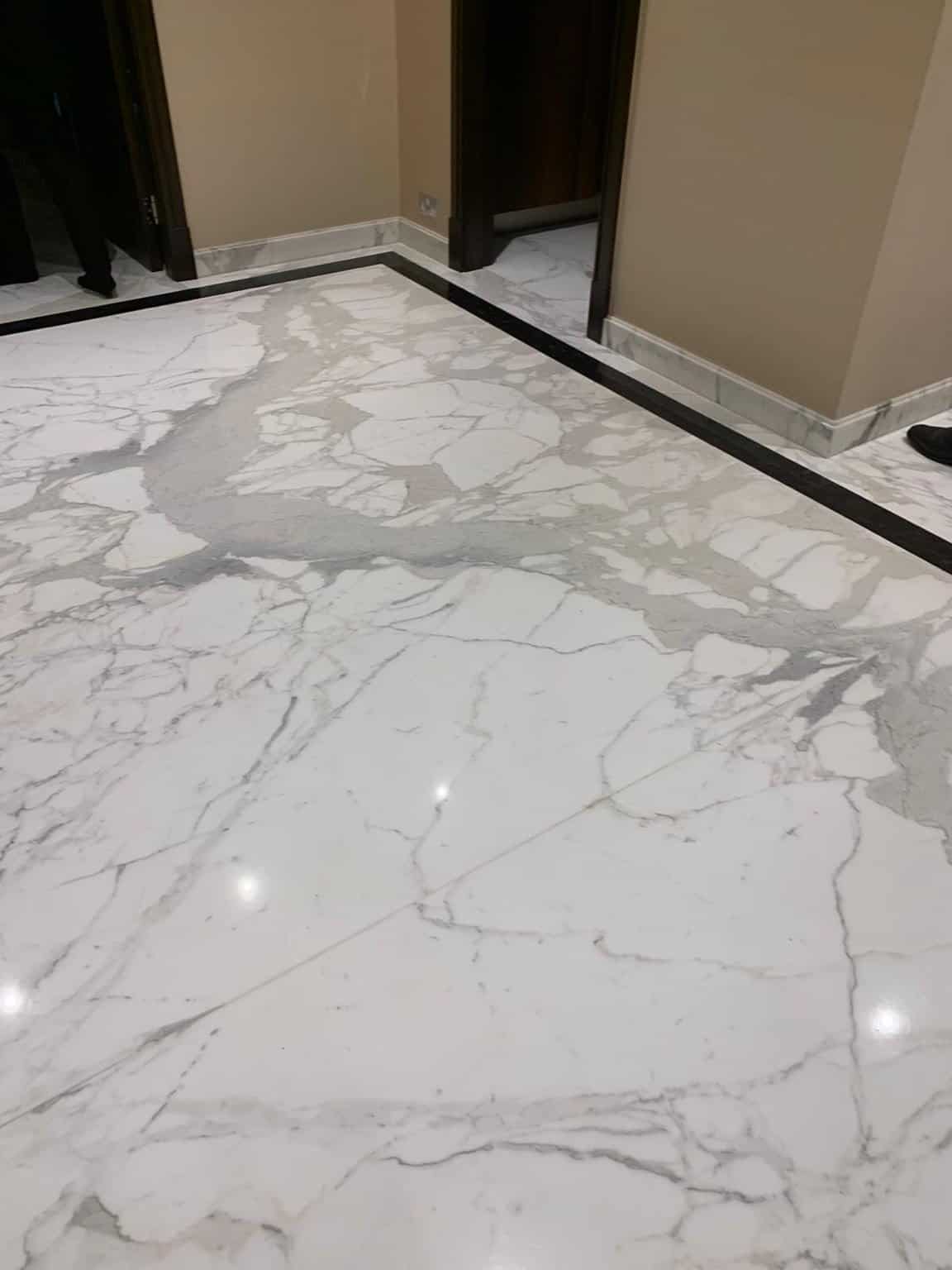
Pictures with White/Bianco Carrara, Calacatta variety, Statuario,
Arabescato