Specialist Natural Stone Restoration, Marble Polishing & Sealing in London
Stone Rescue restores marble floors and natural stone surfaces in London and the Home Counties. We assess wear, scratches, stains and uneven finishes, then recommend a treatment suited to your stone, property and preferred finish. Our work covers residential, commercial and heritage settings.
Marble Floor Restoration, Polishing and Stone Repair
From marble floor cleaning and diamond honing to polishing, local repairs and suitable sealing, we explain what can realistically be improved before work begins. We also care for granite, terrazzo, limestone, mosaic and sandstone. Explore our marble restoration services or send photos for an assessment.
- Stone-specific methods and finish options
- Residential, commercial and heritage projects
- London and Home Counties enquiries
Marble floor restoration specialists
Over time, marble floors can lose their clarity through foot traffic, scratches, acidic spills and unsuitable cleaning products. After inspecting the stone, we may recommend deep cleaning, repairs, honing or polishing to bring back an appropriate matt, satin or gloss finish. We can also assess marble stairs, bathrooms, walls and worktops. The right approach depends on the damage: polishing alone will not solve every crack, stain or uneven tile.
For more detail, read about our marble restoration services and stone floor restoration and polishing process. See a marble and granite floor restoration on King’s Road, London for an example of a mixed-stone project.
How we plan a stone restoration project
Assess. We identify the stone, finish, damage and access requirements. Photographs help us understand the enquiry, but a site visit may be needed.
Recommend. We explain whether cleaning, local repair, honing, polishing or another treatment is appropriate and discuss the expected result and limitations.
Restore. Next, the team uses a method and sequence suited to the surface. We protect adjacent areas and agree practical access arrangements.
Care. Finally, we explain suitable cleaning and maintenance after the work, including any protection that is appropriate for the stone.
Recent restoration work in London
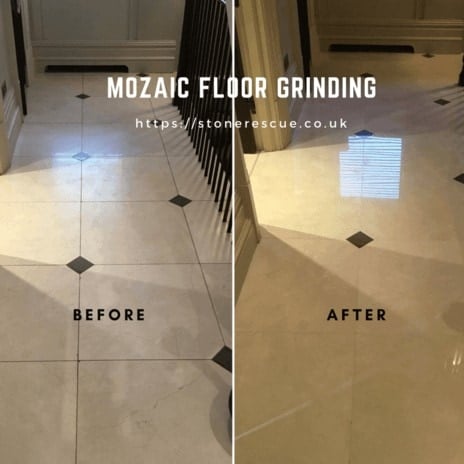
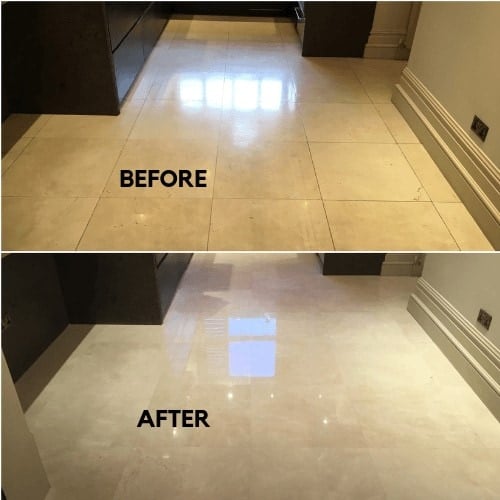
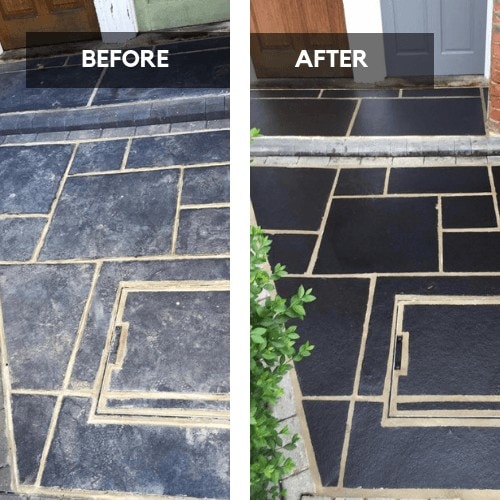
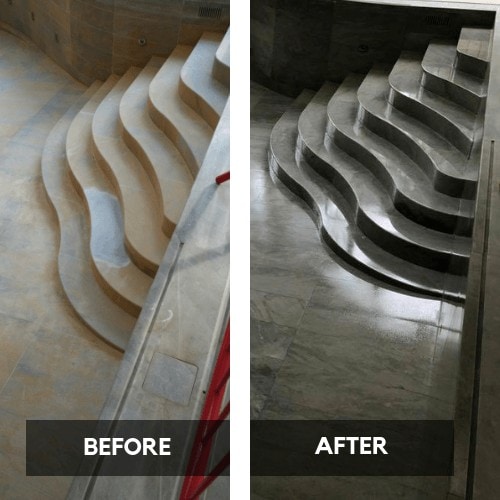
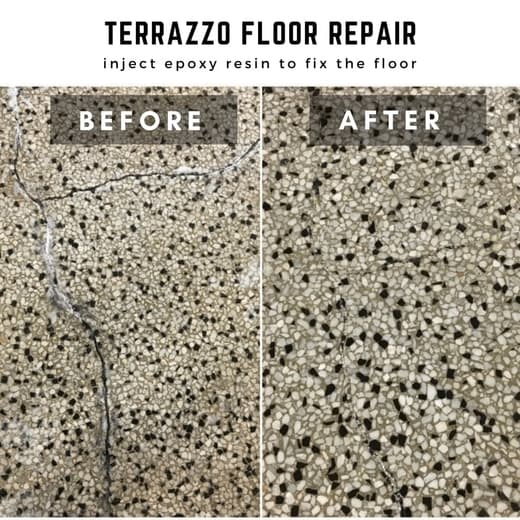
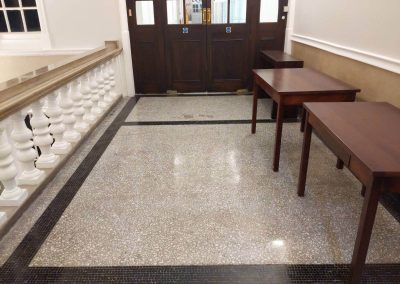
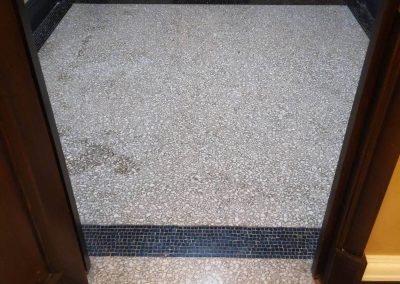
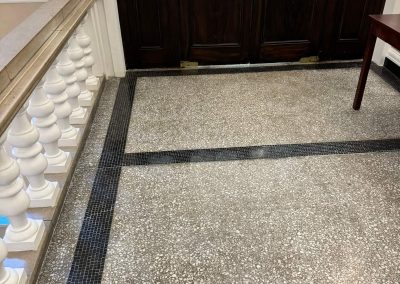
For example, our project pages show the surfaces and locations behind the work. Explore a marble and granite floor on King’s Road, limestone floor work in Piccadilly, a terrazzo floor in North London, and heritage mosaic, terrazzo, marble and granite work at the Royal Bell Hotel. In addition, the existing before-and-after gallery offers more visual examples; each project’s result depends on the original stone and its condition.
For sensitive historic surfaces, read more about our historical sites restoration.
Our latest projects:


Our Stone Restoration Services in London
Explore material-specific restoration, polishing and repair across London and the Home Counties. We assess each surface before recommending its treatment.
Stone Restoration Services
Cleaning, honing, polishing and local repair for tired natural stone floors and surfaces, selected after assessing the material and finish.
Maritime Floor Services
Specialist cleaning and restoration for marine and maritime flooring, planned around the surface, access and required finish.
Mosaic Restoration
Careful cleaning, repair and finishing for mosaic floors and decorative features, with methods suited to the original materials.
Marble Restoration
Restore worn marble floors, stairs and worktops through condition-led cleaning, honing, polishing and local repairs.
Granite Restoration
Address chips, scratches and tired granite surfaces with stone-specific repair and surface refinement.
Terrazzo Restoration
Refresh terrazzo floors with suitable repairs, grinding, honing and polishing while respecting the aggregate and finish.
Swimming Pool Restoration
Restore stone in pool surrounds and wet areas after assessing slip resistance, exposure and maintenance needs.
Limestone Restoration
Clean, repair, hone and protect limestone floors, stairs and worktops with a method chosen for this porous stone.
Sandstone & Heritage Stone
Clean and treat sandstone with a surface-appropriate approach; see our historical sites service for heritage stonework.
Before and After

Serving London and the Home Counties
Stone Rescue handles enquiries across London and the Home Counties, including residential, commercial and heritage properties. To begin, tell us your postcode, stone type, approximate area and the issue you are seeing so we can advise on availability and the next step. We do not assume every project requires the same process or programme.
Frequently asked questions
Can a dull marble floor be restored without replacing it?
Often, yes. Cleaning, honing and polishing can improve many worn marble floors. We assess deep damage, loose tiles, cracks and previous treatments separately before advising what is achievable.
What is the difference between cleaning, honing and polishing?
First, cleaning removes suitable surface soil. Next, honing refines the stone with abrasives to address some wear and leave a smoother matt or satin finish. Finally, polishing develops more gloss where the stone and use are suitable. However, the sequence depends on the condition of the floor.
Do you work on granite, terrazzo, limestone and mosaic as well as marble?
Yes. Each material has different properties and requires a suitable process. The service links above explain the approach for each surface.
Will sealing stop stains and scratches permanently?
No. A suitable sealer may help with some spills, but it does not make stone stain-proof, scratch-proof or maintenance-free. We explain product suitability and ongoing care for the specific surface.
How do I obtain a quote for stone restoration in London or the Home Counties?
Contact Stone Rescue with photographs, the location, stone type if known, and the approximate size of the area. We can then discuss the scope and whether a site assessment is needed.
Stone care and conservation resources
For general stone-care information, see the Natural Stone Institute’s care guidance. For historic buildings, Historic England’s maintenance and repair guidance provides wider conservation context. However, these resources are general; Stone Rescue recommends work after assessing the actual surface.
Ready to discuss your stone? Send photos and request a stone restoration assessment.
Study cases
Case Study 1
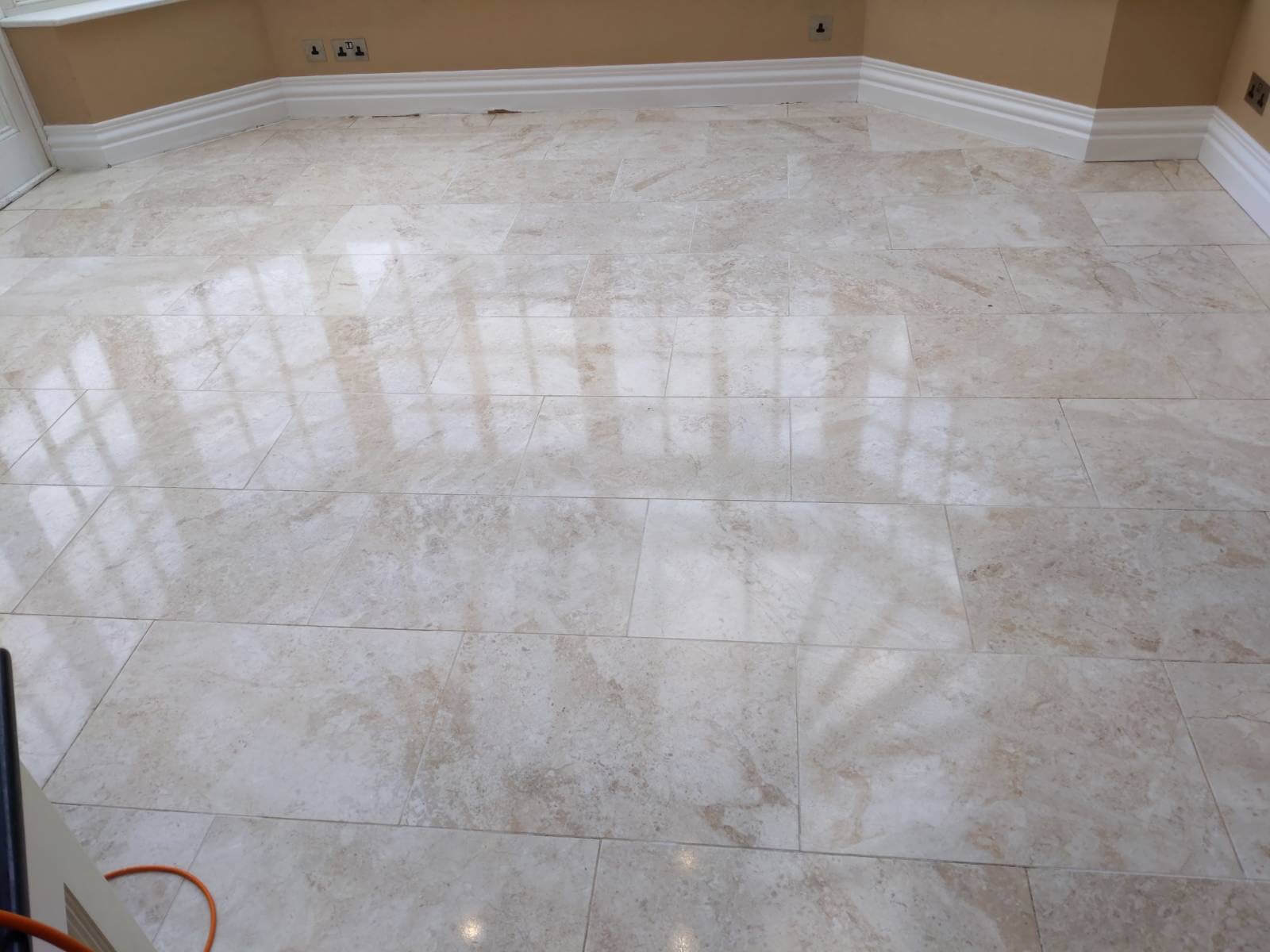
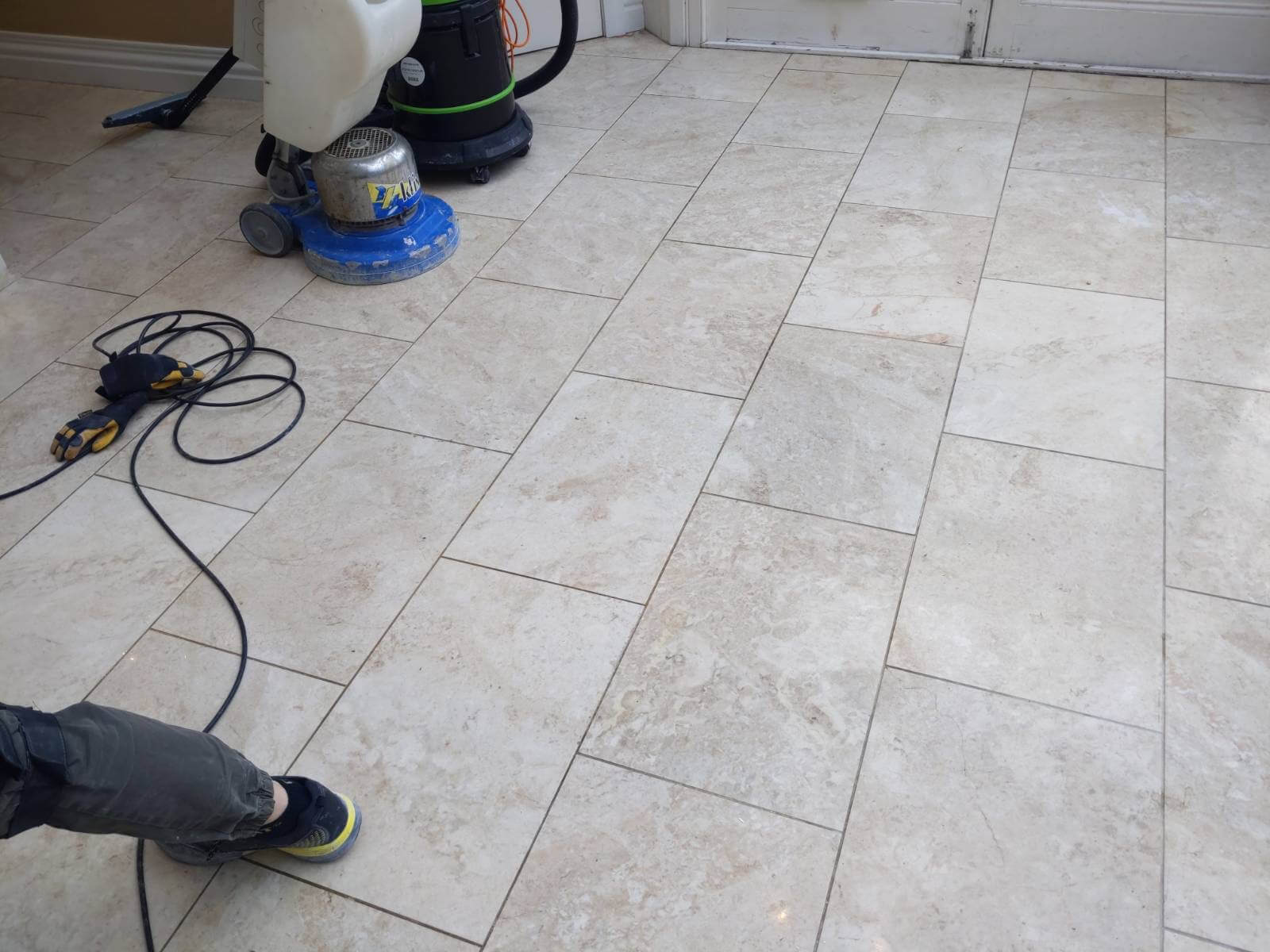
Case Study: Limestone Floor Restoration Project
Background:
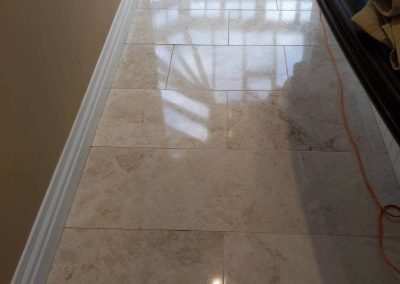
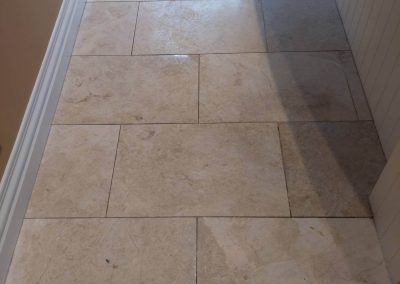
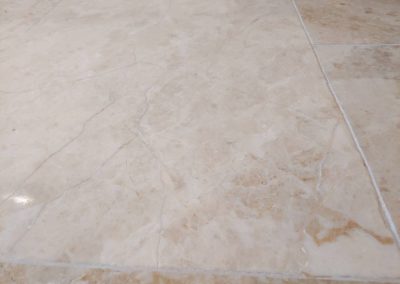
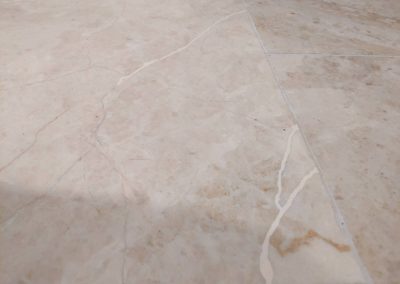
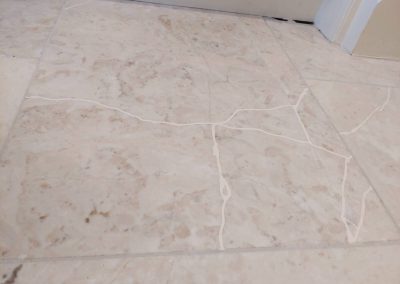
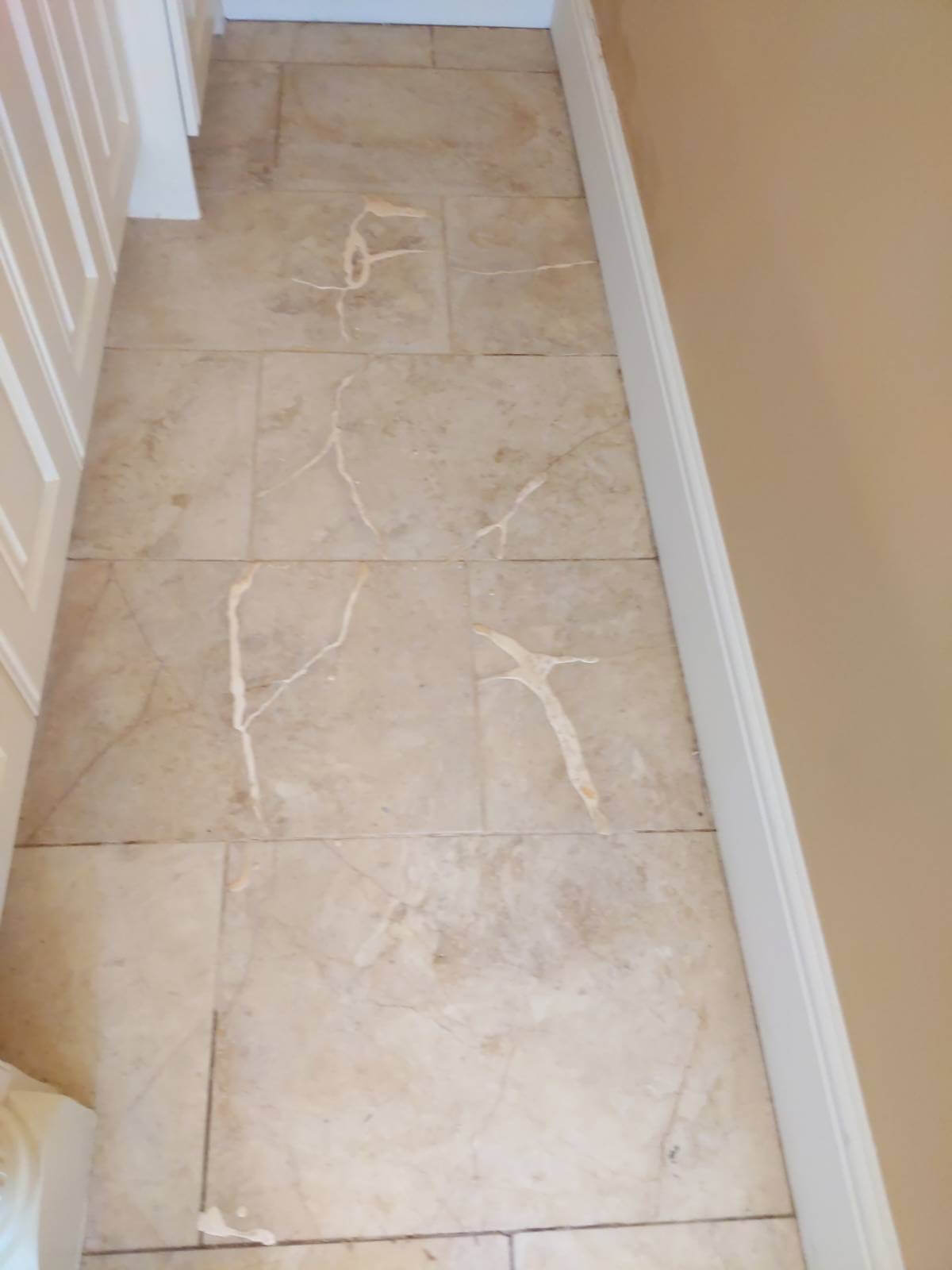
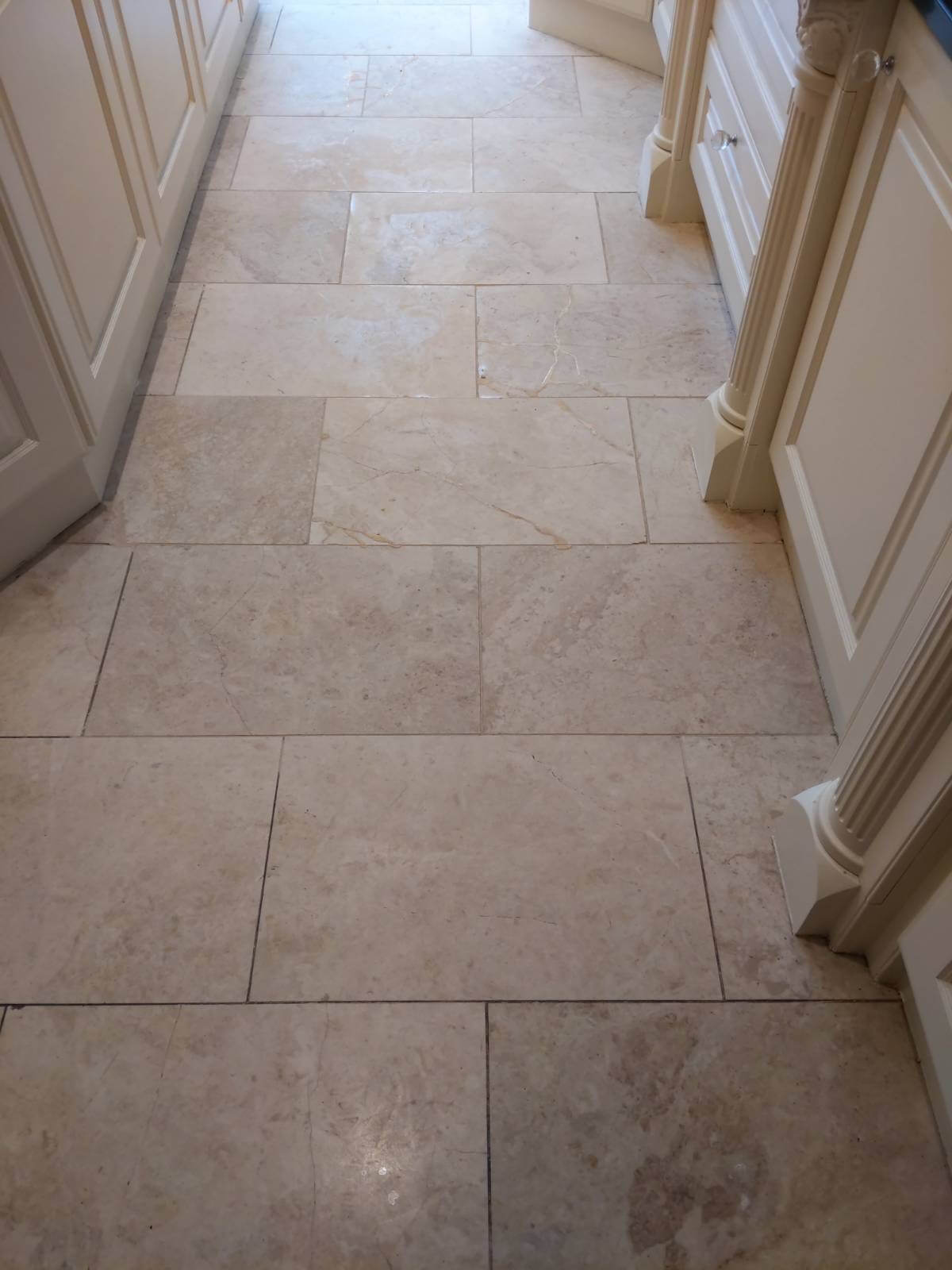
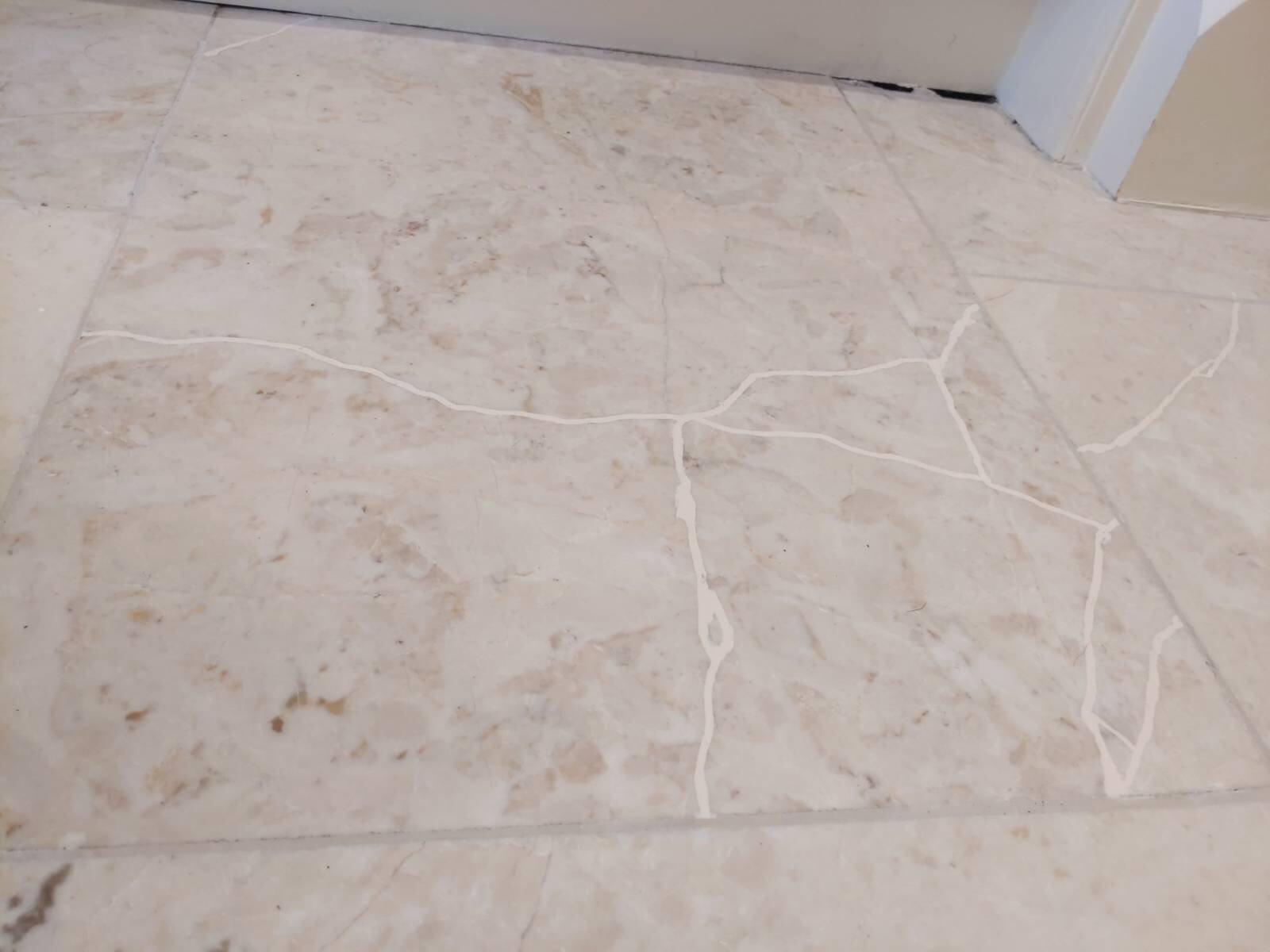
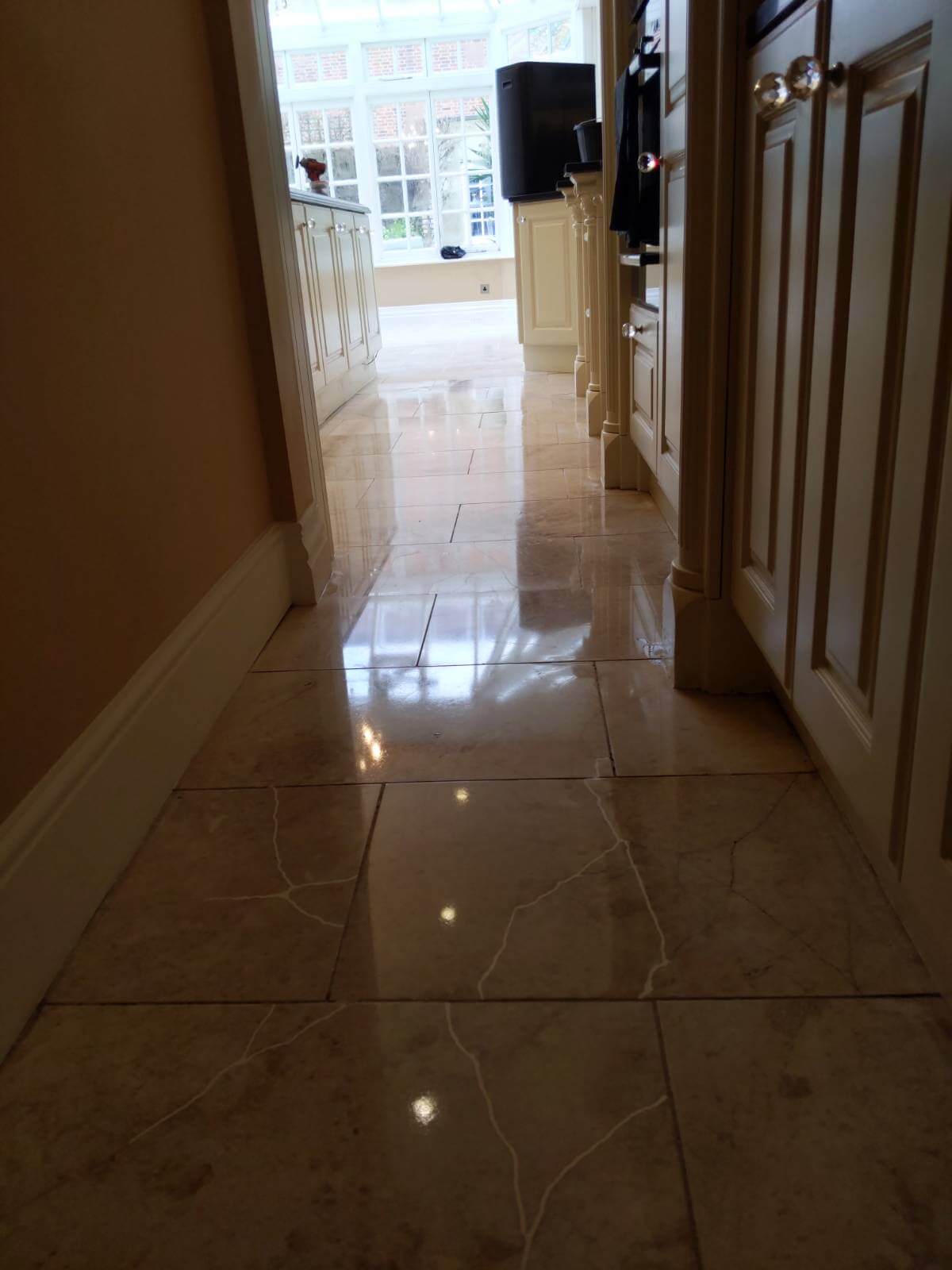
The limestone floor in question, located in a high-traffic area, had not received any maintenance or treatment over the past ten years. This neglect resulted in significant wear and tear, including fissures and loose tiles, which not only compromised the aesthetic appeal but also posed safety risks.
Project Objectives:
1. **Repair and Stabilize:** Address all structural issues including fissures and loose tiles to ensure the floor’s integrity.
2. **Cosmetic Restoration:** Enhance the visual appeal through topical treatments and polishing.
3. **Sealing:** Apply a durable sealant to protect the limestone and extend its lifespan.
Methodology:
1. **Initial Assessment and Repair:**
– Our team began by conducting a thorough inspection to identify all damaged areas.
– Fissures were meticulously repaired using a limestone-compatible filler to ensure seamless integration with the existing material.
– Loose tiles were secured using appropriate adhesives and, where necessary, replaced with matching limestone tiles to maintain uniformity.
2. **Cosmetic Restoration:**
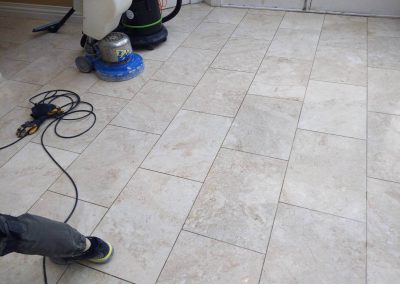
– Post-repair, the surface was cleaned to remove any debris or old sealant remnants.
– Technicians applied topical treatments to fill in any remaining open spaces, ensuring a smooth transition between repaired and original areas.
3. **Surface Treatment:**
– The entire floor was then polished to a satin finish, which not only enhances the natural beauty of the limestone but also provides a more durable surface than a high gloss finish.
– A light restoration process was employed, removing 1-2 mm of the top layer to eliminate minor scratches and uneven wear, thus rejuvenating the floor’s appearance.
4. **Sealing:**
– After allowing sufficient drying time, an impregnator hybrid sealant was applied. This sealant penetrates the limestone, providing both water and stain resistance without altering the stone’s breathability or appearance.
– The effectiveness of this sealant is expected to last between one to three years, depending on the frequency of maintenance and the level of foot traffic.
Project Cost and Duration:
– The total cost for this comprehensive limestone floor restoration was £3,100, covering materials, labor, and equipment.
– Project duration: 4 days.
Conclusion:
This project not only restored the functionality and safety of the limestone floor but also significantly enhanced its aesthetic value. The application of a high-quality sealant ensures that the floor remains protected against daily wear and environmental factors for an extended period, provided regular maintenance is adhered to. This case study serves as an example of how proper restoration techniques can breathe new life into neglected architectural elements, preserving them for future generations.
Pictures
-
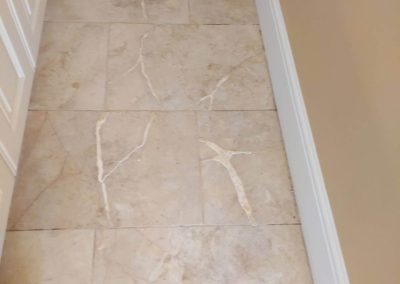
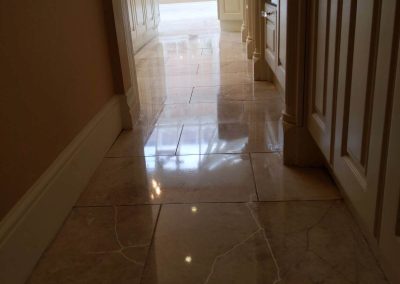
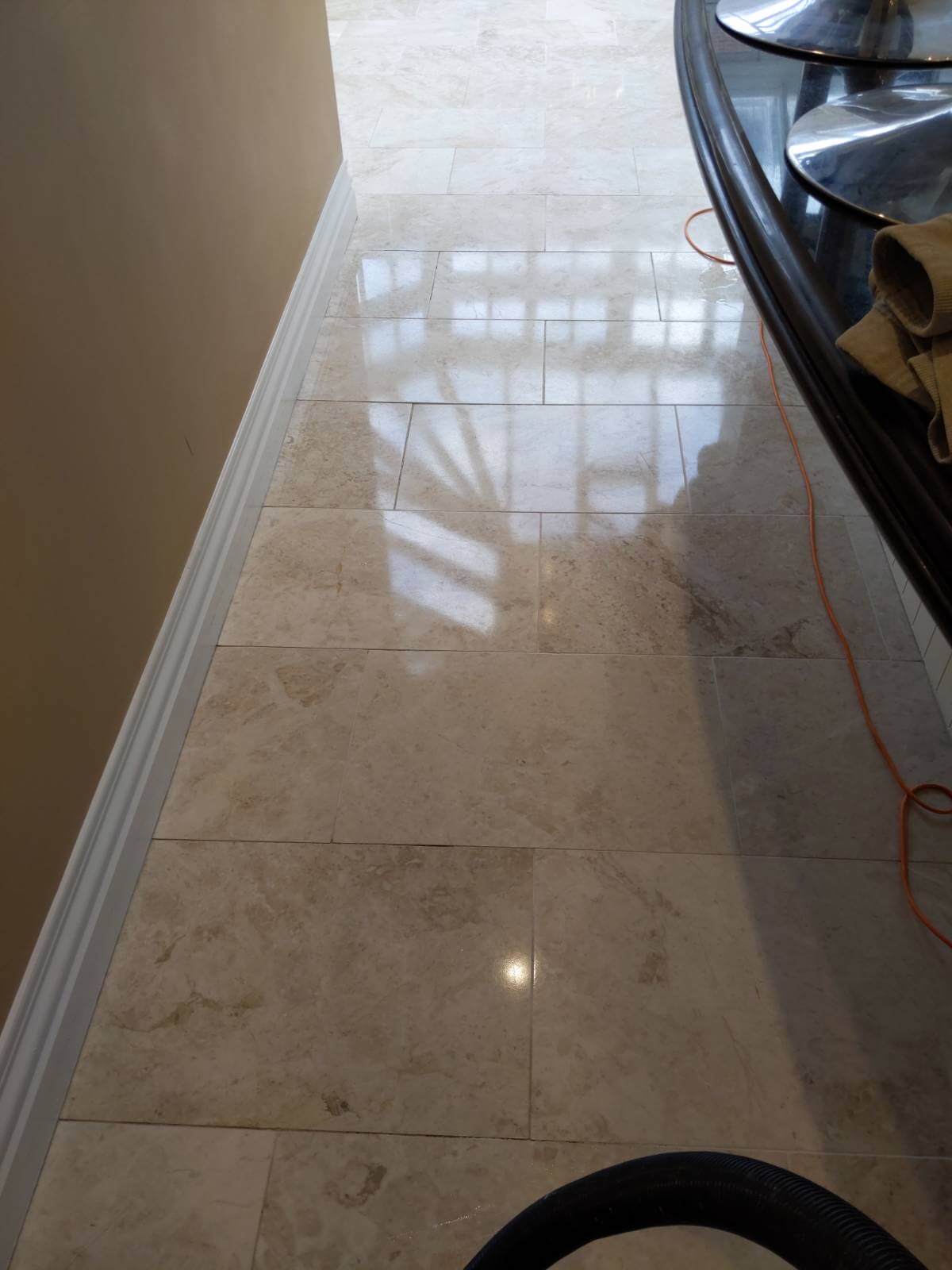
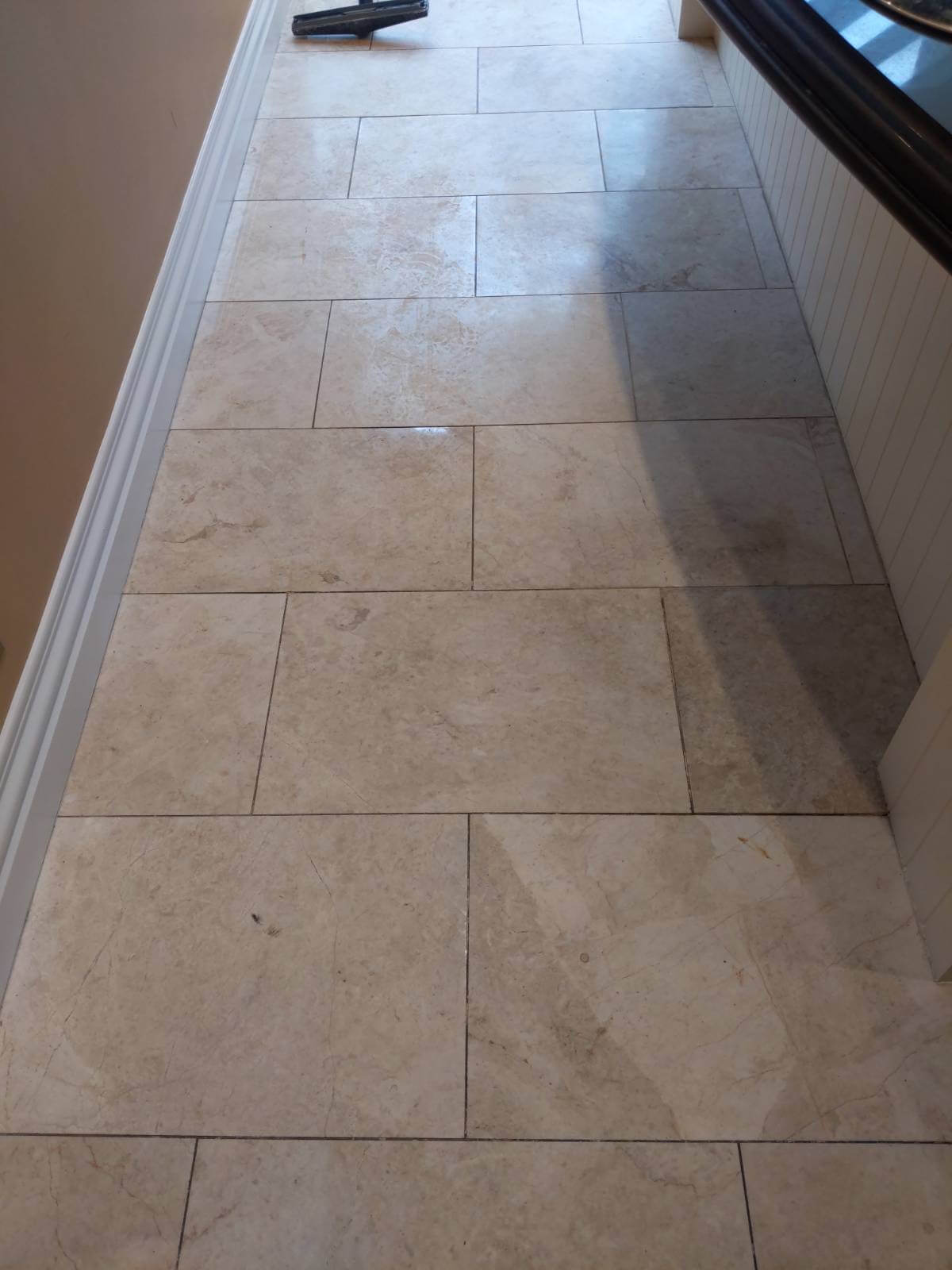
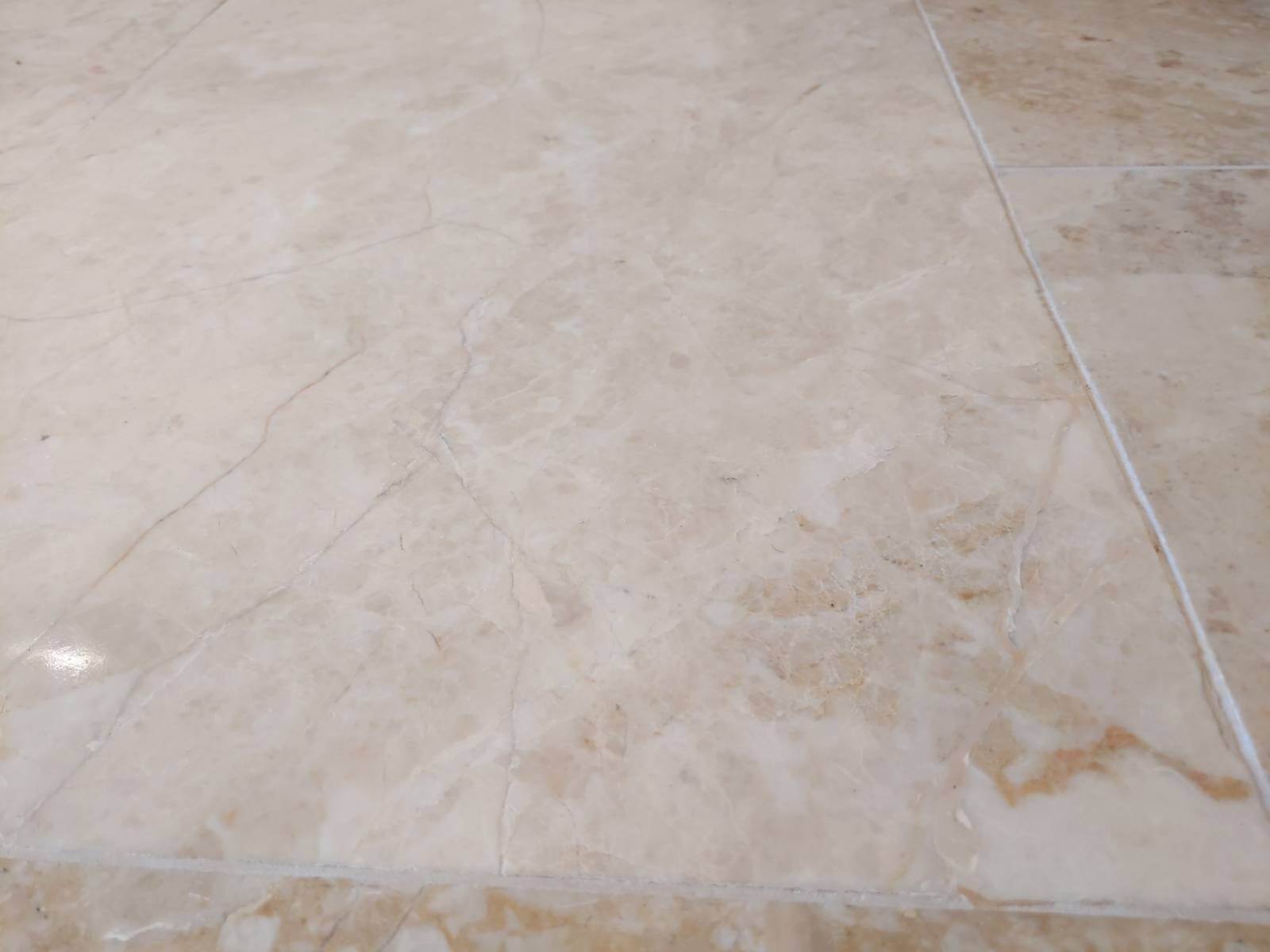
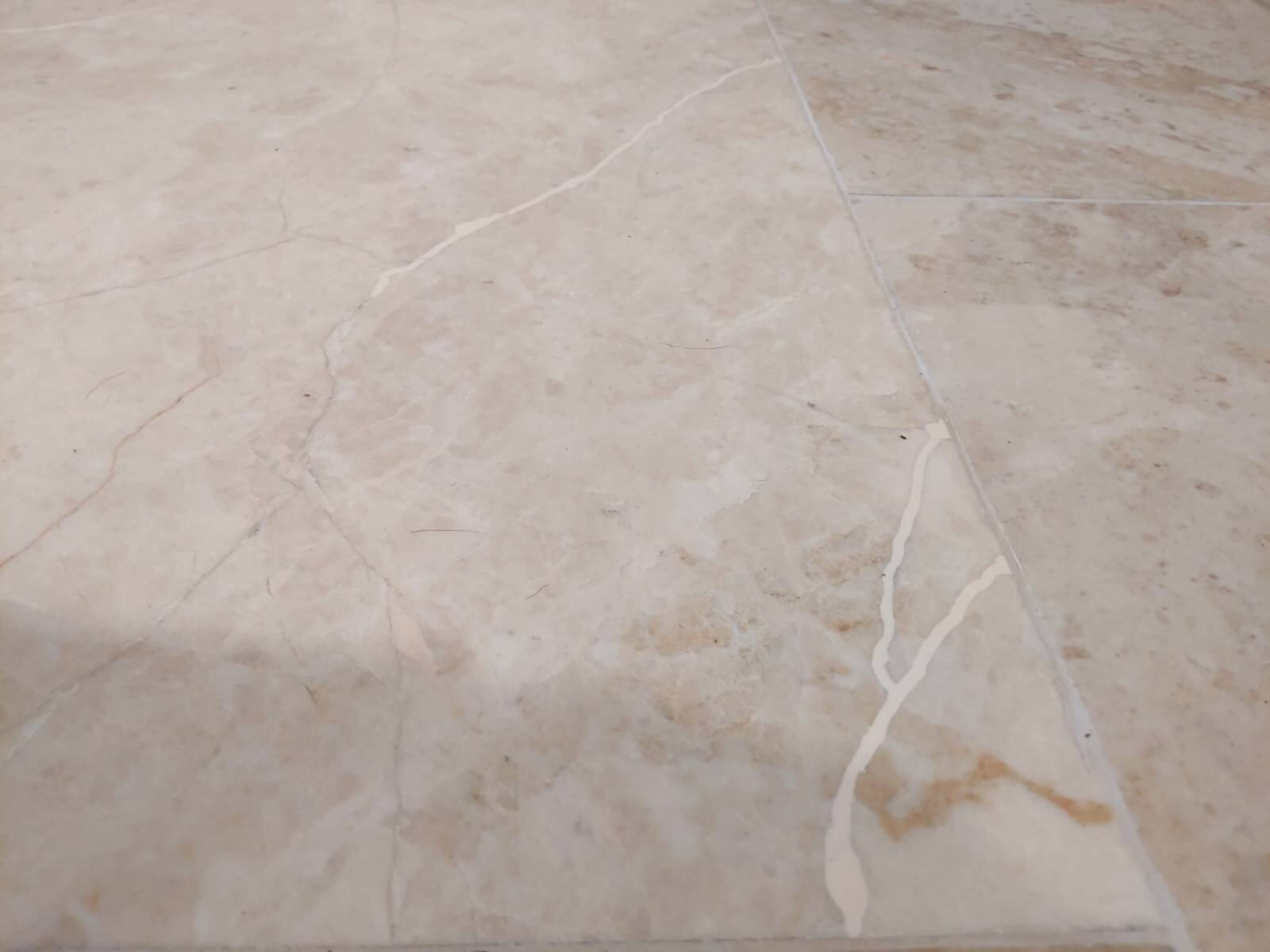
Damaged stone tiles with chips and cracks before restoration by Stone Rescue in a UK property.
-
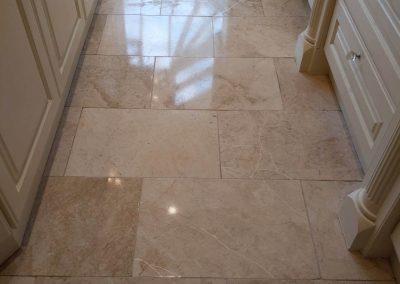
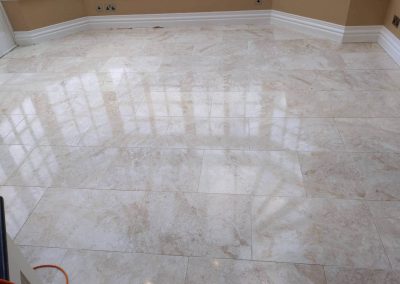
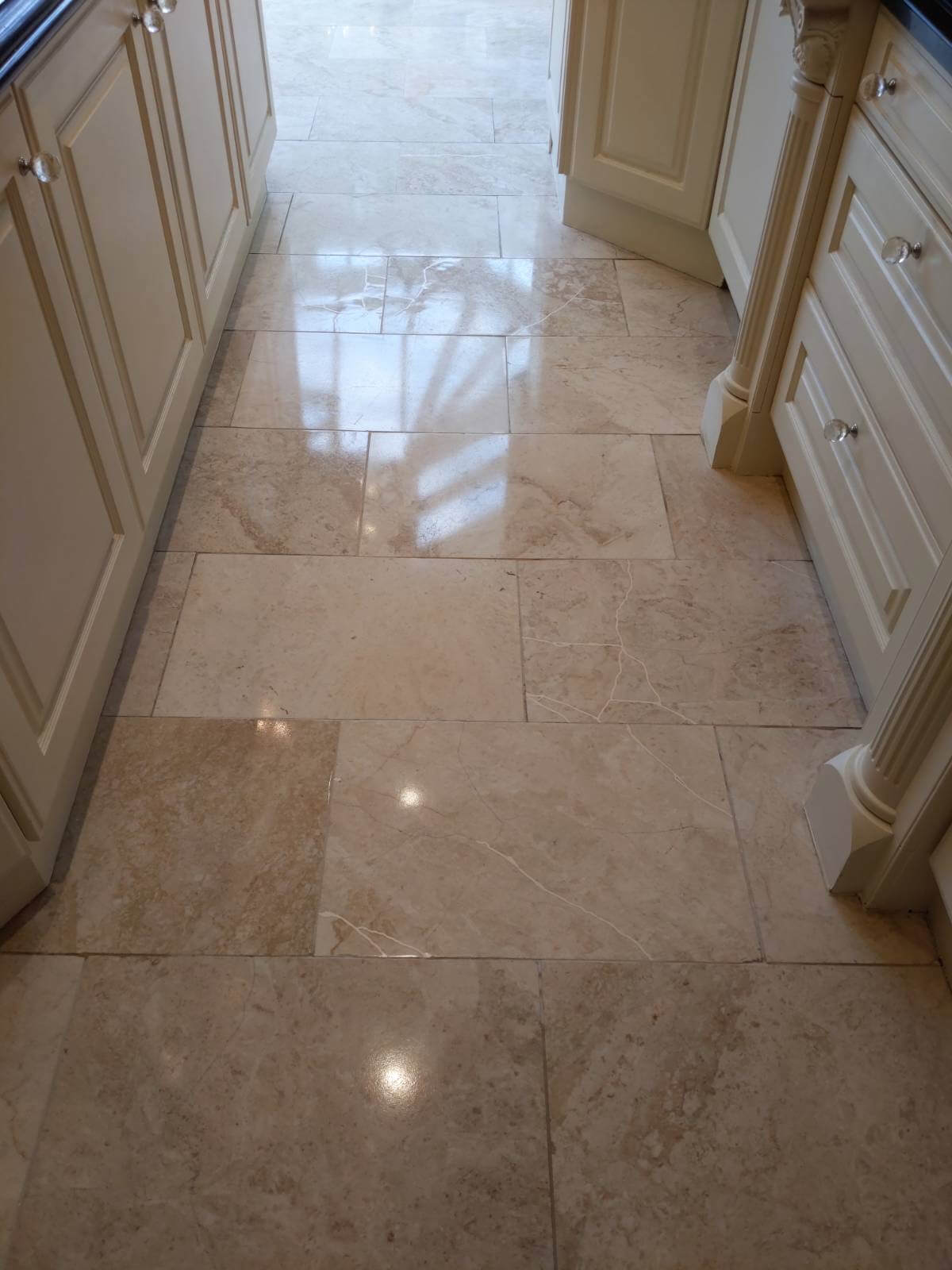
Clean, polished stone floor in a kitchen, showcasing the quality of Stone Rescue's restoration work.
-
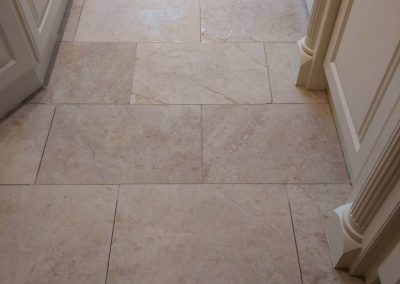
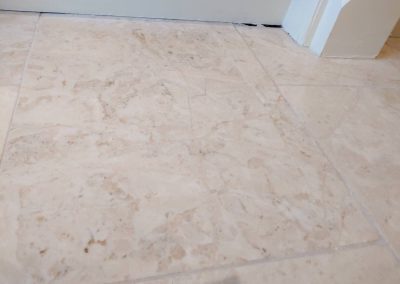
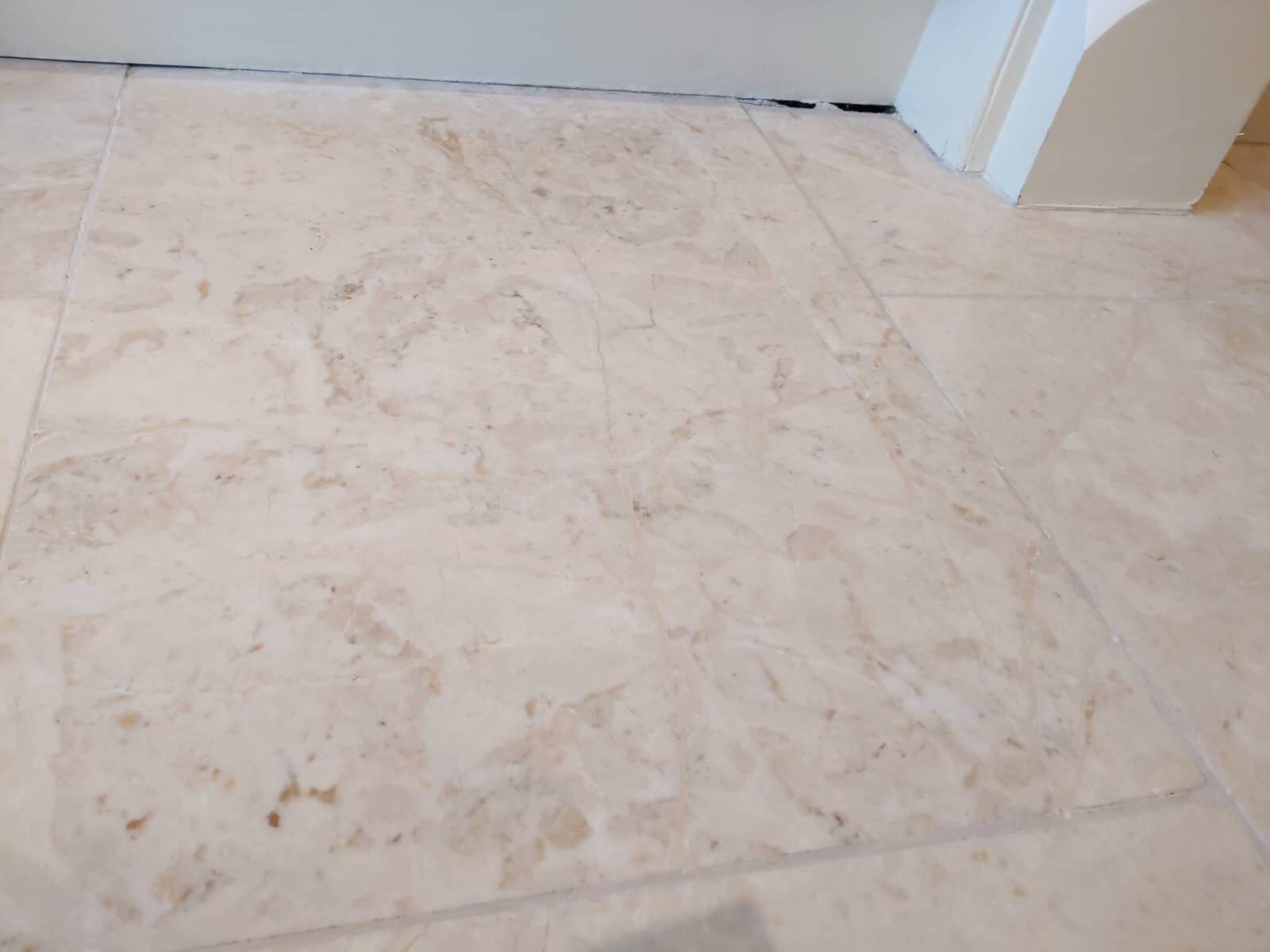
Cleaned and restored stone floor surface by Stone Rescue, showing light repair and polishing work.
-
-
-
-
-
-
-
-
-
Case Study 2
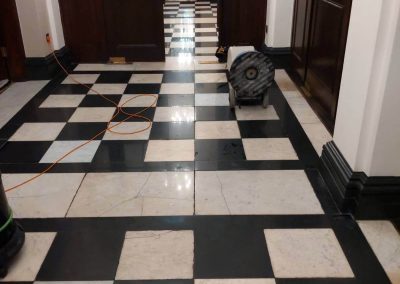
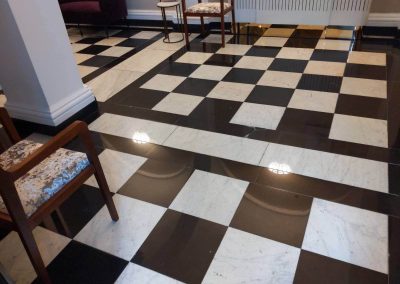
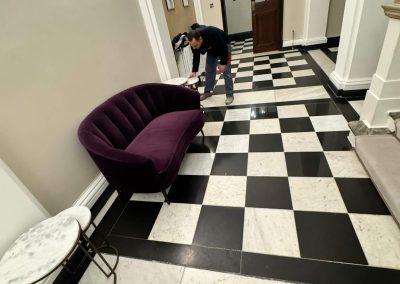
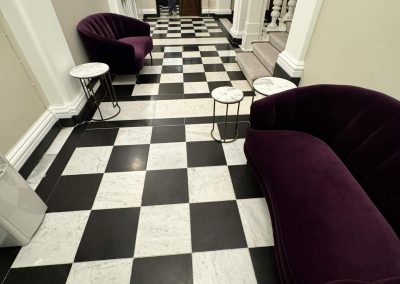
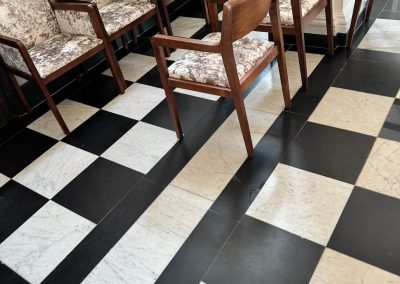
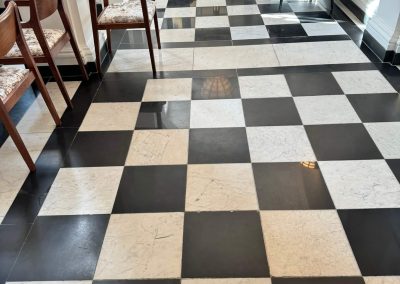
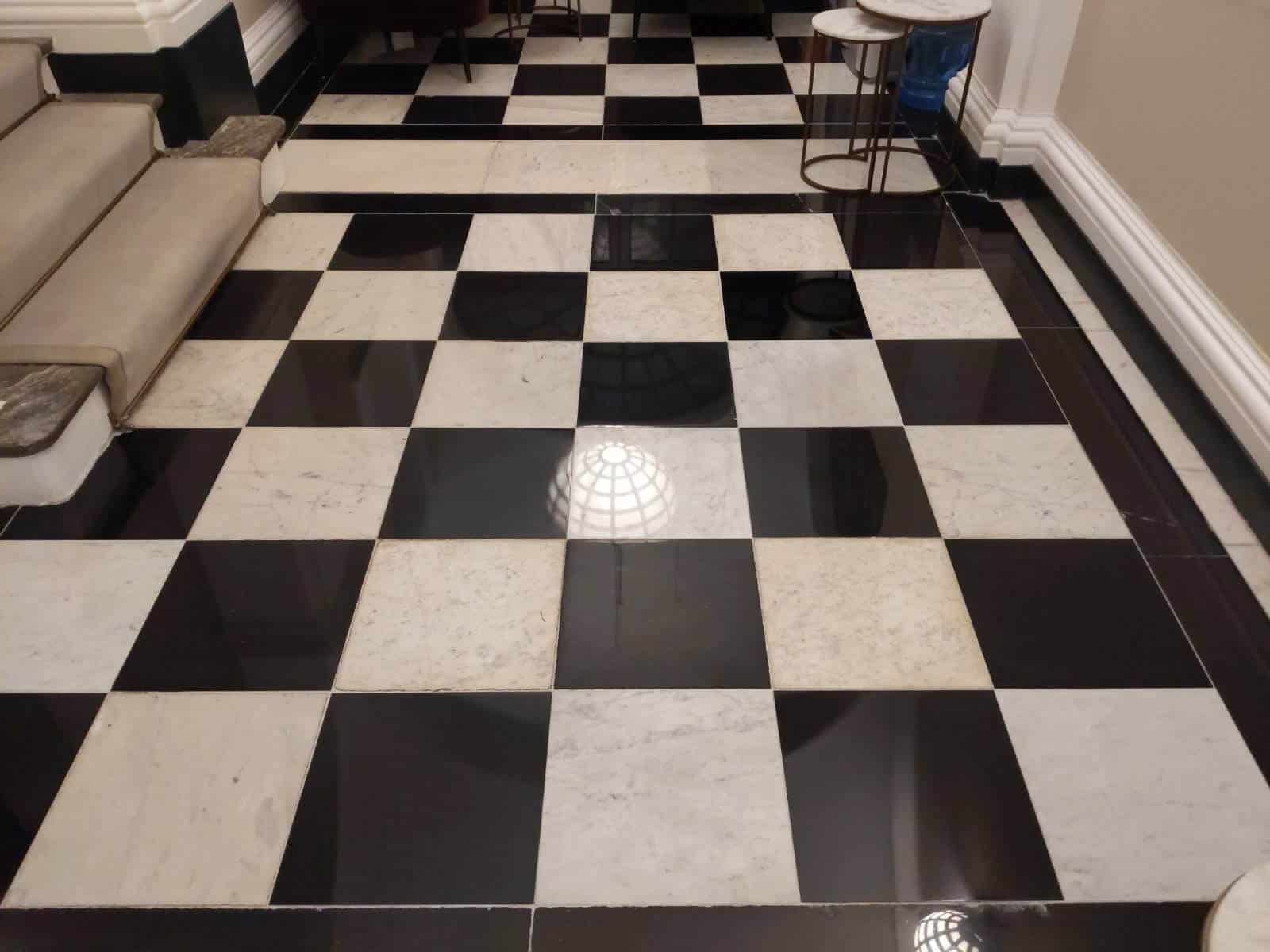
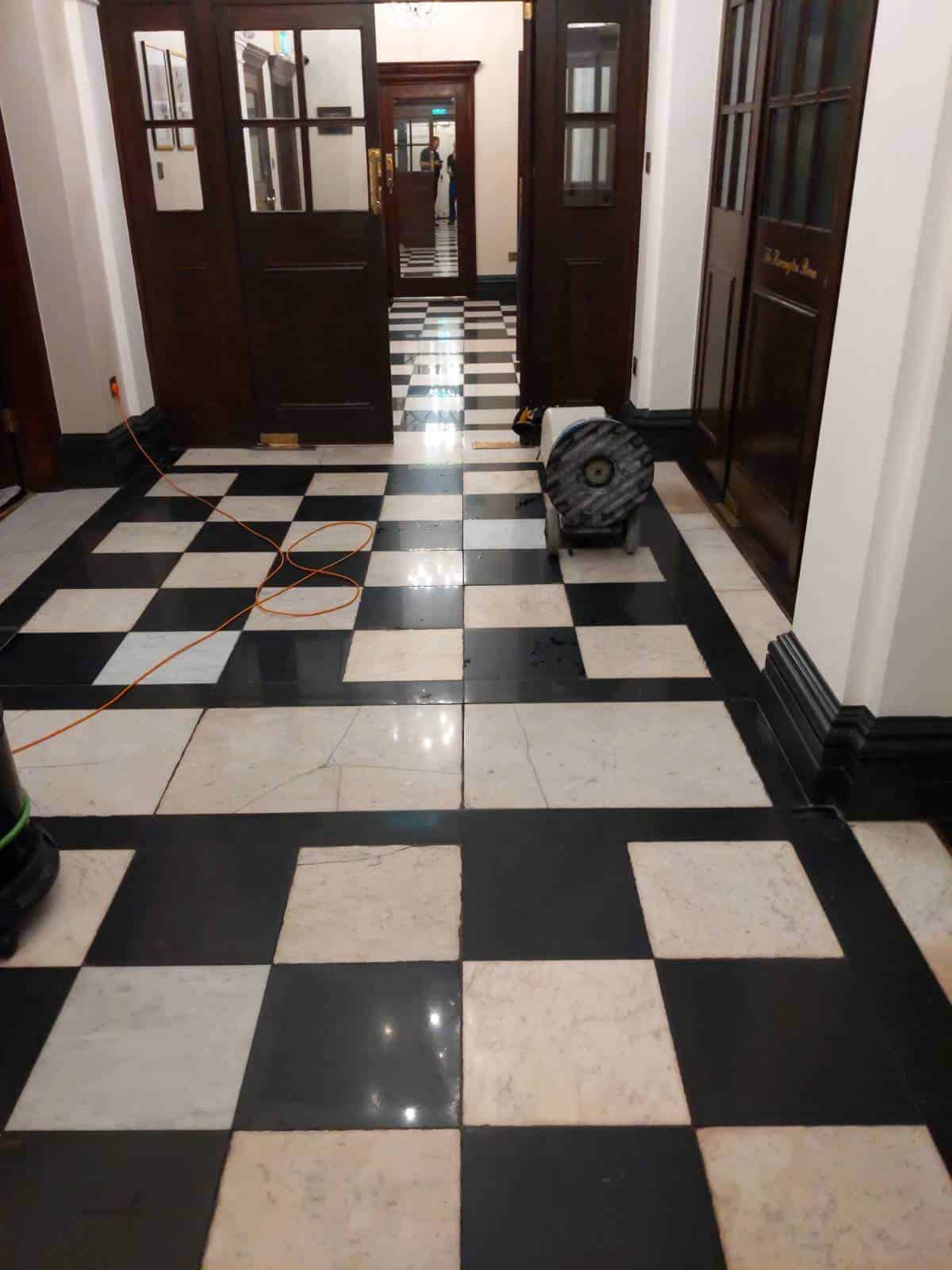
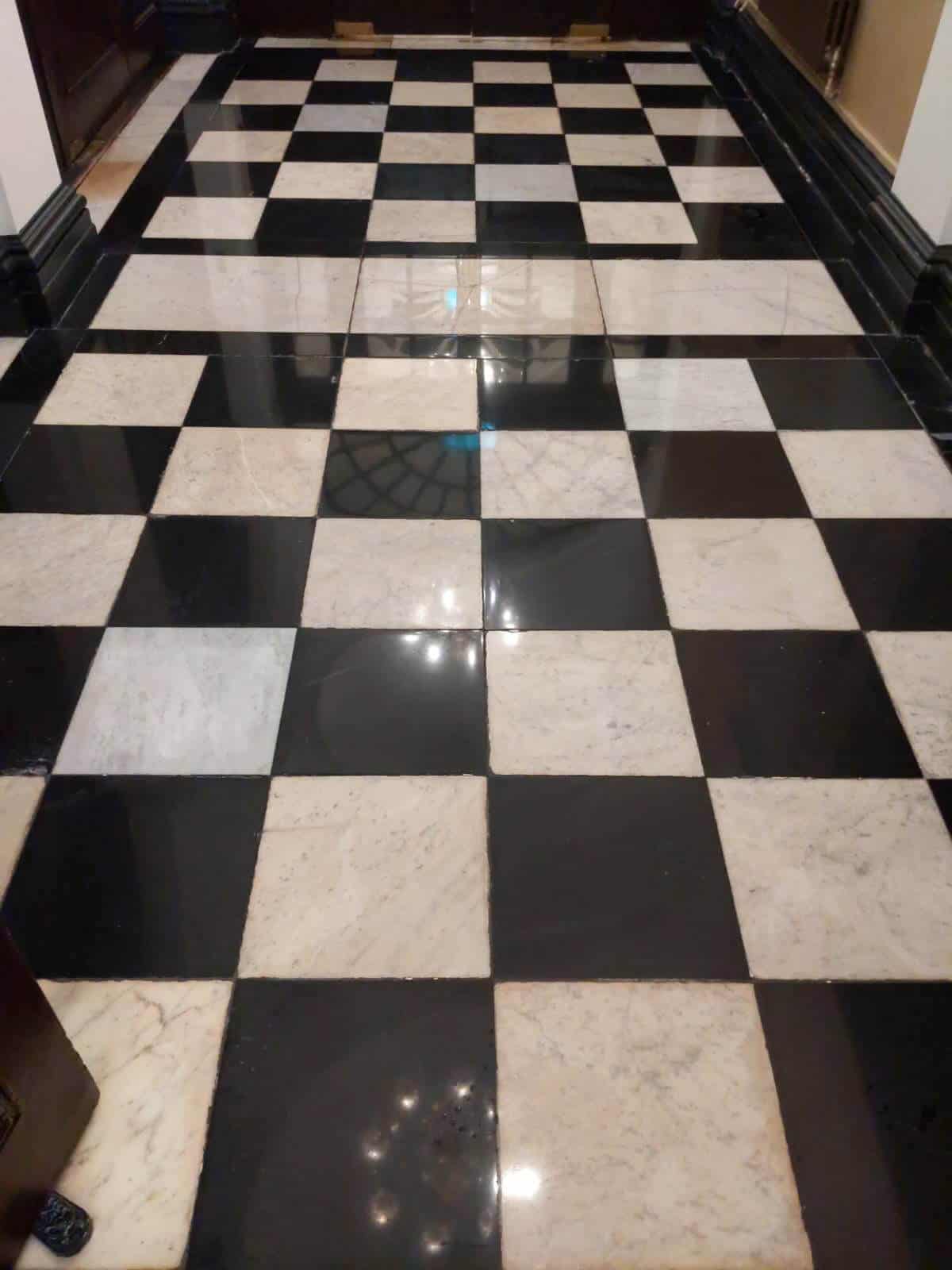
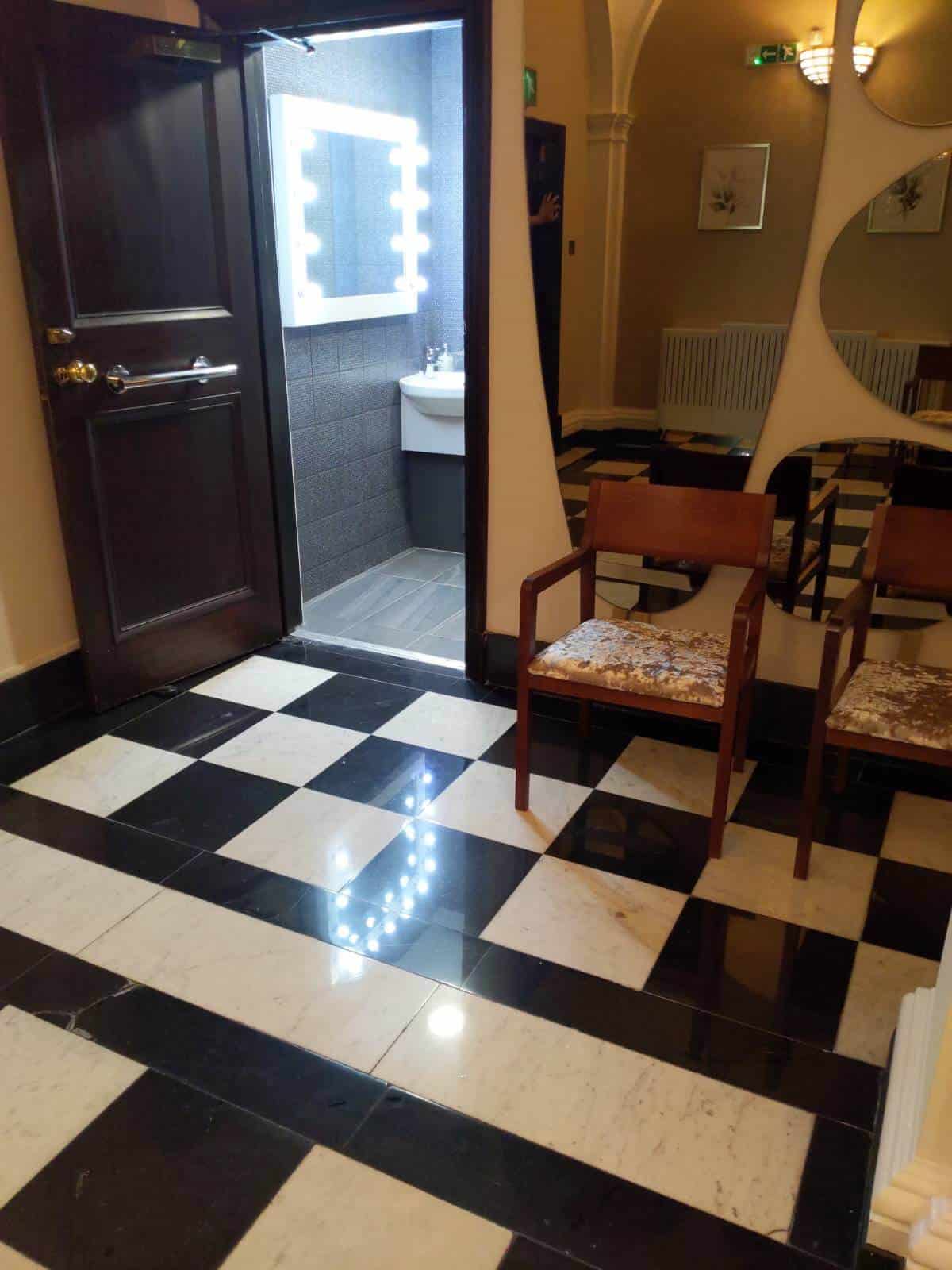
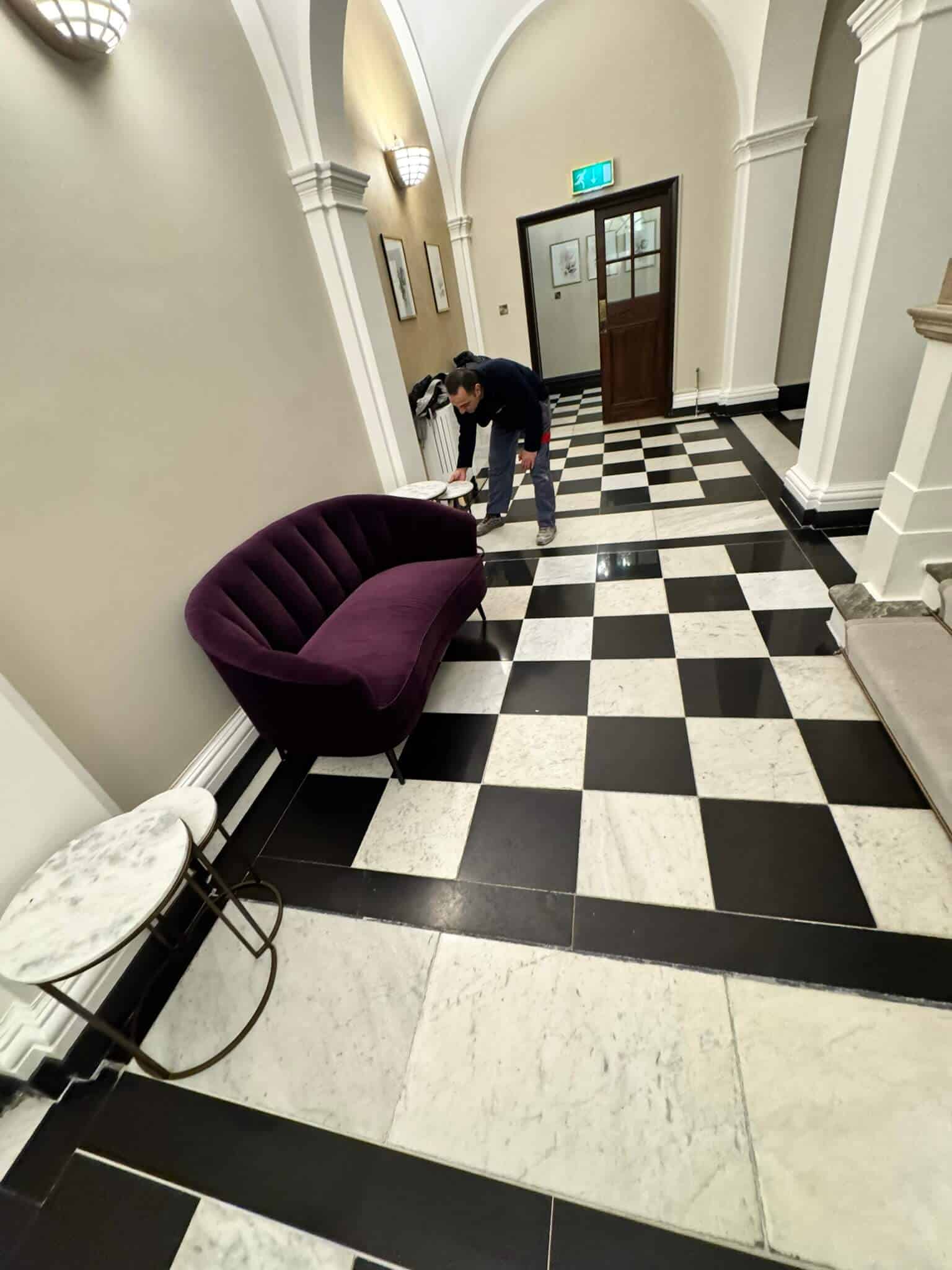
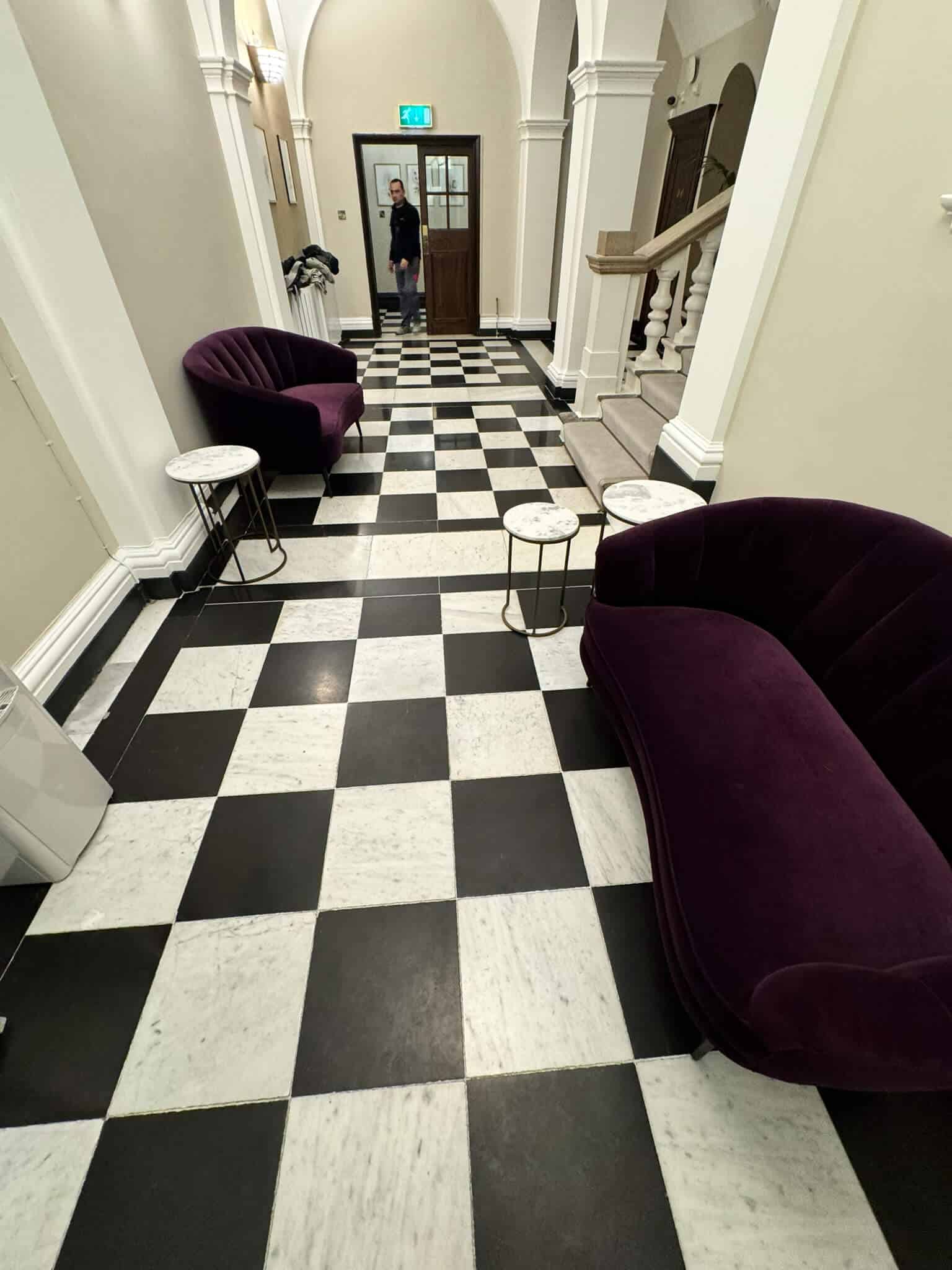
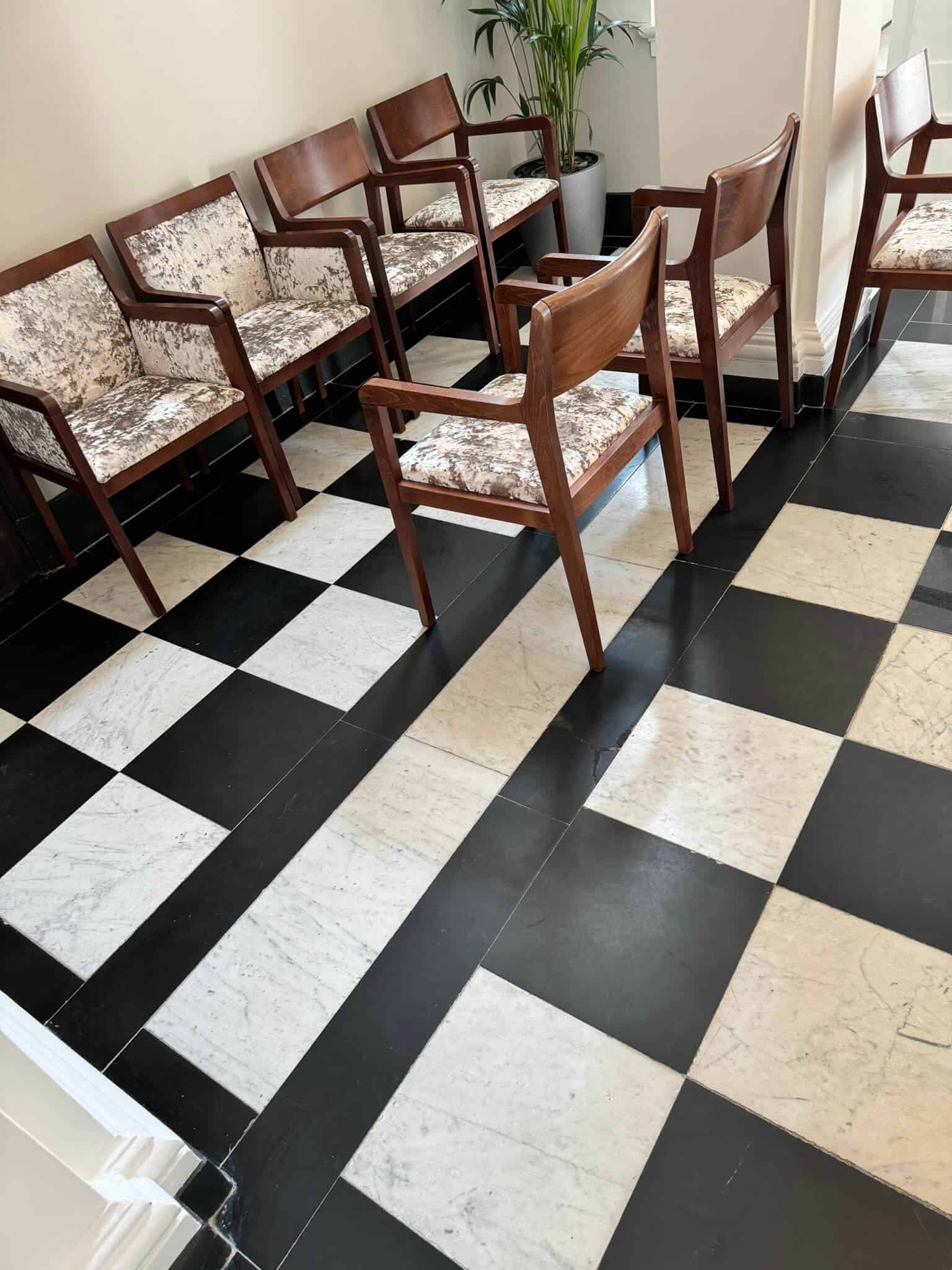
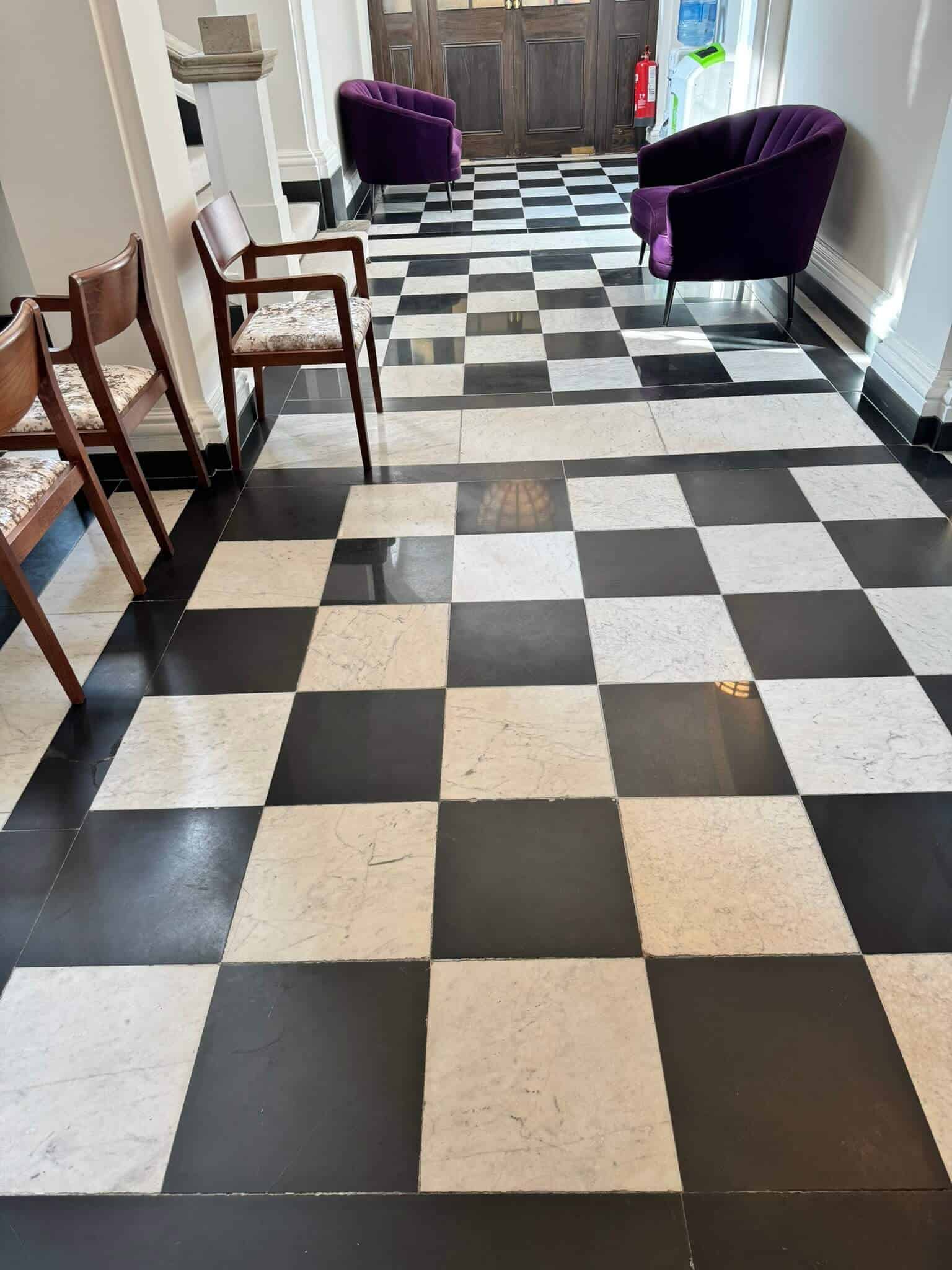
Case Study: Marble and Granite Floor Restoration on King’s Road, London
Project Overview:
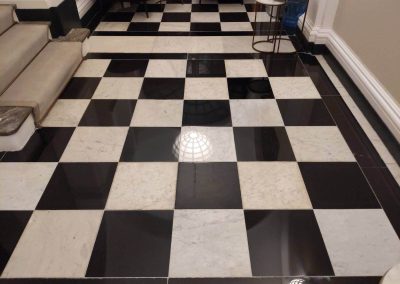
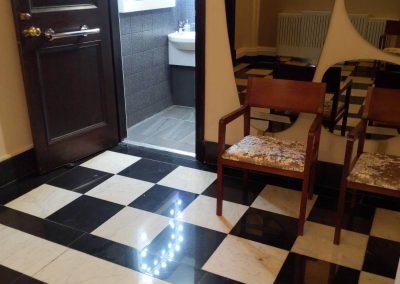
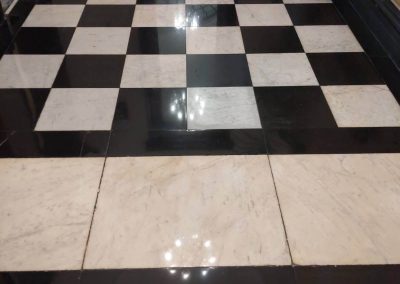
The restoration project was undertaken on a prestigious property located on King’s Road, London, featuring a floor composed of white Carrara marble and Black Zimbabwe granite. This combination presents unique challenges due to the contrasting properties of the materials: marble’s softness versus granite’s hardness.
Objectives:
- Surface Restoration: To remove scratches and repair previous restoration attempts.
- Enhance Aesthetics: Restore the natural shine and gloss of both marble and granite.
- Protection: Apply a suitable sealer to prevent future staining and damage.
Methodology:
- Initial Assessment: The floor was inspected to identify the extent of damage, focusing on scratches, previous repair attempts, and overall wear.
- Grinding and Polishing: Due to the differing hardness of marble and granite, our team used a specialized approach:
- Marble: Ground down gently using progressively finer grits of diamond abrasives to remove scratches without excessive material loss.
- Granite: Required more aggressive grinding to address deep scratches and restore its surface, using appropriate diamond tools.
- Natural Polishing: The floor was polished using water and synthetic diamond compounds. This method avoids chemicals that could react differently with marble and granite, potentially causing discoloration or structural issues.
- Sealing: An impregnator sealer was applied to both surfaces. This sealer penetrates the stone, offering protection against light stains while maintaining the natural look and breathability of the stone.
- Final Shine: The final polishing was done with water and synthetic diamonds to achieve a natural shine, avoiding any chemical-based products that might give the stone an unnatural, plastic-like appearance.
Challenges:
Material Compatibility: Finding a restoration process that suits both marble and granite without compromising either material’s integrity.
Historical Value: Ensuring that the restoration respects the historical and aesthetic value of the property.
Project Duration and Cost:
- Duration: The project was completed within 3 days, showcasing the efficiency of our specialized team.
- Cost: The total cost for this high-end restoration was £4,500, reflecting the complexity of the materials involved and the precision required in the restoration process.
Conclusion:
This case study demonstrates the successful restoration of a dual-material floor in a high-profile location. By employing advanced techniques tailored to the unique properties of marble and granite, we not only repaired the damage but also enhanced the floor’s appearance, ensuring it continues to serve as a centerpiece of the property’s interior. This project underscores the importance of using natural and compatible materials in stone restoration to preserve the authenticity and longevity of such surfaces.
Pictures
-
-
-
-
-
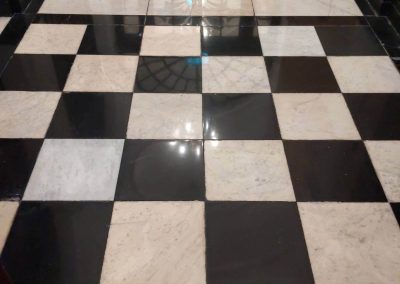
Polished marble and granite floor restored by Stone Rescue, showcasing a checkerboard pattern.
-
-
-
-
-
-
-
-





Disclaimer: Please treat the above price as a guidance price
- The estimate/ quotation prices can vary and will be fix it based on existing stone conditions.
- For the final prices we’ll request a site visit to have a close inspection on the stone. Our technicians will establish quotation prices based on our internal guidance.
Testimonials
Our projects