

Guidance price list
How much does it cost to polish a stone floor?
Natural stone floors have a beauty and durability unlike anything else on the market today. Stone comes in a wide range of different colours, patterns, styles, sizes, and finishes, which means that you can create an elegant, formal entryway or a rustic kitchen and regardless of stone type, your floor will last for years when properly maintained.
Level of shine

Cleaning procedure

Labour and polishing procedure

| Method | Best On | Average Cost |
| Grinding, Honing, and Polishing | All stones, heavily damaged stones, hard stones like granite | £50-£70 per m2 |
| Buffing with polishing compounds | All stones, particularly good on marbles | £28 per m2 |
| Diamond polishing | Marbles and granites | £25- 40 per m2 |
| Powder polishing | All stones depending on the chemical used | £20-£30 per m2 |
| Crystallization | Marbles and granite, avoid using on green stones | £10-£20 per m2 |
Sealing

Additional considerations and costs
For a stone floor in very bad condition, it may require replacement. Replacing one or two stones is generally not done, unless you have extra tiles left over from the original dye lot. Stones vary too much between lots to be able to install new tiles from a new lot into an old floor. You can expect to pay around £150 to £500 square metre installed for a new stone floor.
Countertop Repair or Refinishing Costs

Your countertops/worktops help define your kitchen’s style and functionality. It pays to keep them in good condition. Unfortunately, chips, scratches, burns and water damage are potential issues that harm your kitchen’s, or bathroom’s, aesthetic. Eventually, you’ll need to choose between refinishing, repair or resurfacing.
- Refinishing a countertop is one type of repair to the surface finish. It includes buffing out scratches, sanding away stains, adding a coat of epoxy and recoating the surface with a sealant.
- Resurfacing can include both the removal and replacement of a worn laminate or tiles and the addition of a new surface.
Cost to Resurface Natural Stone Countertops
In most cases, repairing counters is more cost-effective than full a replacement, but it’s skilled work that requires a professional. Before searching for quotes, spend some time learning about the difference between repairing/ replacing/ resurfacing and refinish, and which is best for your surface.
Study cases
Case Study 1
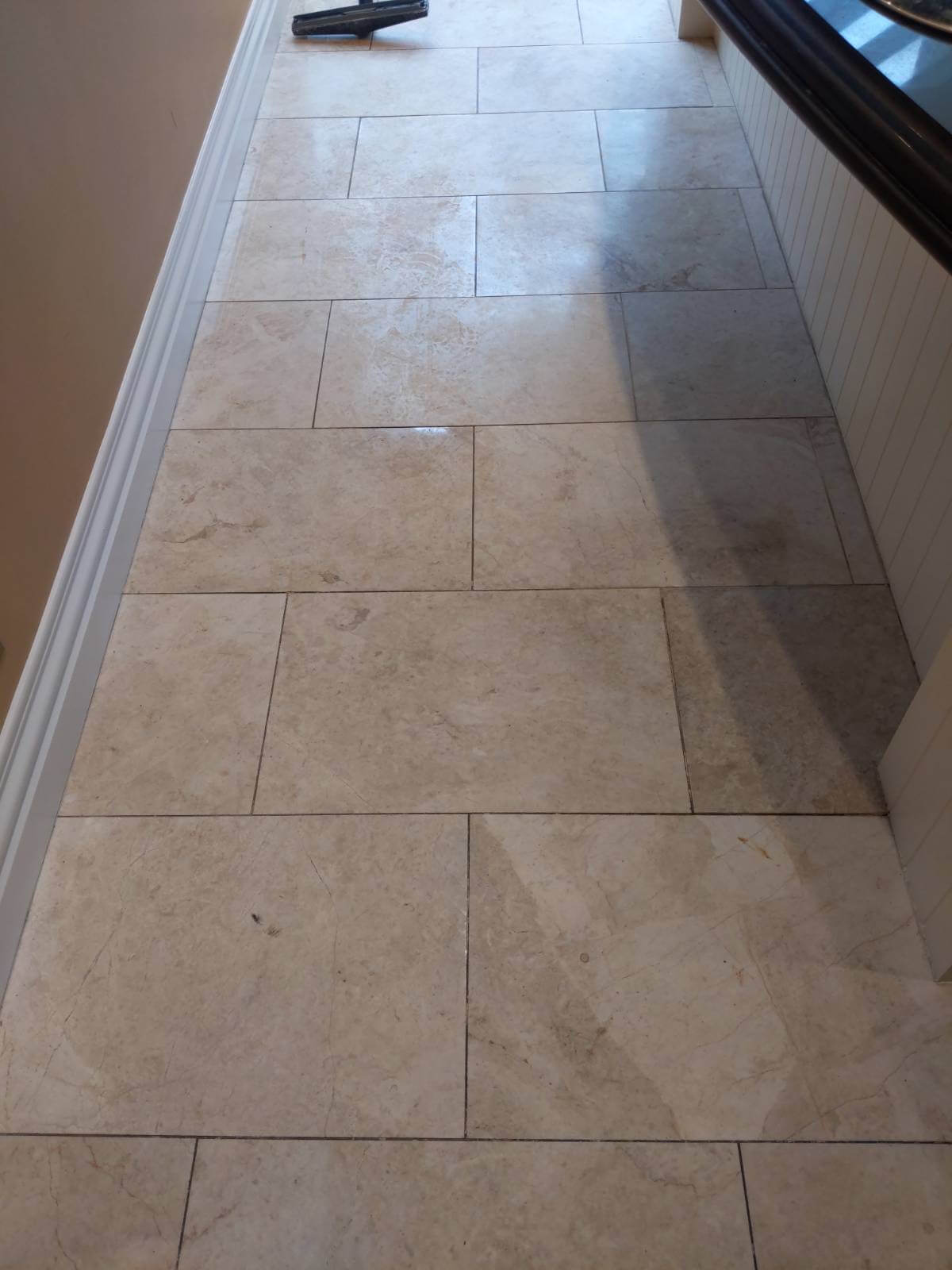
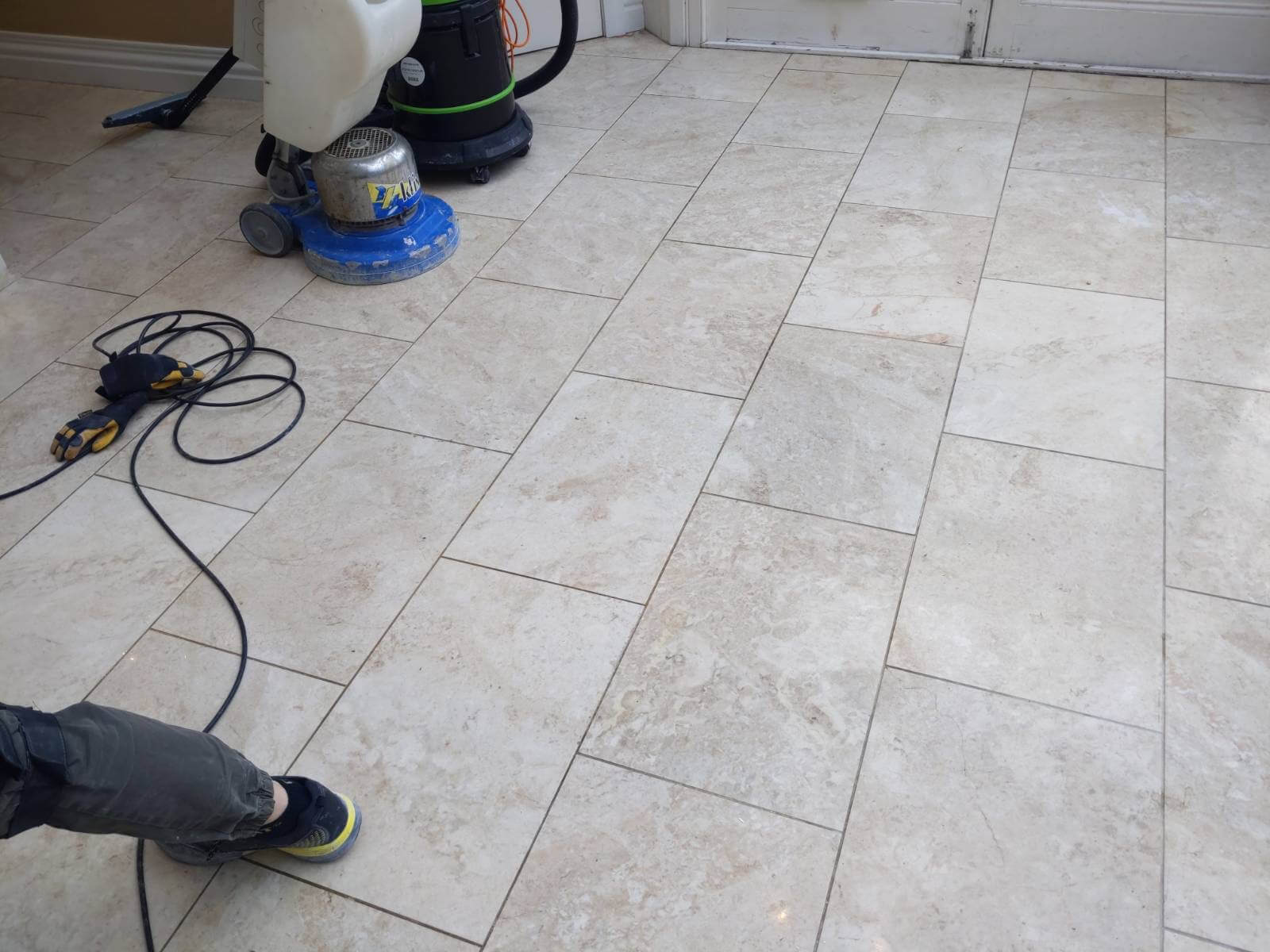
Case Study: Limestone Floor Restoration Project
Background:
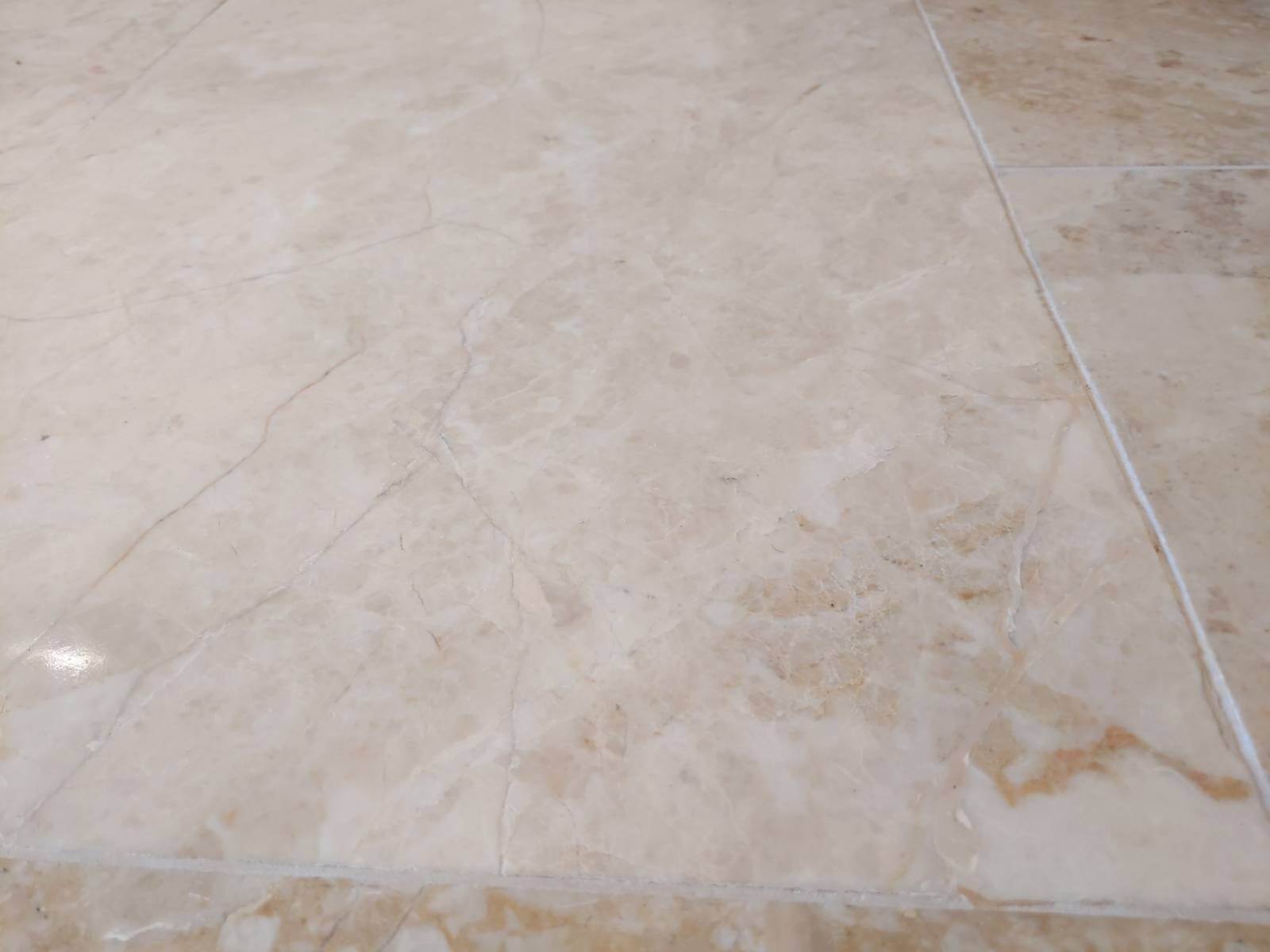
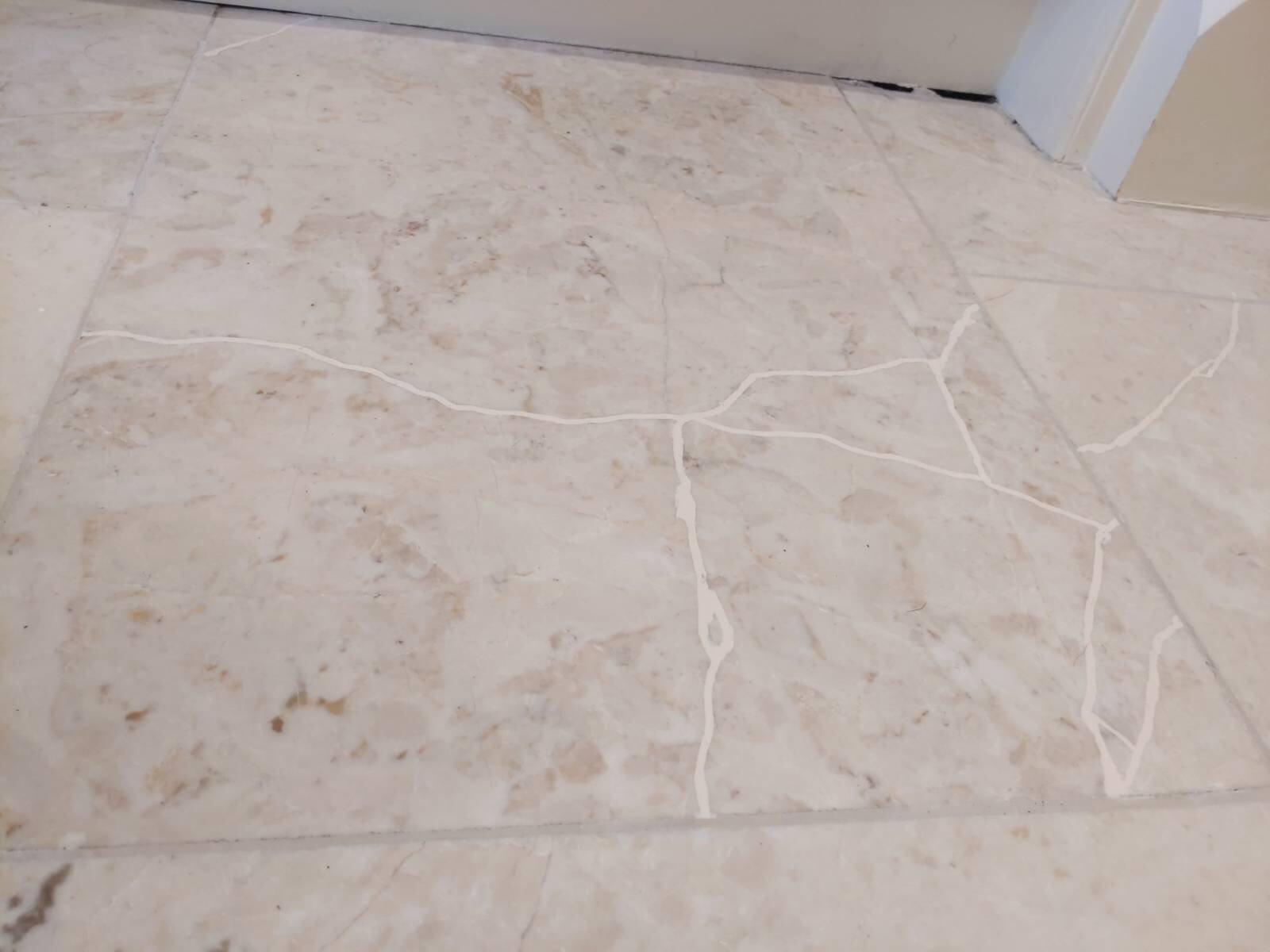
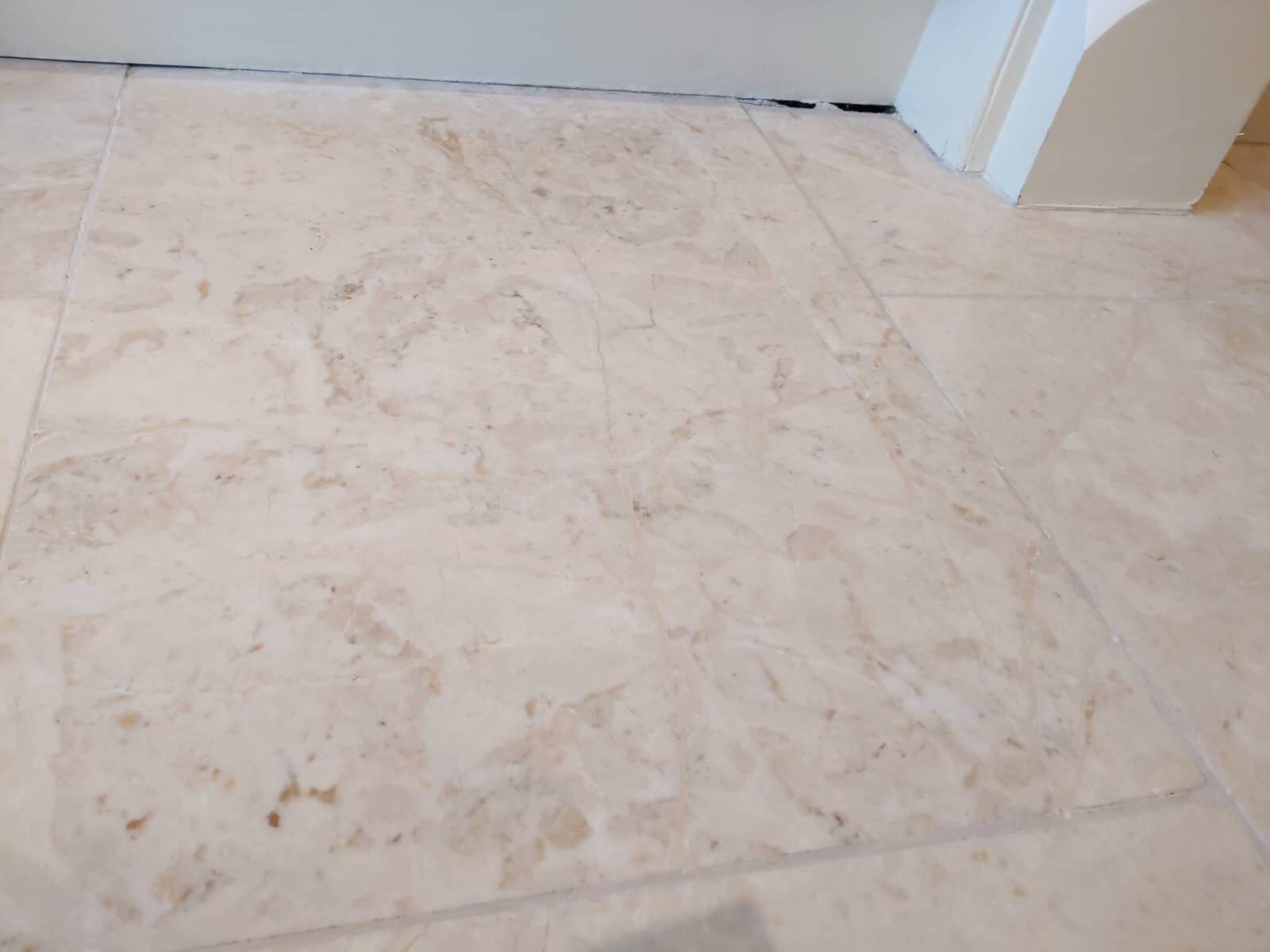
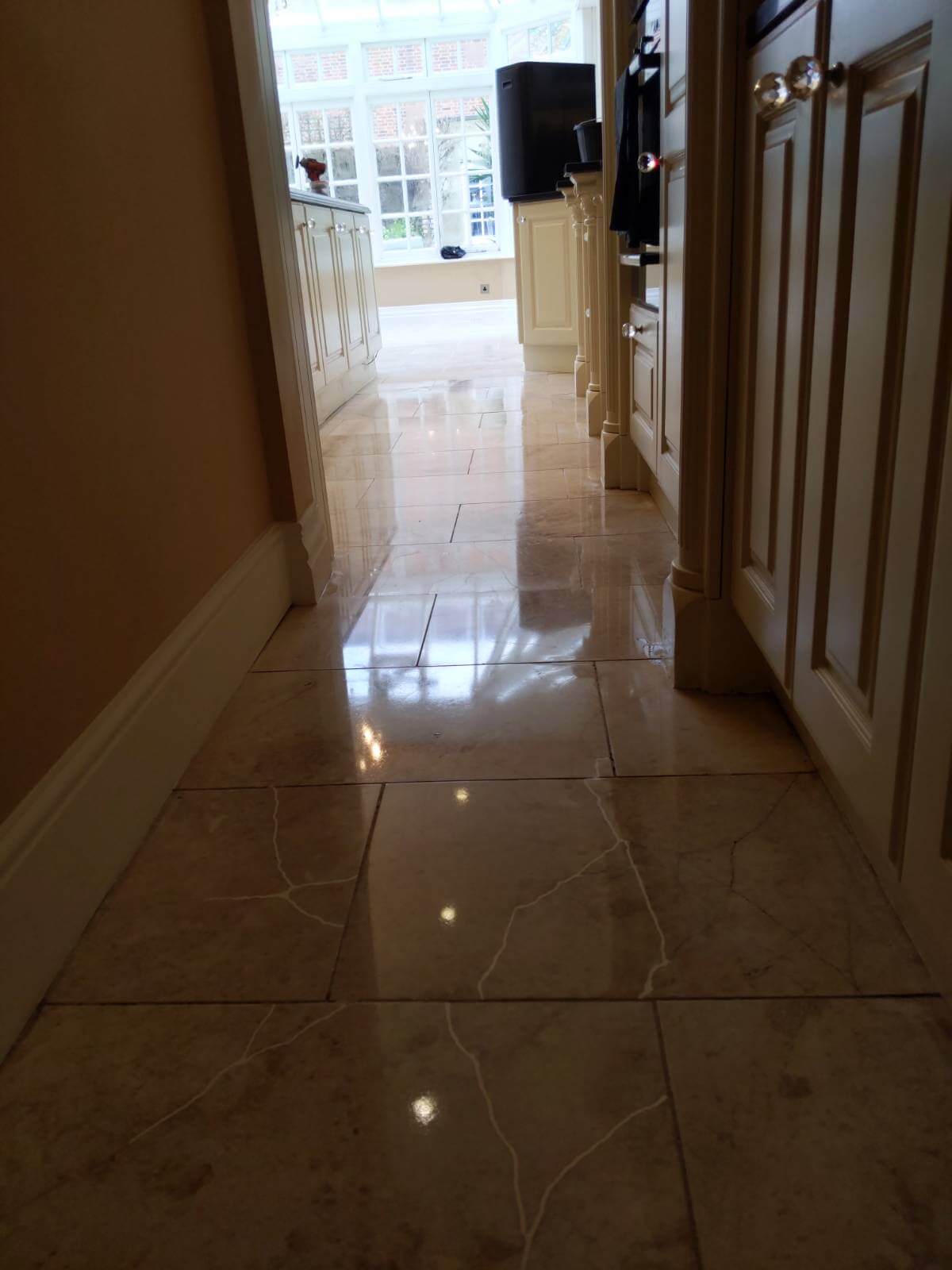
The limestone floor in question, located in a high-traffic area, had not received any maintenance or treatment over the past ten years. This neglect resulted in significant wear and tear, including fissures and loose tiles, which not only compromised the aesthetic appeal but also posed safety risks.
Project Objectives:
1. **Repair and Stabilize:** Address all structural issues including fissures and loose tiles to ensure the floor’s integrity.
2. **Cosmetic Restoration:** Enhance the visual appeal through topical treatments and polishing.
3. **Sealing:** Apply a durable sealant to protect the limestone and extend its lifespan.
Methodology:
1. **Initial Assessment and Repair:**
– Our team began by conducting a thorough inspection to identify all damaged areas.
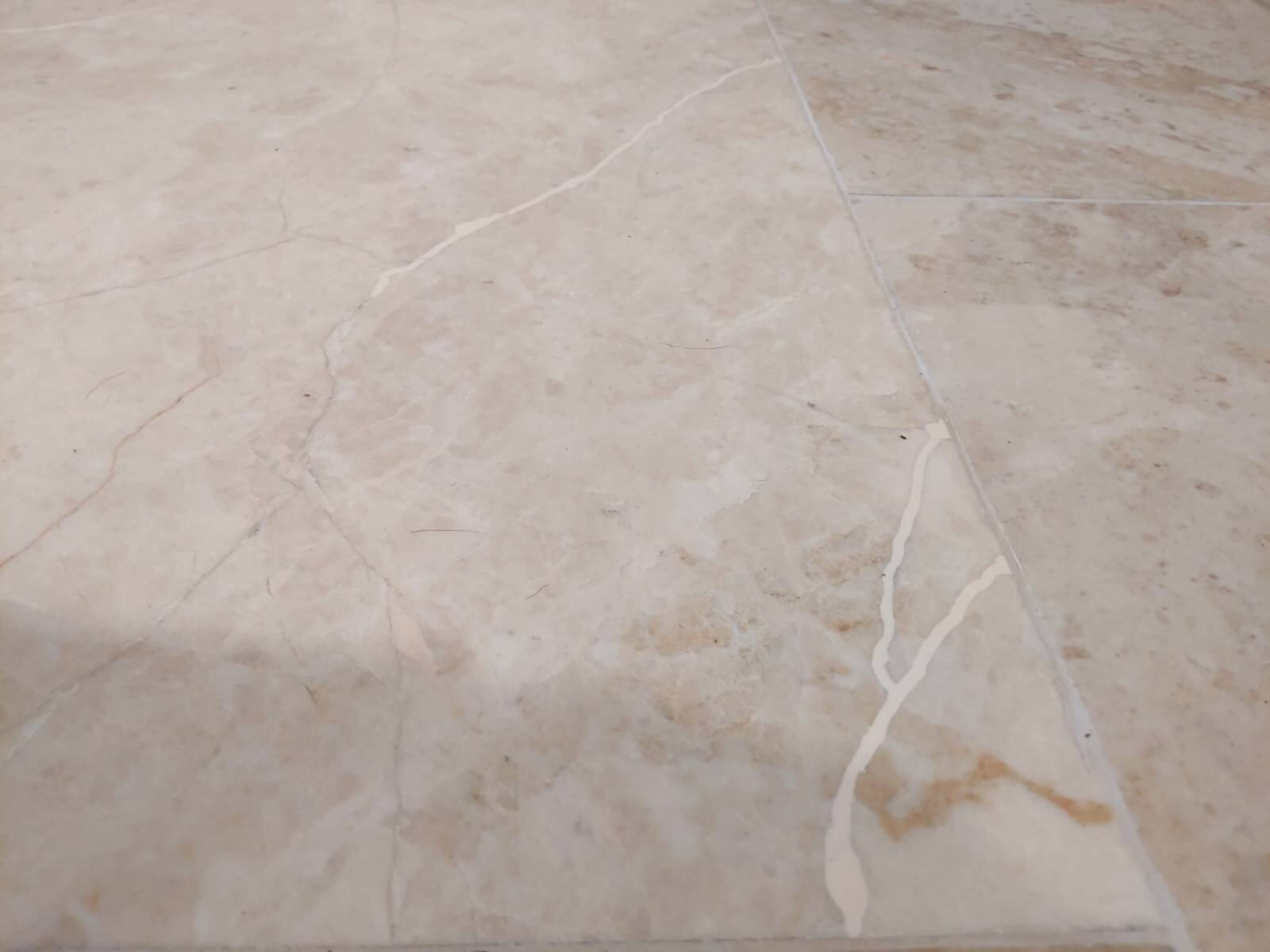
– Fissures were meticulously repaired using a limestone-compatible filler to ensure seamless integration with the existing material.
– Loose tiles were secured using appropriate adhesives and, where necessary, replaced with matching limestone tiles to maintain uniformity.
2. **Cosmetic Restoration:**
– Post-repair, the surface was cleaned to remove any debris or old sealant remnants.
– Technicians applied topical treatments to fill in any remaining open spaces, ensuring a smooth transition between repaired and original areas.
3. **Surface Treatment:**
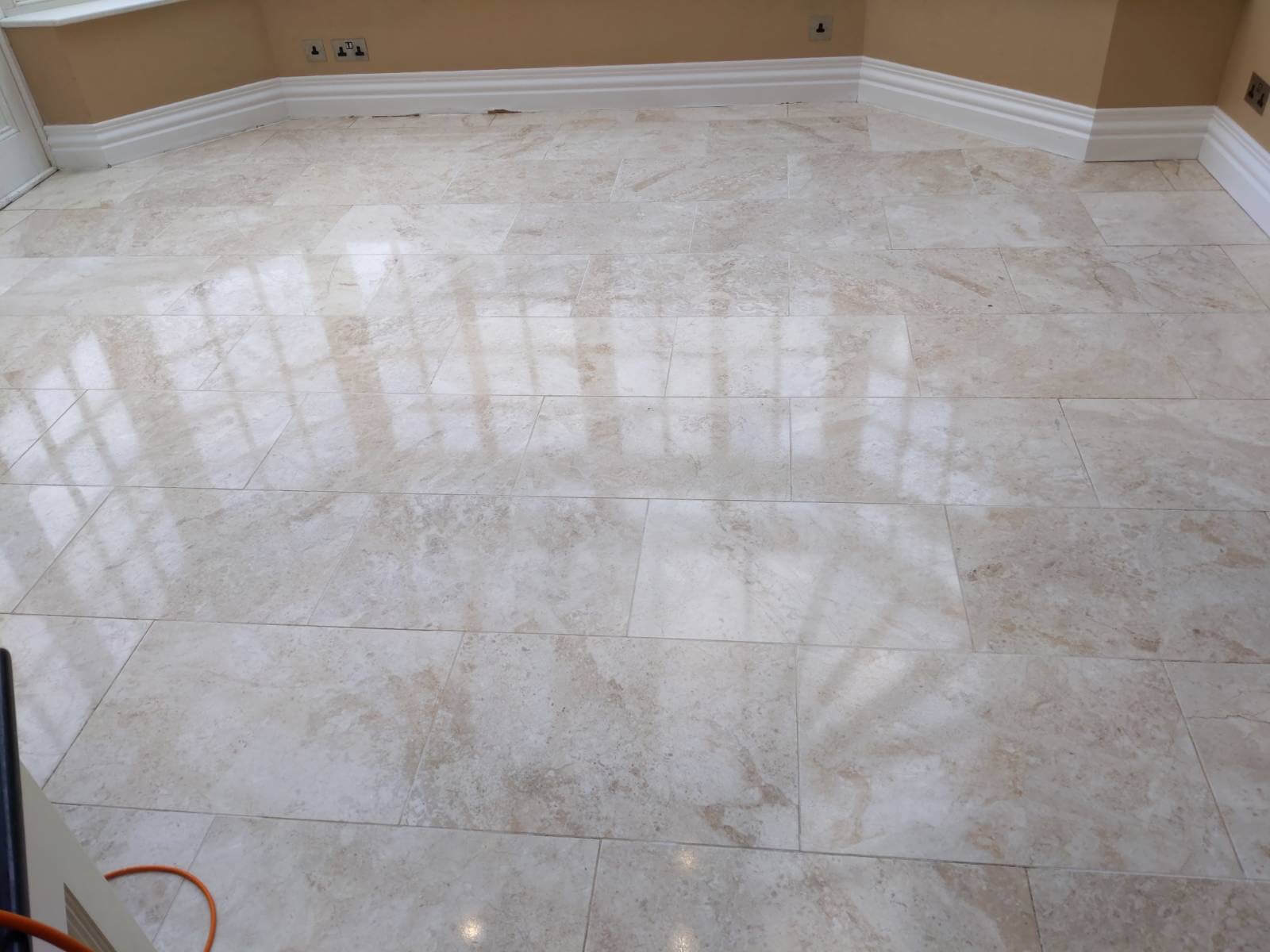
– The entire floor was then polished to a satin finish, which not only enhances the natural beauty of the limestone but also provides a more durable surface than a high gloss finish.
– A light restoration process was employed, removing 1-2 mm of the top layer to eliminate minor scratches and uneven wear, thus rejuvenating the floor’s appearance.
4. **Sealing:**
– After allowing sufficient drying time, an impregnator hybrid sealant was applied. This sealant penetrates the limestone, providing both water and stain resistance without altering the stone’s breathability or appearance.
– The effectiveness of this sealant is expected to last between one to three years, depending on the frequency of maintenance and the level of foot traffic.
Project Cost and Duration:
– The total cost for this comprehensive limestone floor restoration was £3,100, covering materials, labor, and equipment.
– Project duration: 4 days.
Conclusion:
This project not only restored the functionality and safety of the limestone floor but also significantly enhanced its aesthetic value. The application of a high-quality sealant ensures that the floor remains protected against daily wear and environmental factors for an extended period, provided regular maintenance is adhered to. This case study serves as an example of how proper restoration techniques can breathe new life into neglected architectural elements, preserving them for future generations.
Pictures
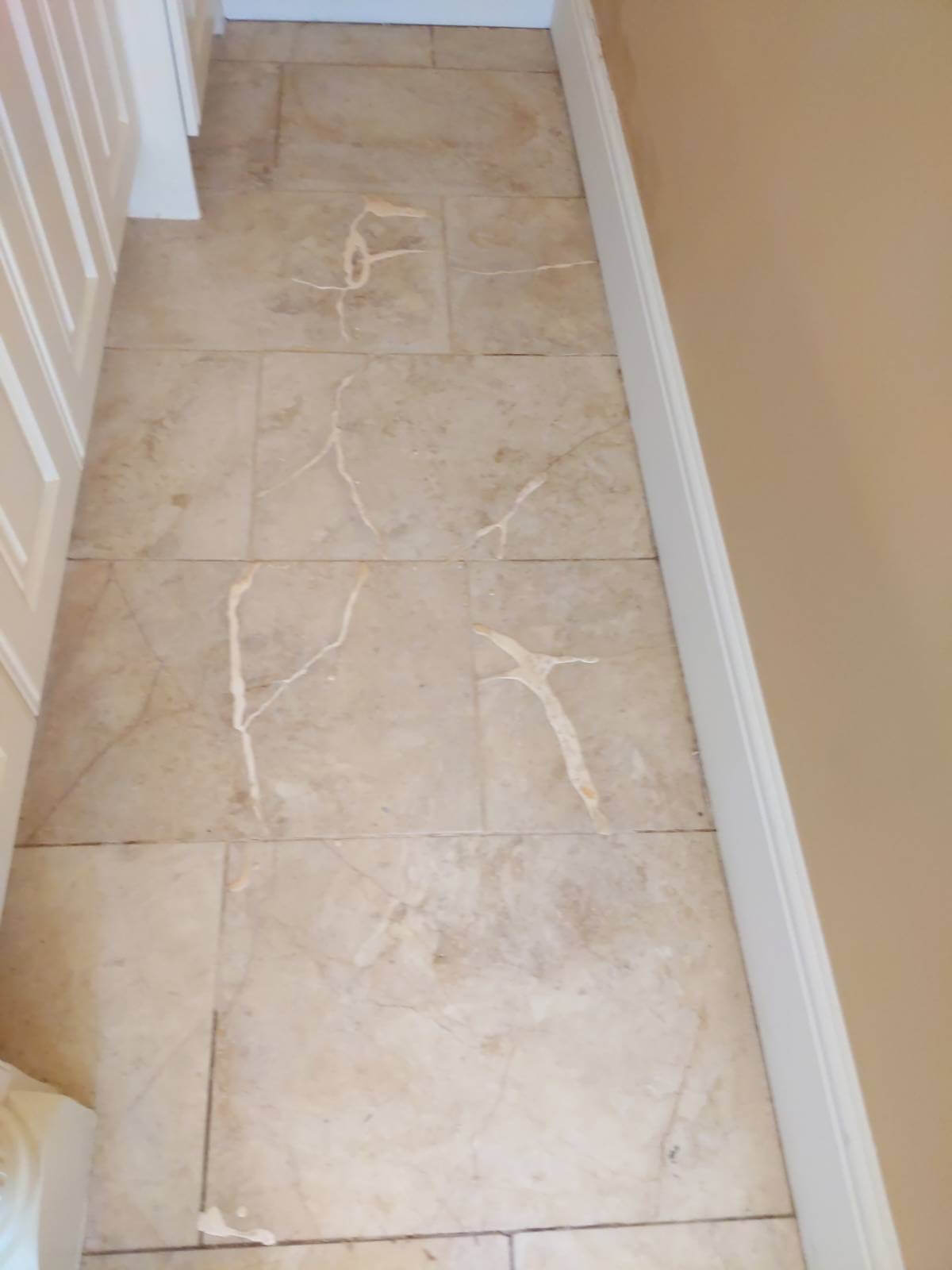
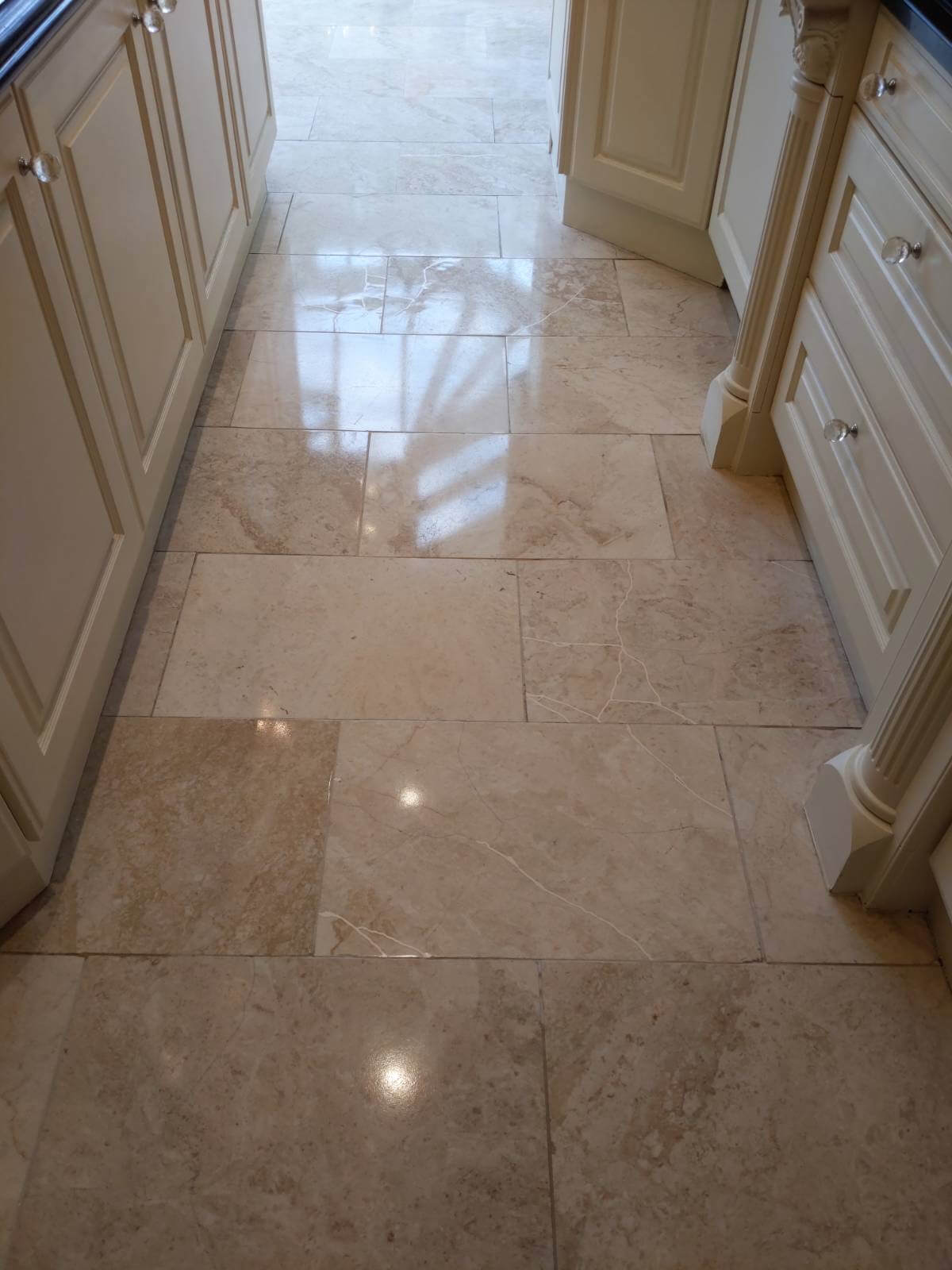
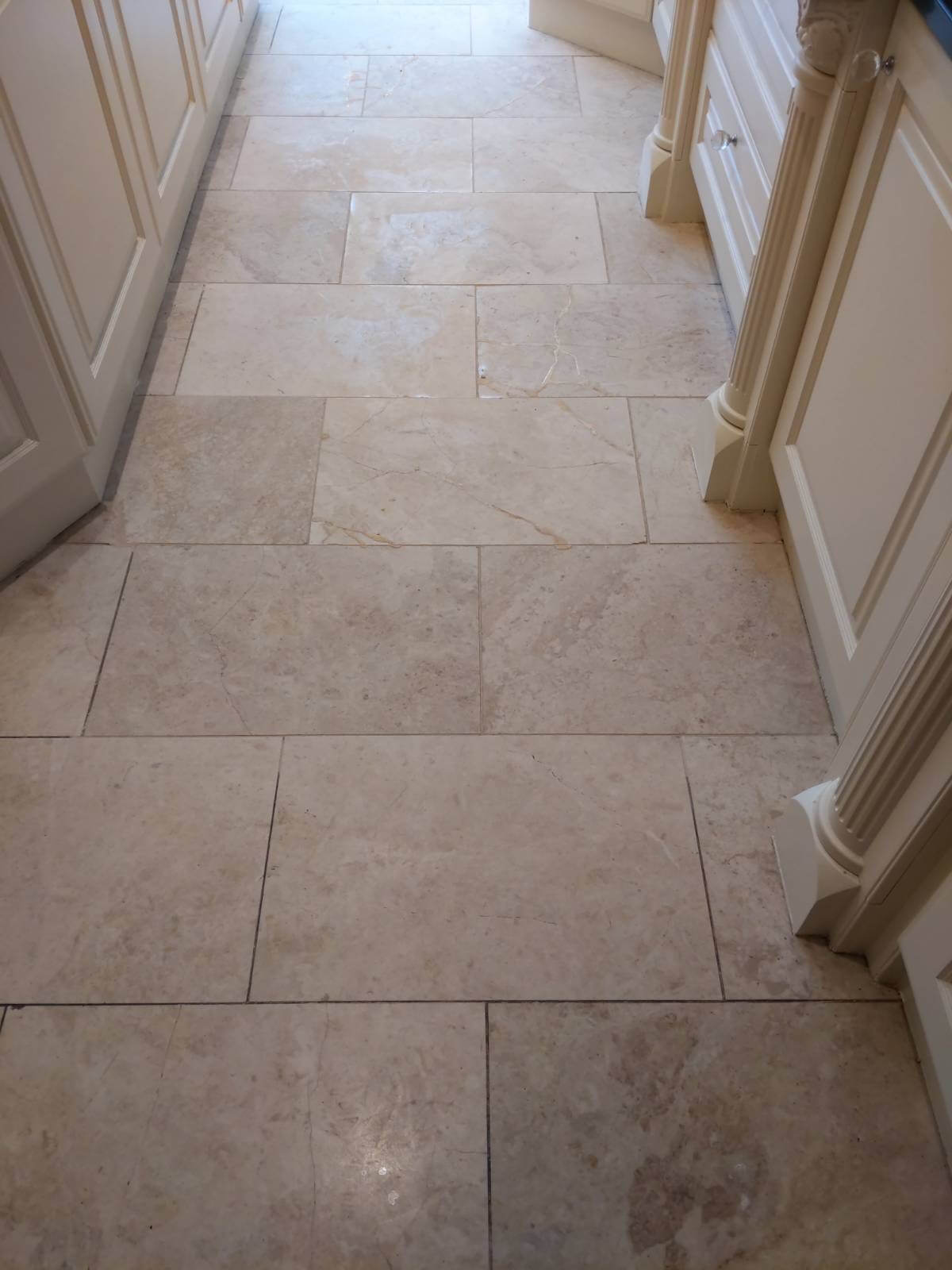
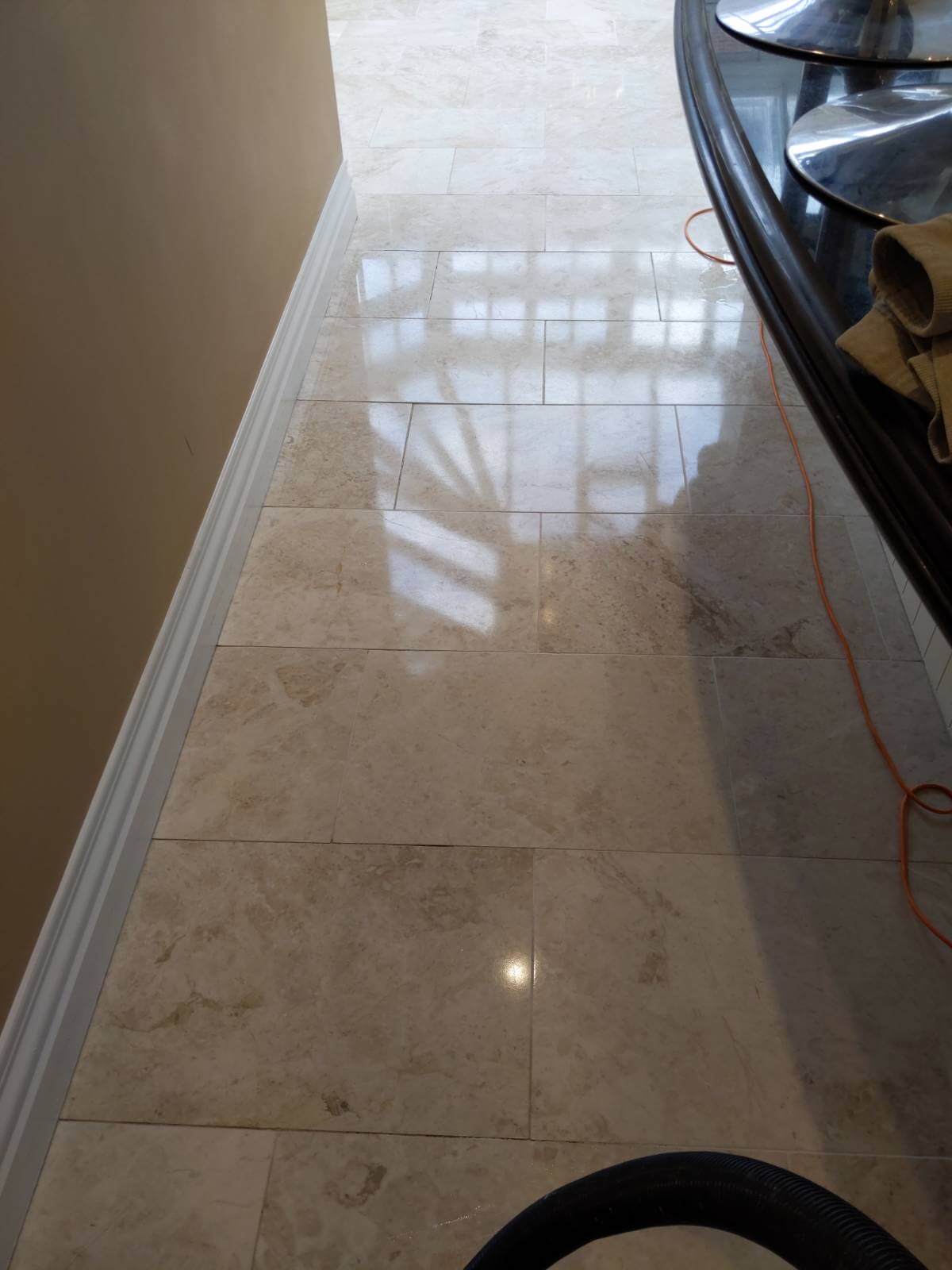
Case Study 2
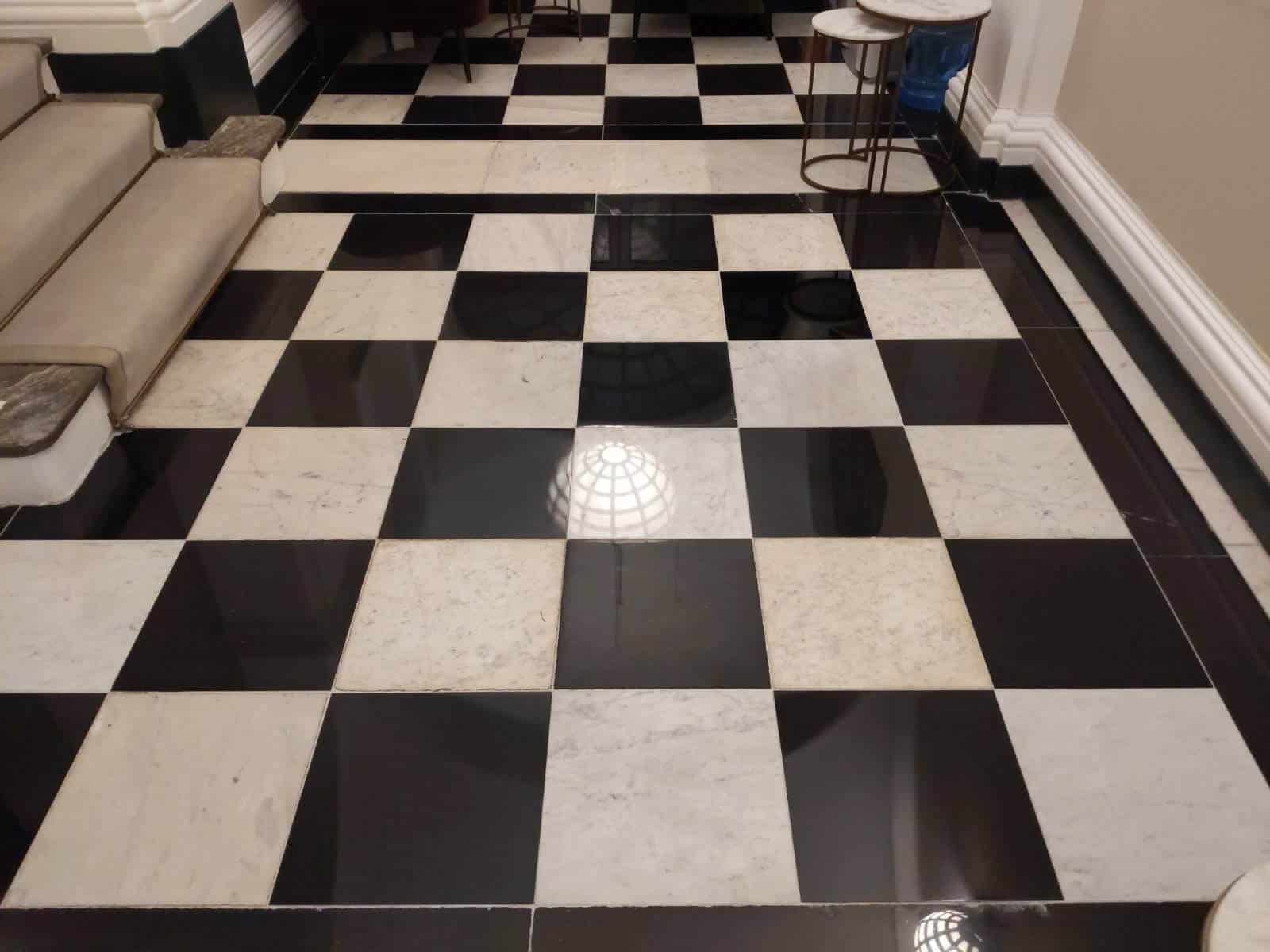
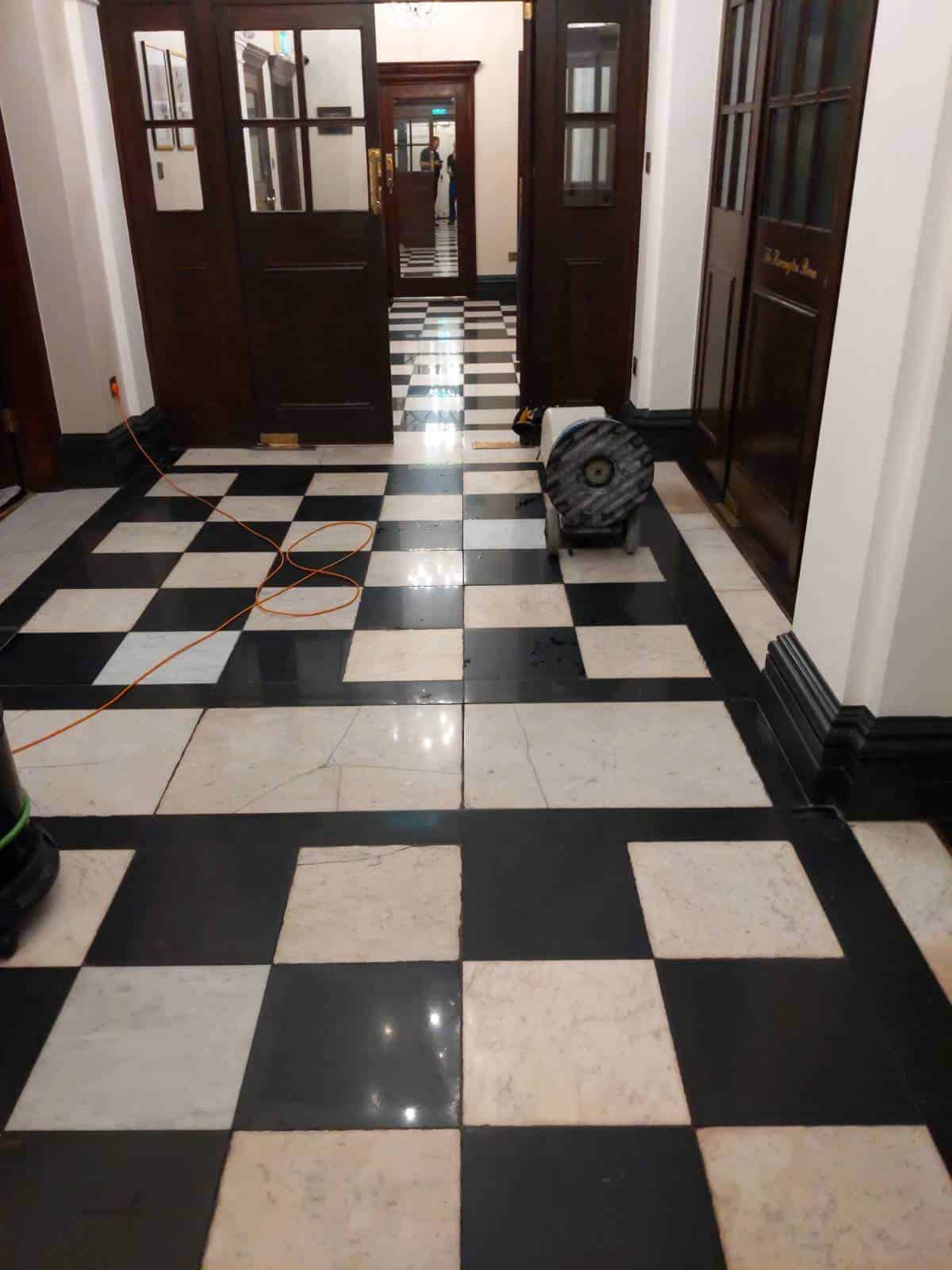
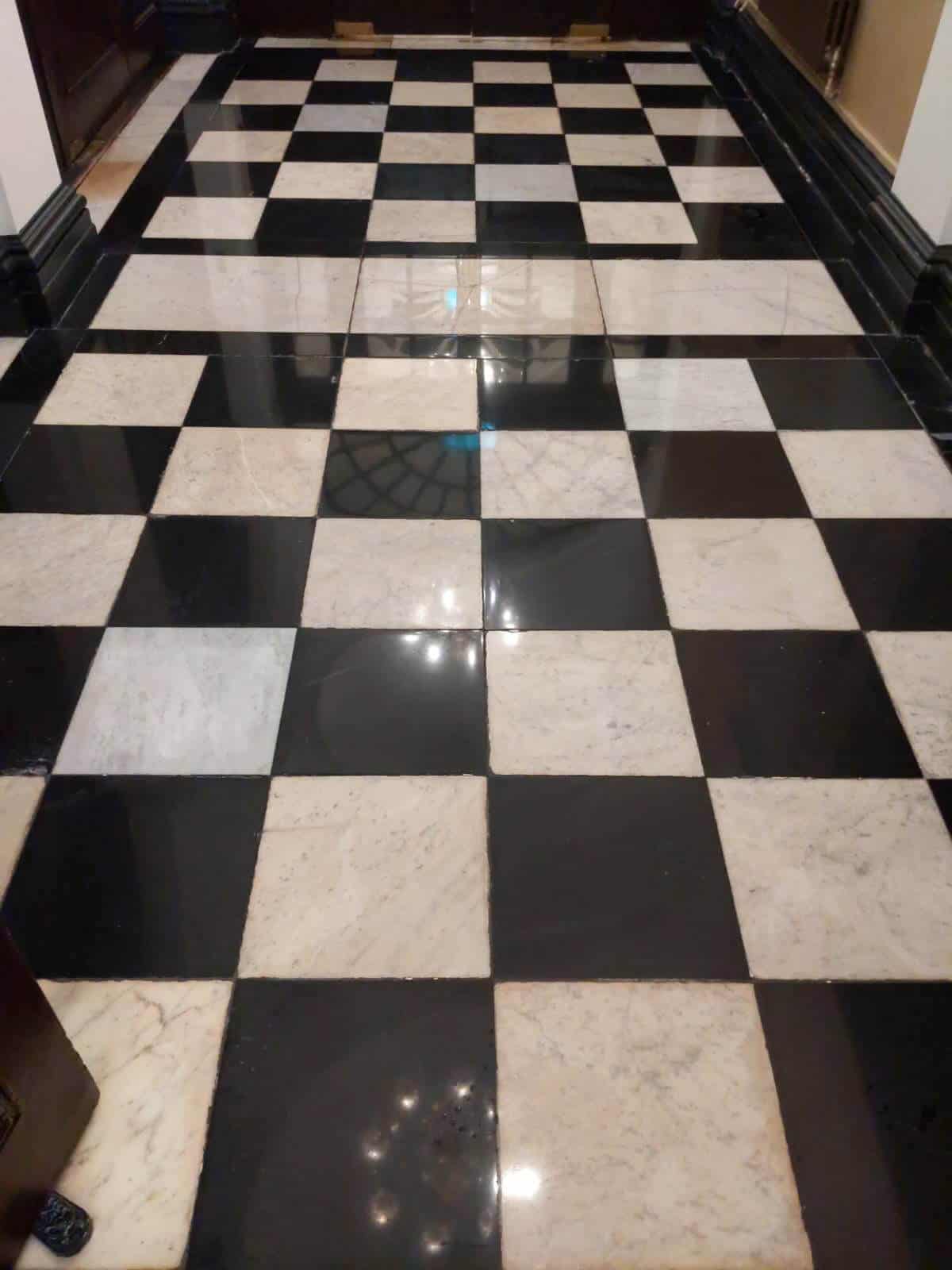
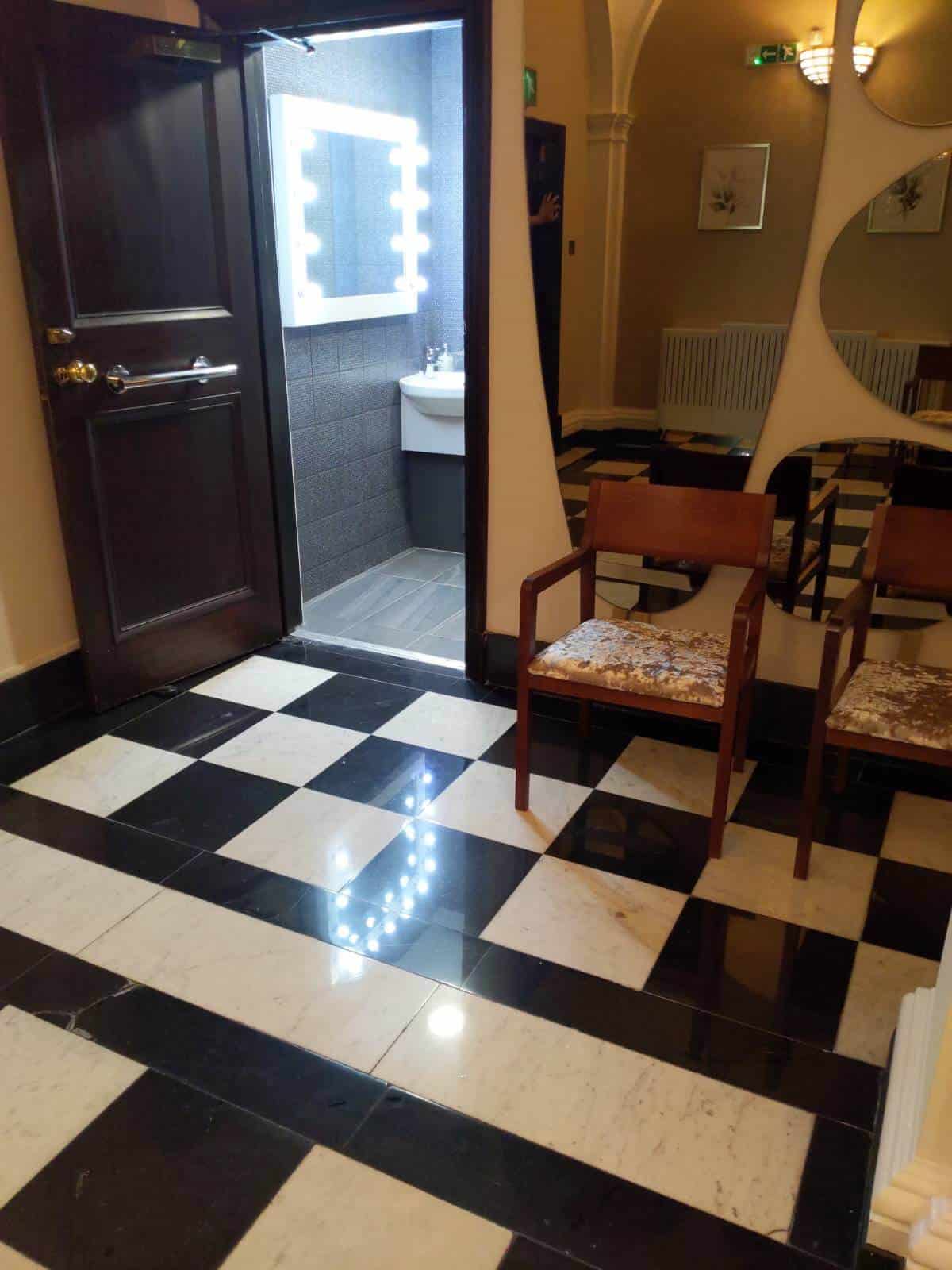
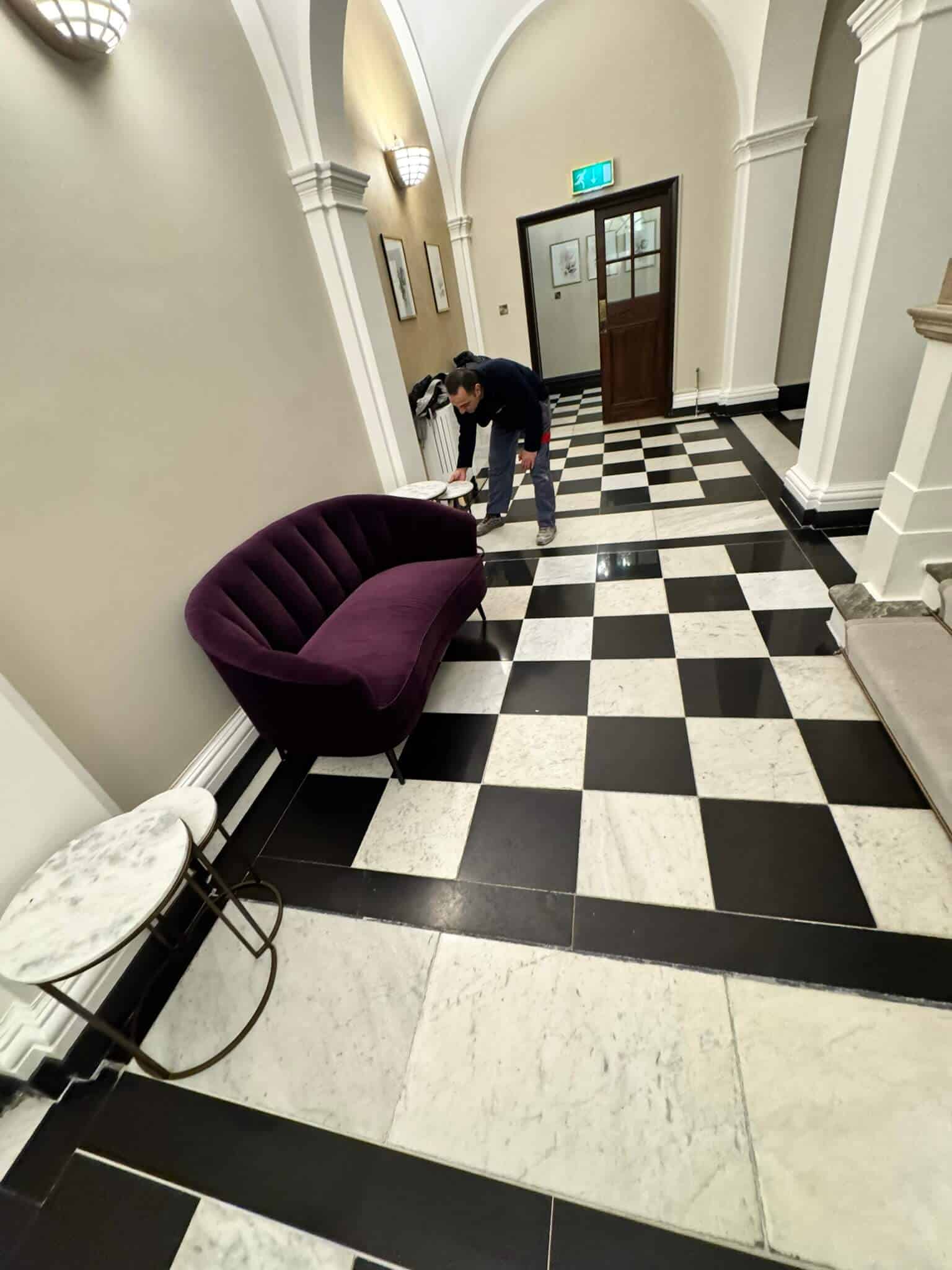
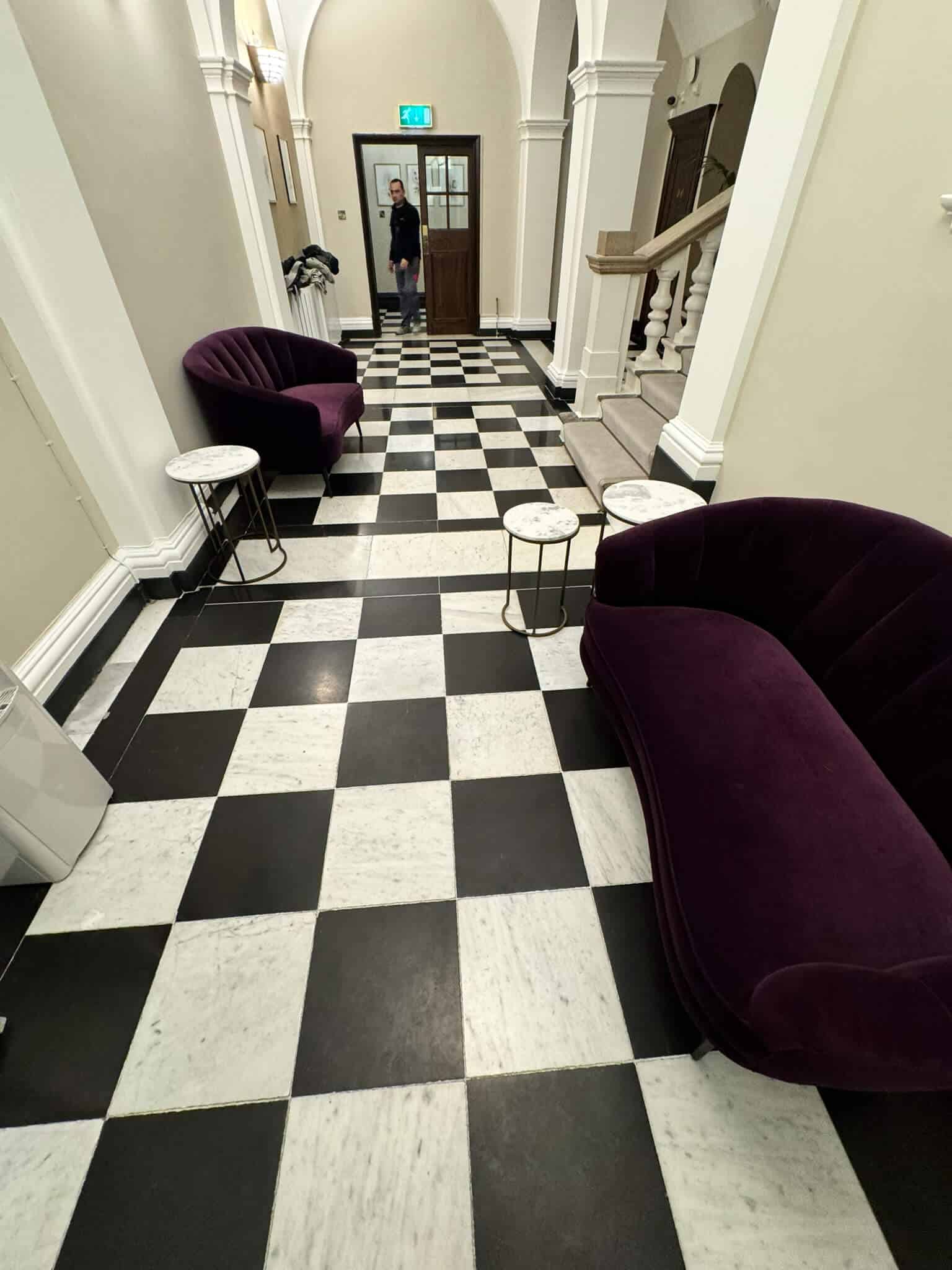
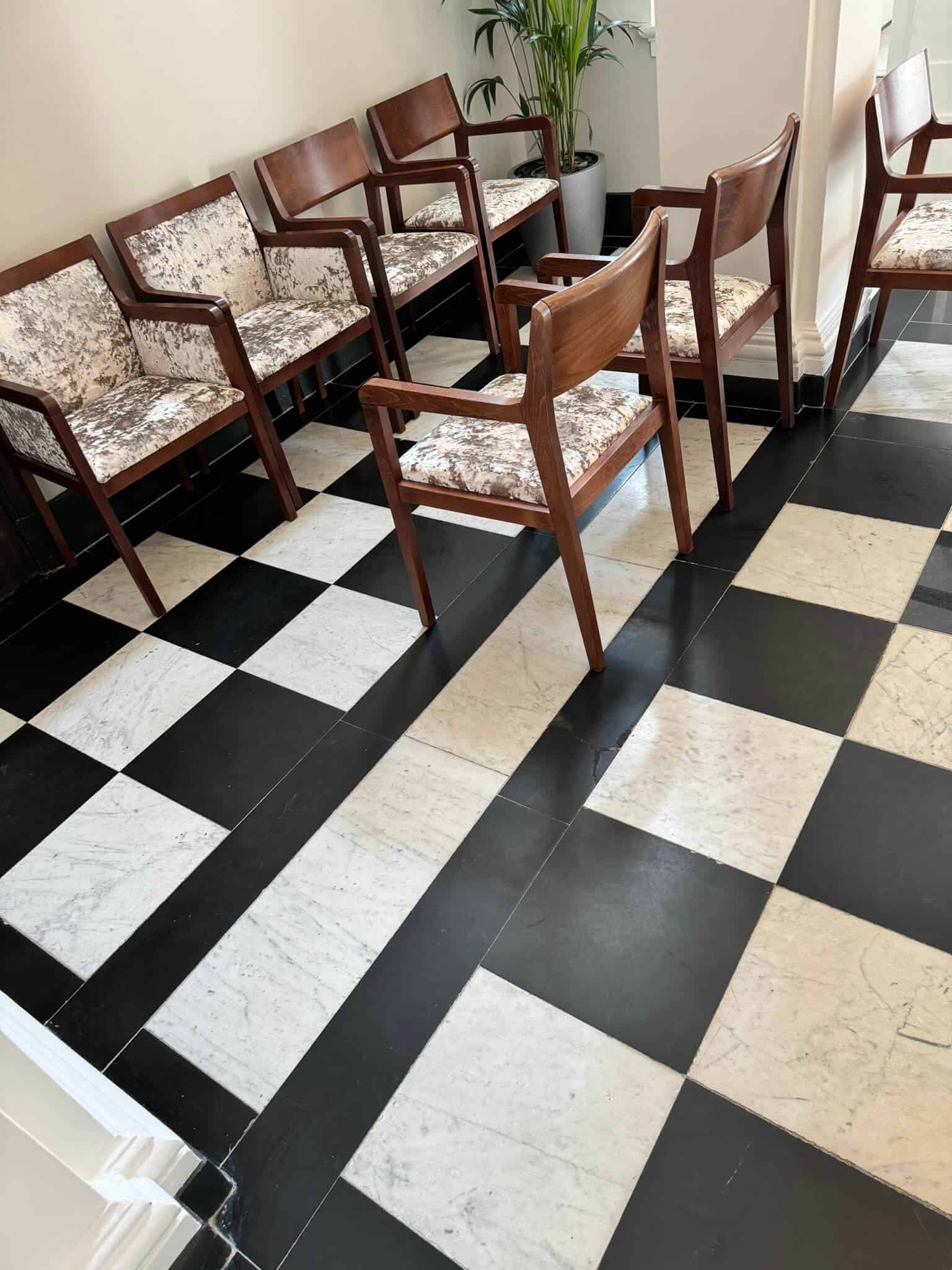
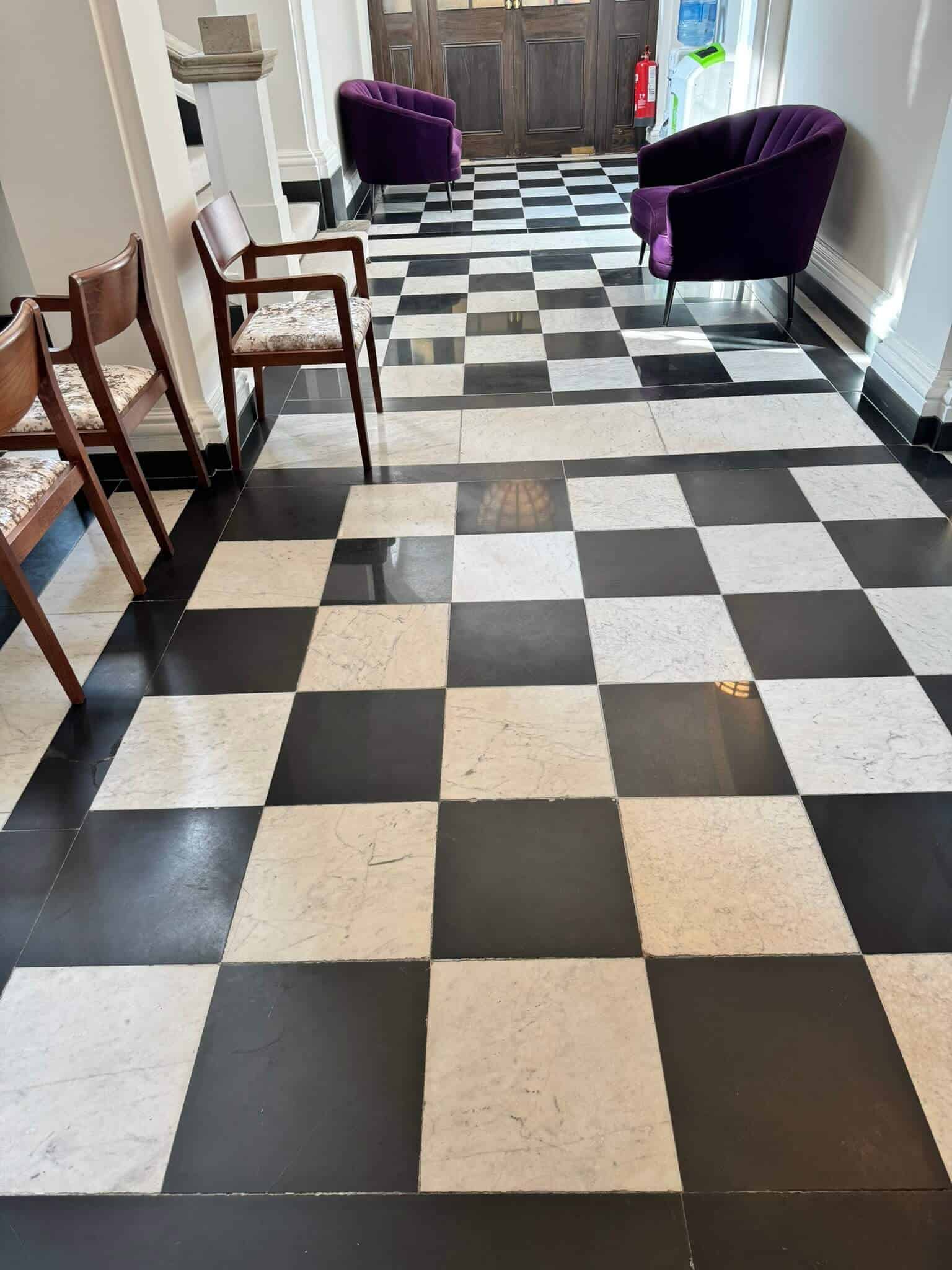
Case Study: Marble and Granite Floor Restoration on King’s Road, London
Project Overview:
The restoration project was undertaken on a prestigious property located on King’s Road, London, featuring a floor composed of white Carrara marble and Black Zimbabwe granite. This combination presents unique challenges due to the contrasting properties of the materials: marble’s softness versus granite’s hardness.
Objectives:
- Surface Restoration: To remove scratches and repair previous restoration attempts.
- Enhance Aesthetics: Restore the natural shine and gloss of both marble and granite.
- Protection: Apply a suitable sealer to prevent future staining and damage.
Methodology:
- Initial Assessment: The floor was inspected to identify the extent of damage, focusing on scratches, previous repair attempts, and overall wear.
- Grinding and Polishing: Due to the differing hardness of marble and granite, our team used a specialized approach:
- Marble: Ground down gently using progressively finer grits of diamond abrasives to remove scratches without excessive material loss.
- Granite: Required more aggressive grinding to address deep scratches and restore its surface, using appropriate diamond tools.
- Natural Polishing: The floor was polished using water and synthetic diamond compounds. This method avoids chemicals that could react differently with marble and granite, potentially causing discoloration or structural issues.
- Sealing: An impregnator sealer was applied to both surfaces. This sealer penetrates the stone, offering protection against light stains while maintaining the natural look and breathability of the stone.
- Final Shine: The final polishing was done with water and synthetic diamonds to achieve a natural shine, avoiding any chemical-based products that might give the stone an unnatural, plastic-like appearance.
Challenges:
Material Compatibility: Finding a restoration process that suits both marble and granite without compromising either material’s integrity.
Historical Value: Ensuring that the restoration respects the historical and aesthetic value of the property.
Project Duration and Cost:
- Duration: The project was completed within 3 days, showcasing the efficiency of our specialized team.
- Cost: The total cost for this high-end restoration was £4,500, reflecting the complexity of the materials involved and the precision required in the restoration process.
Conclusion:
This case study demonstrates the successful restoration of a dual-material floor in a high-profile location. By employing advanced techniques tailored to the unique properties of marble and granite, we not only repaired the damage but also enhanced the floor’s appearance, ensuring it continues to serve as a centerpiece of the property’s interior. This project underscores the importance of using natural and compatible materials in stone restoration to preserve the authenticity and longevity of such surfaces.
Pictures





Disclaimer: Please treat the above price as a guidance price
- The estimate/ quotation prices can vary and will be fix it based on existing stone conditions.
- For the final prices we’ll request a site visit to have a close inspection on the stone. Our technicians will establish quotation prices based on our internal guidance.
We currently accept Cryptocurrency Payments

