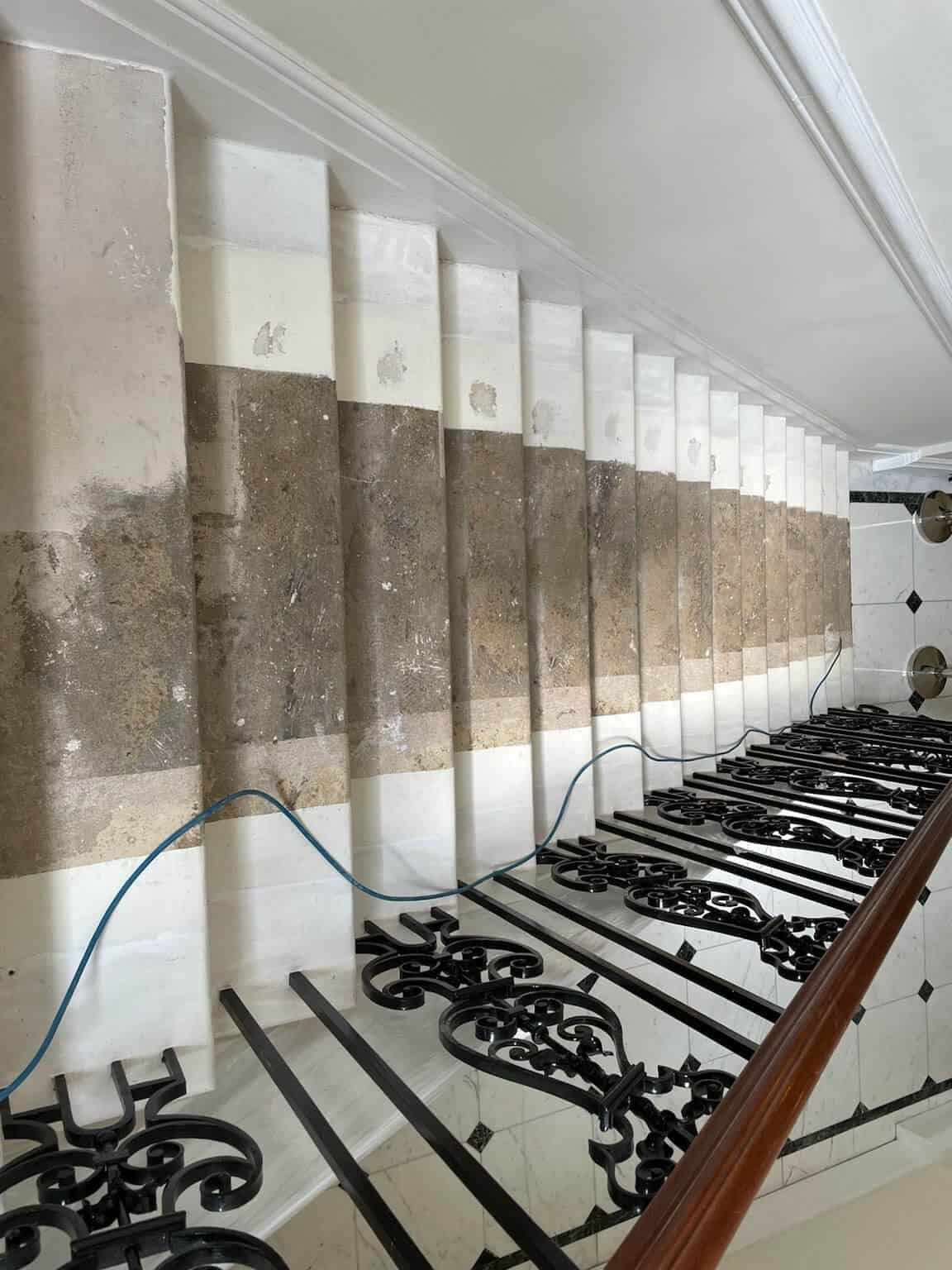
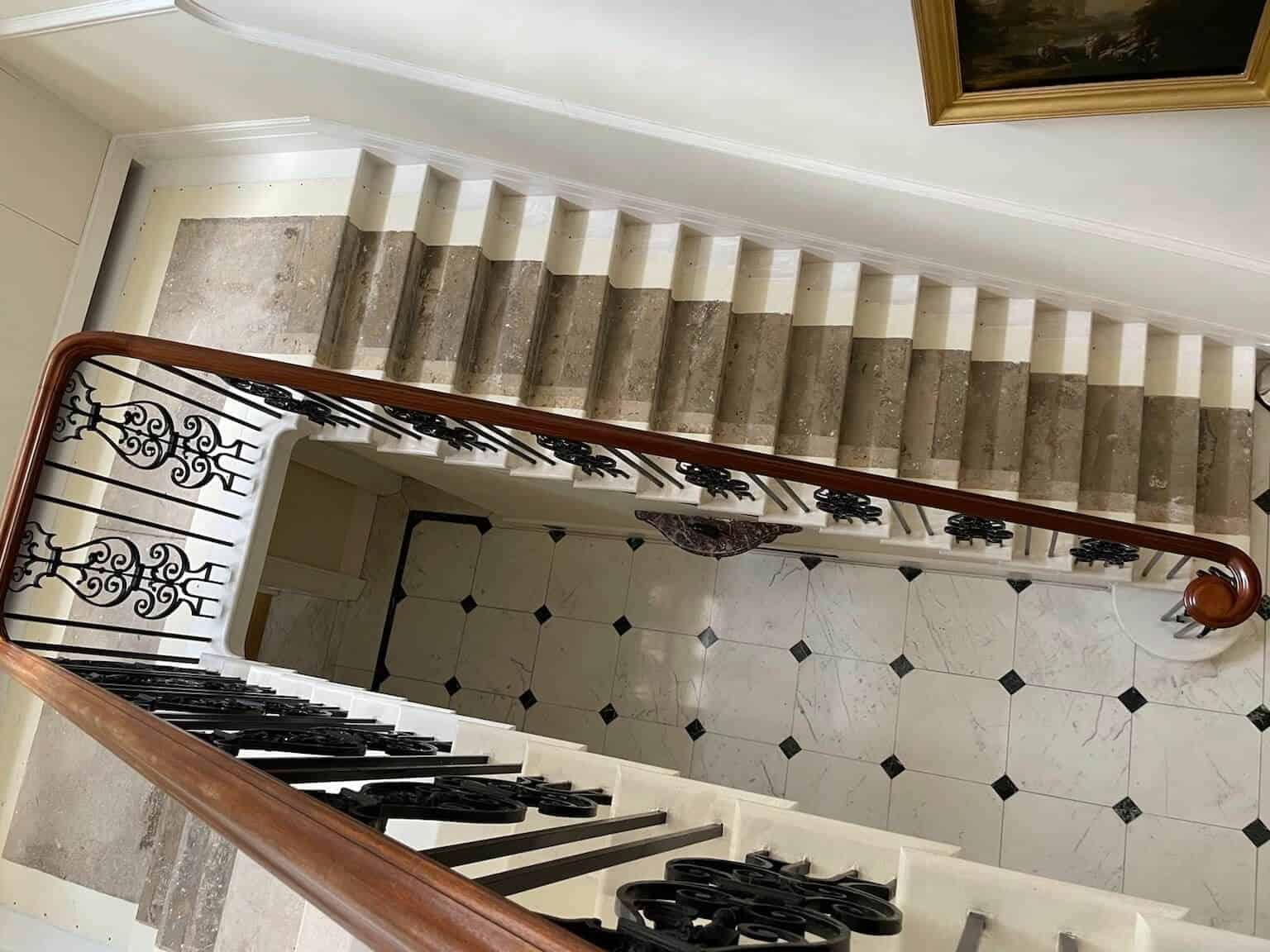
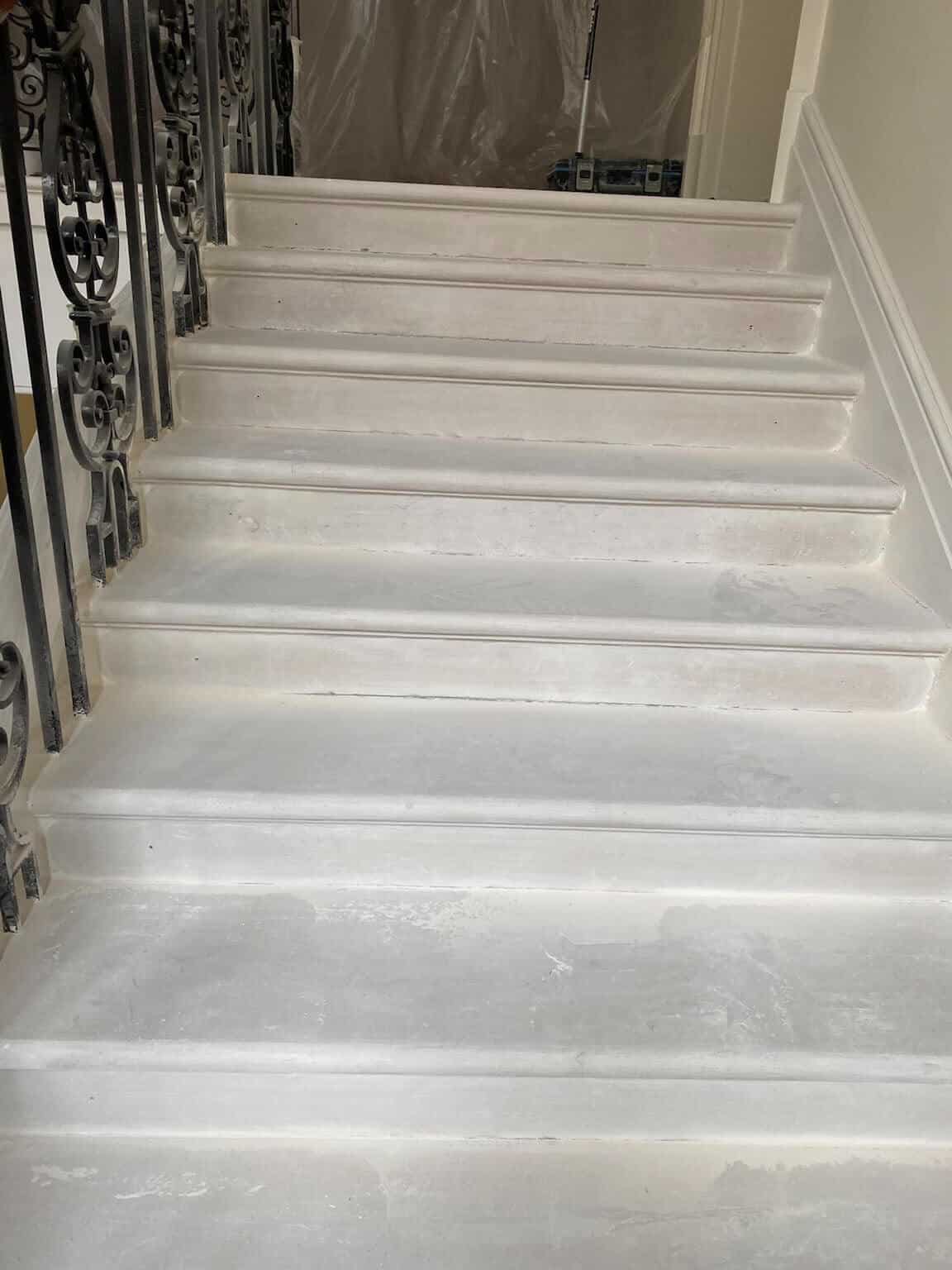
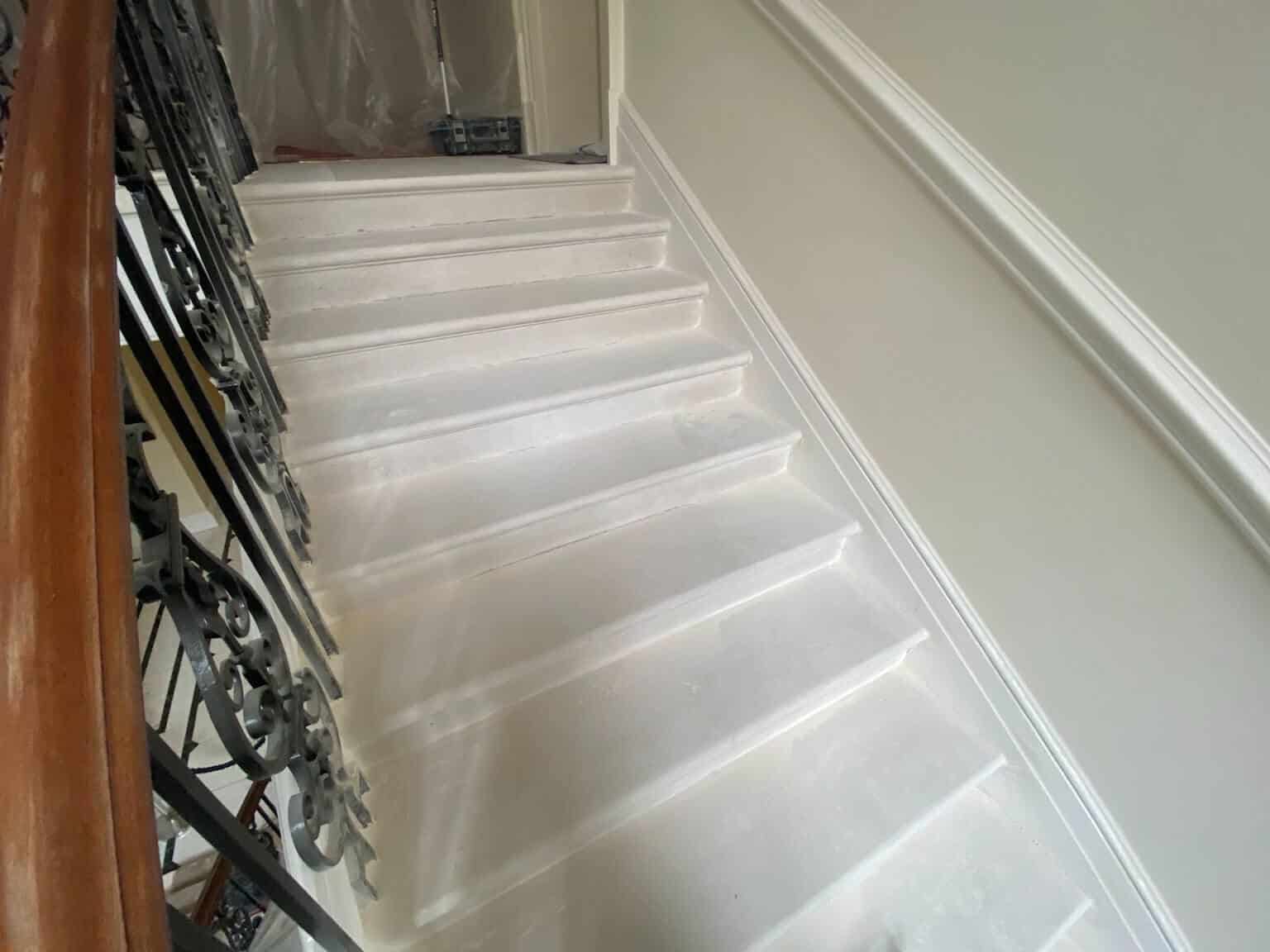
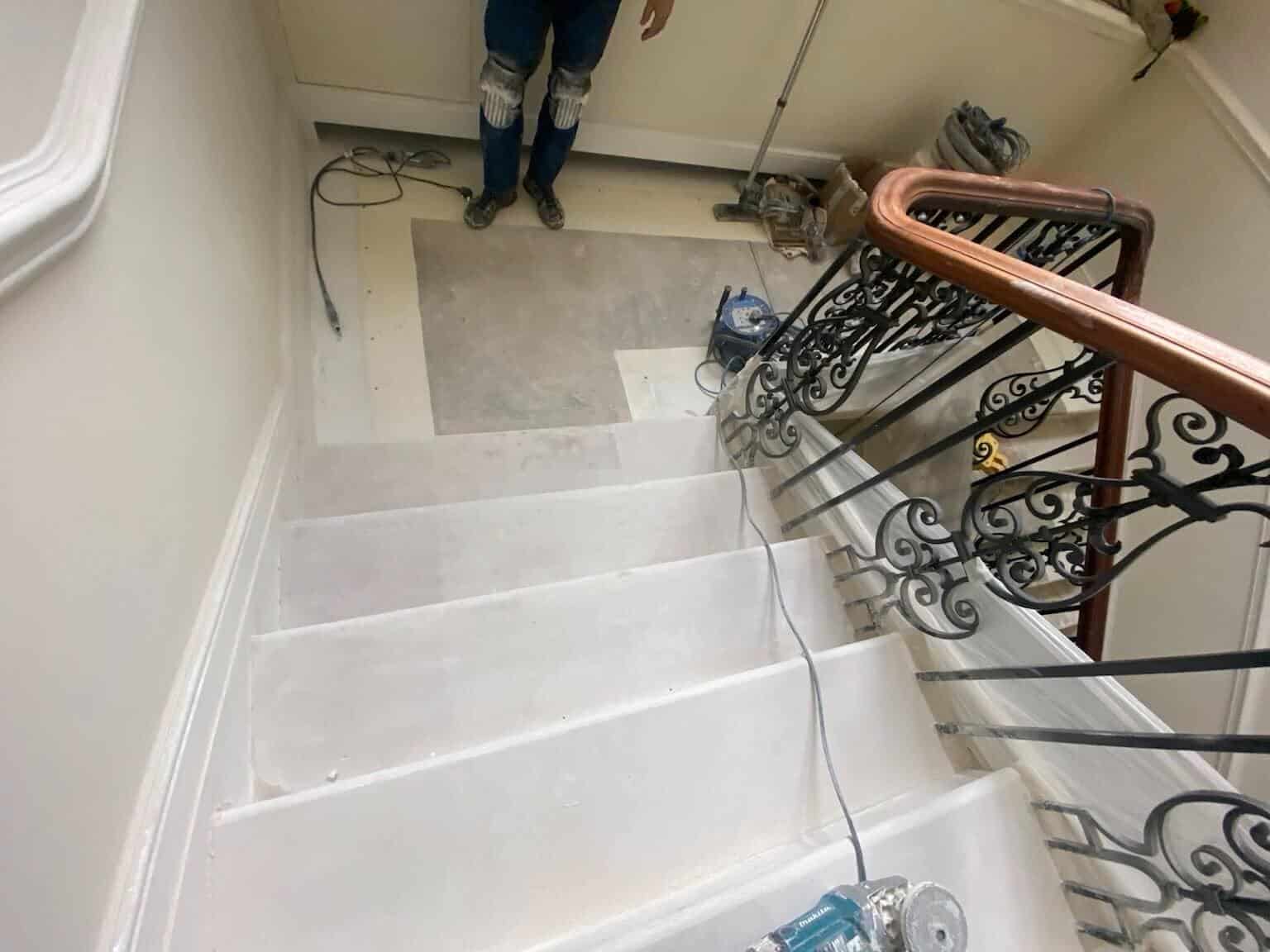
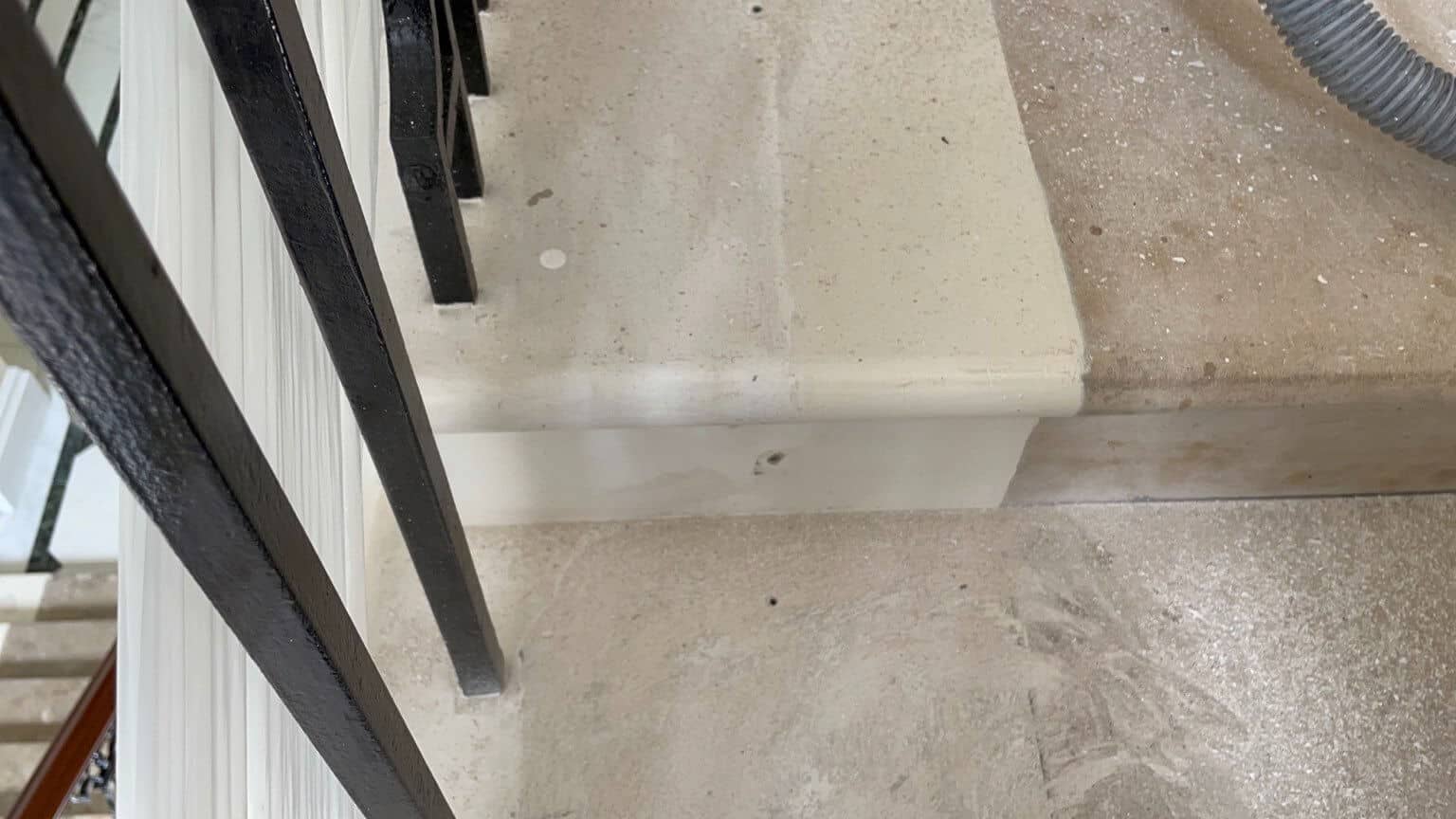
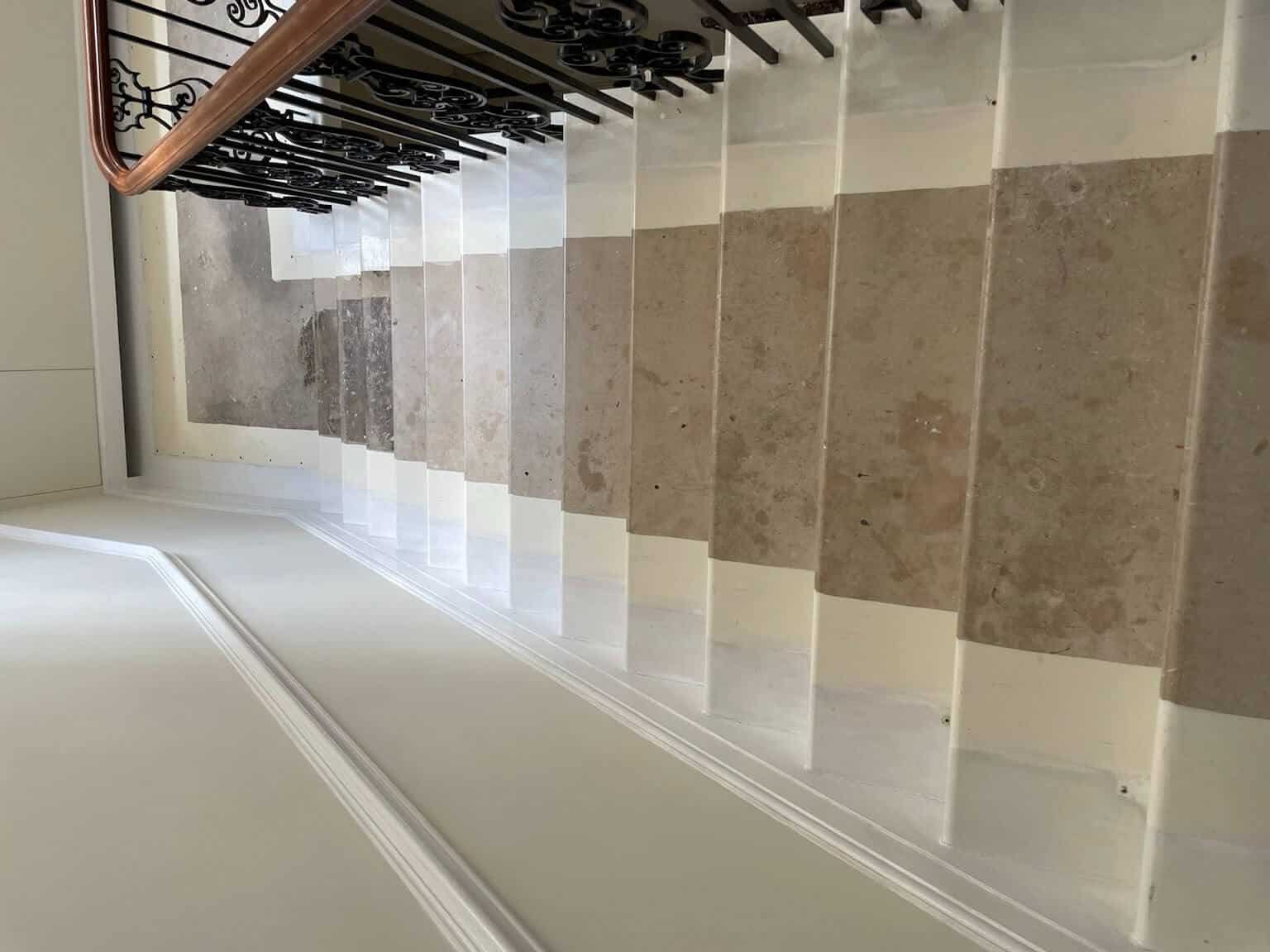
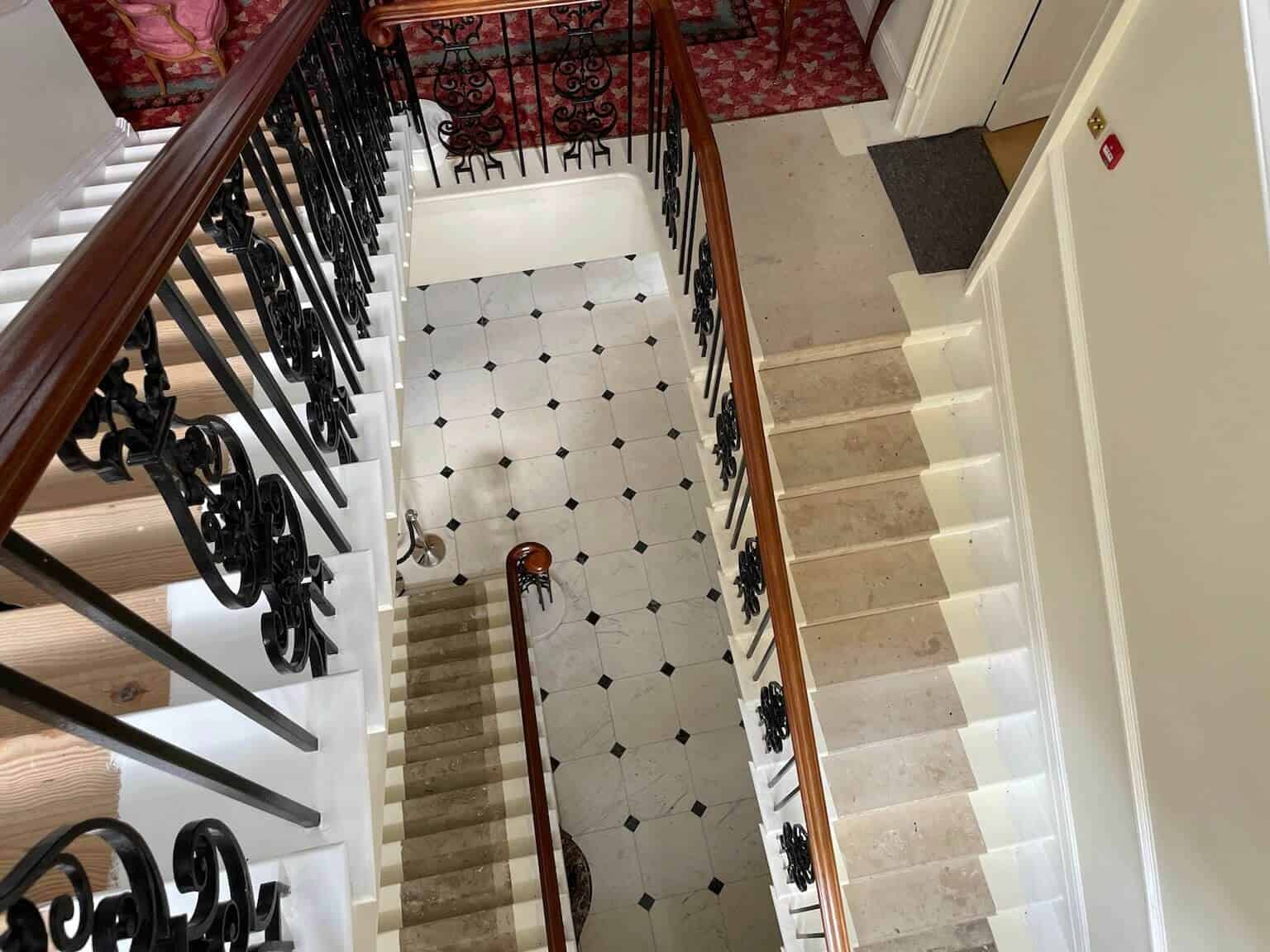
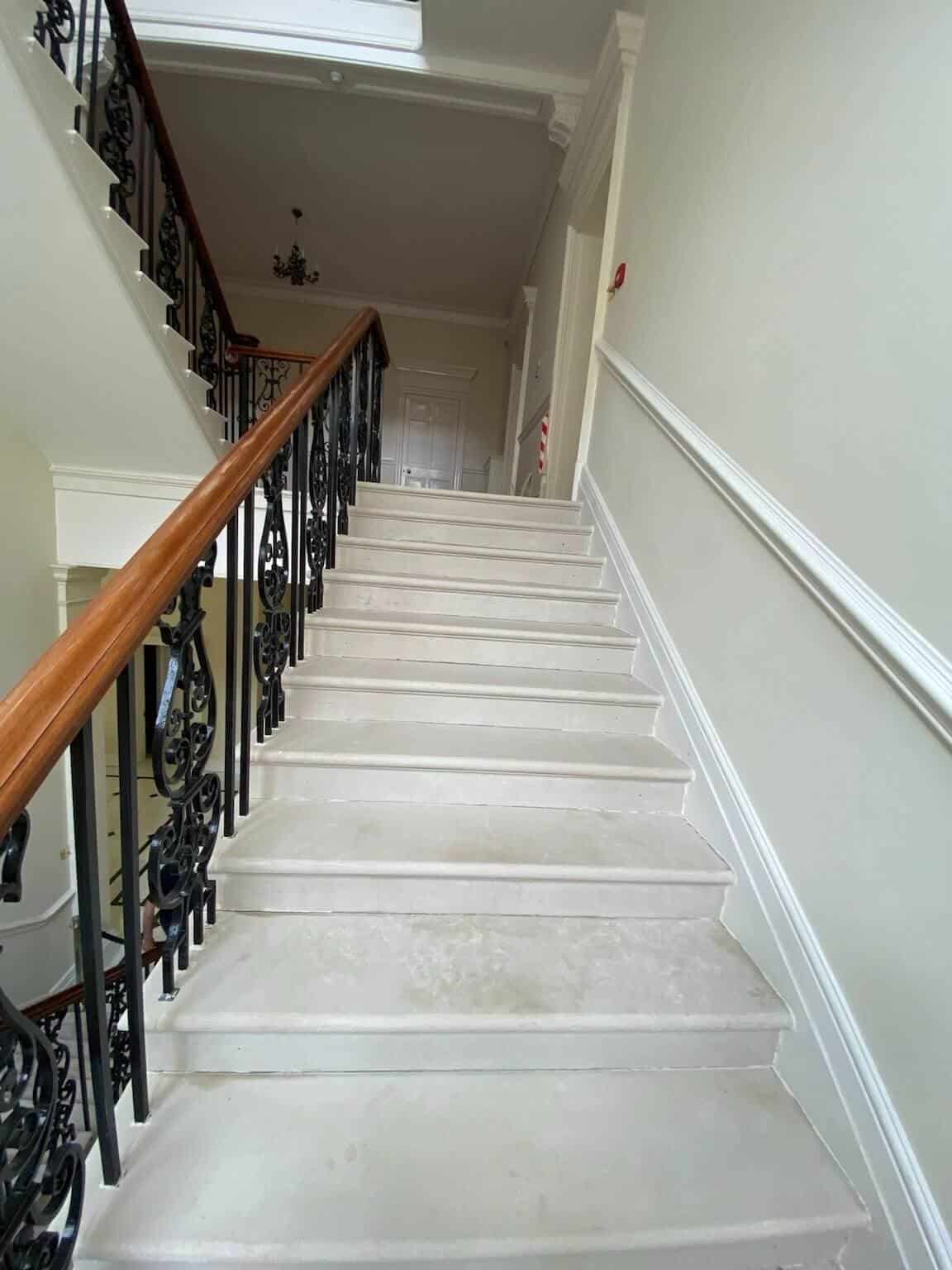
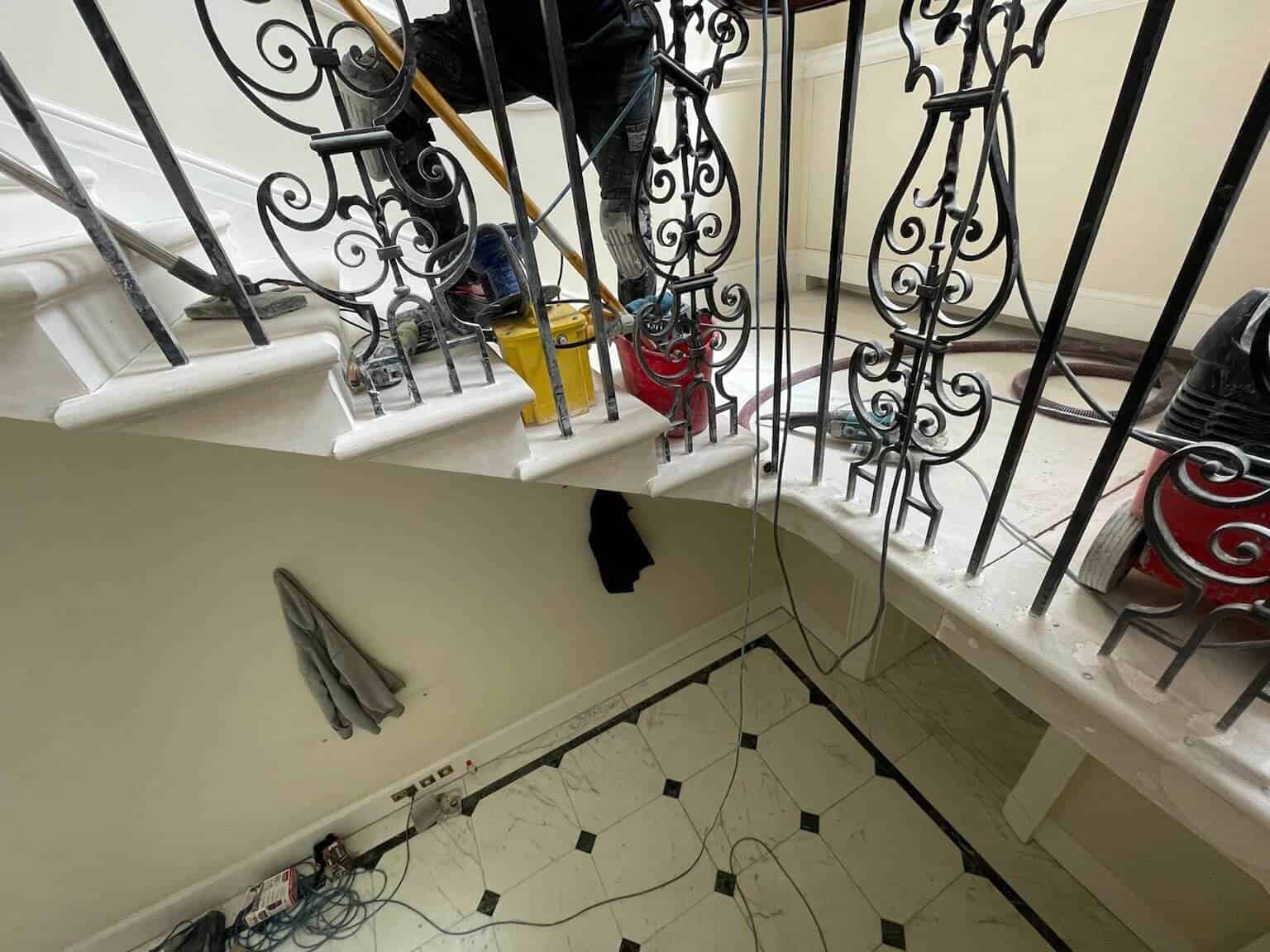
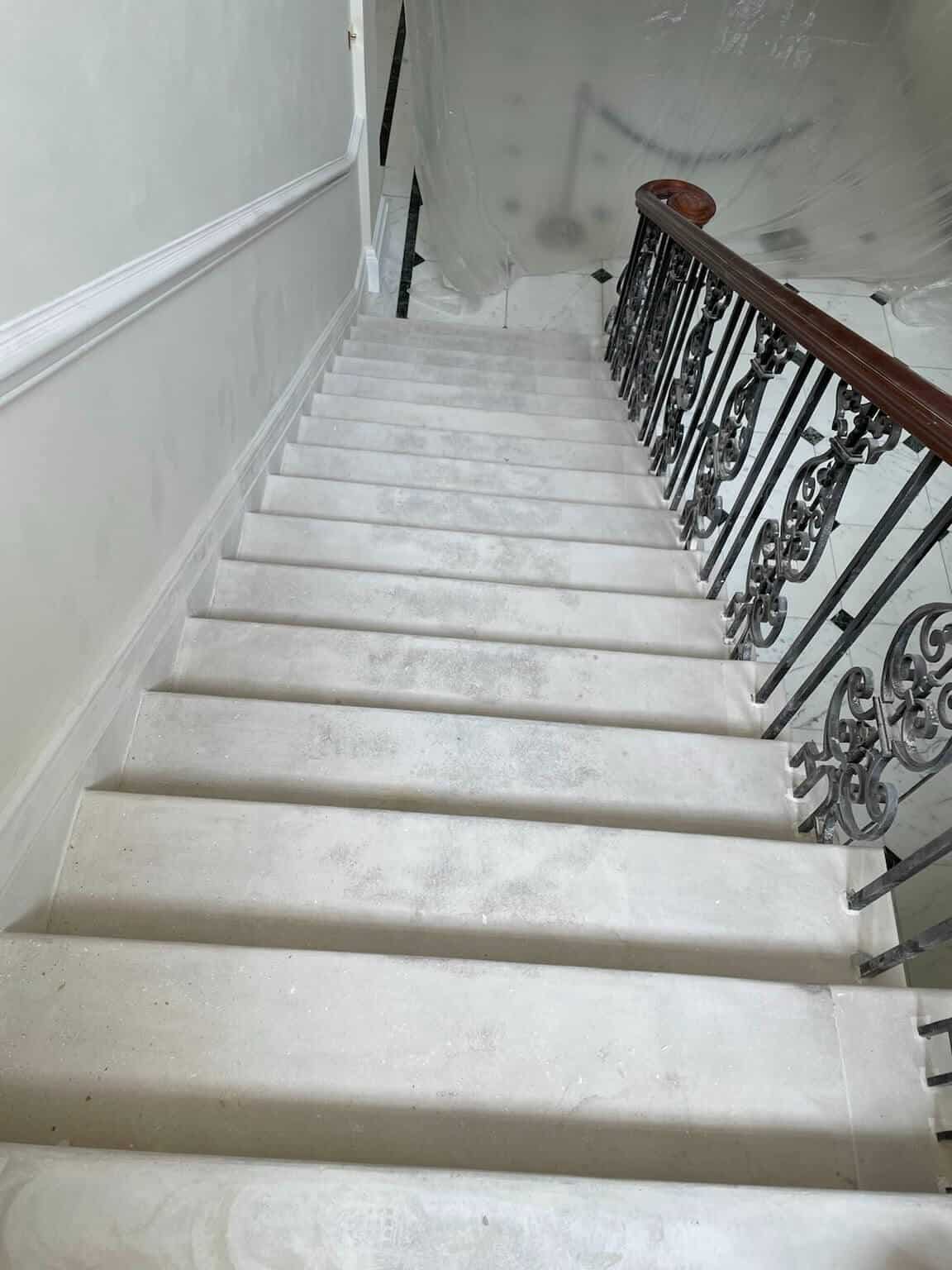
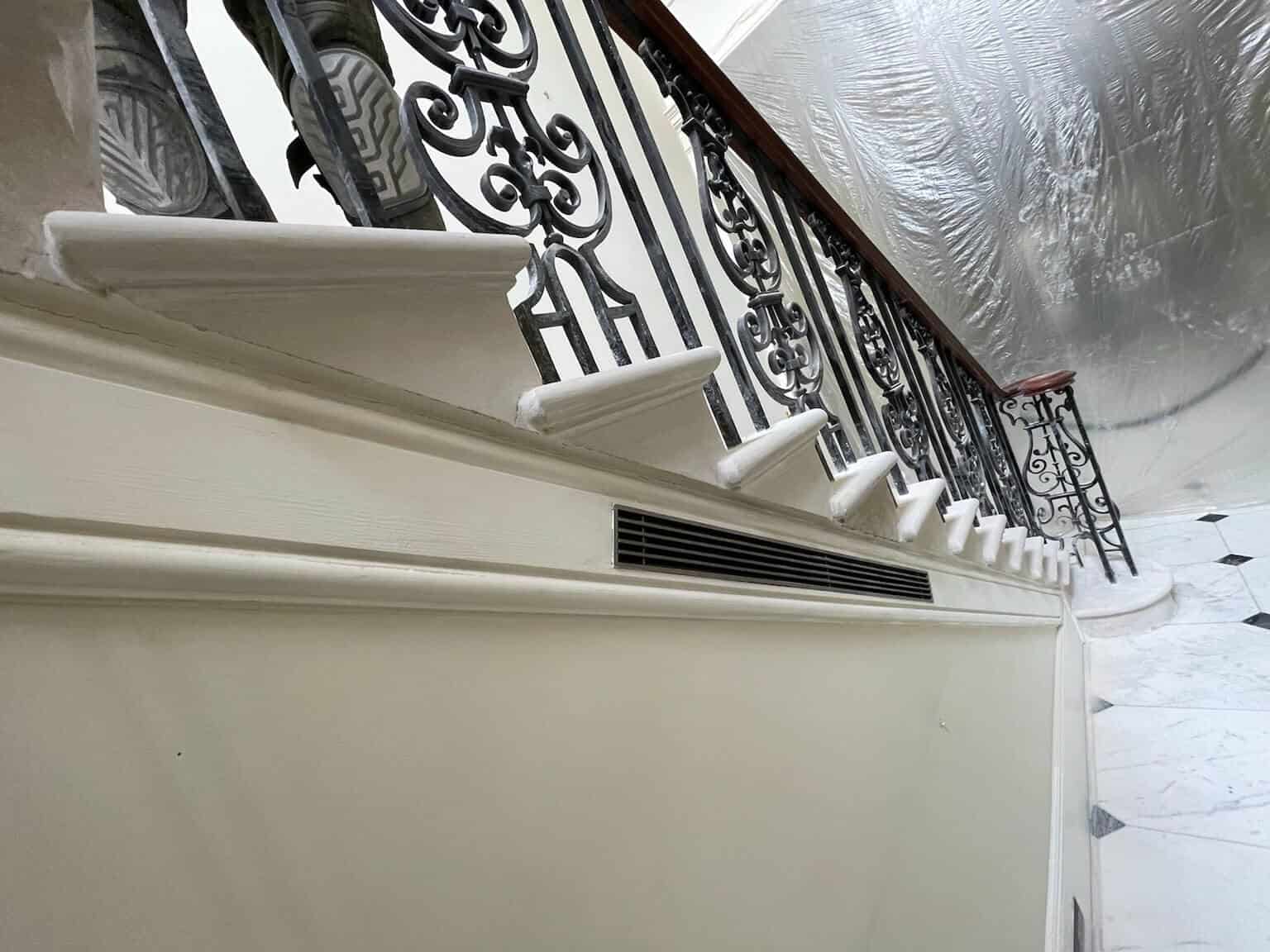
This London project involved restoring a sandstone and Portland stone staircase, including its turning landing, in a Grade II listed building. The photographs show the staircase before, during and after the work.
The restoration challenge
Several layers of paint covered the stone, hiding its surface and details. The team removed the coatings, refined the exposed steps and selected a finish suitable for the staircase. Work in a listed building calls for care around original features and the requirements of the property.
Stone type and existing condition determine the cleaning and finishing approach. The next sections describe the paint removal, surface work and sealing used on this staircase.


Paint removal and surface work
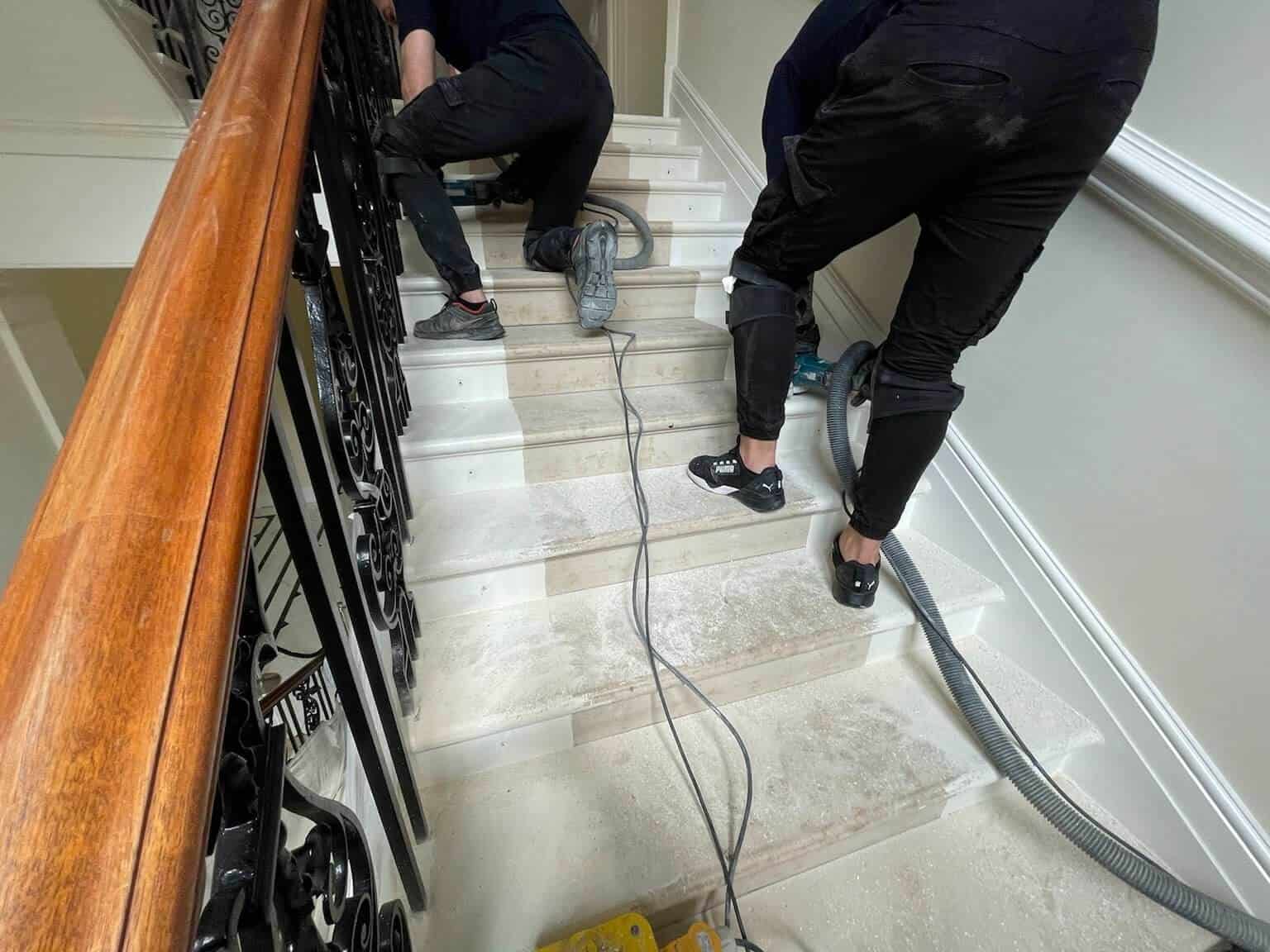
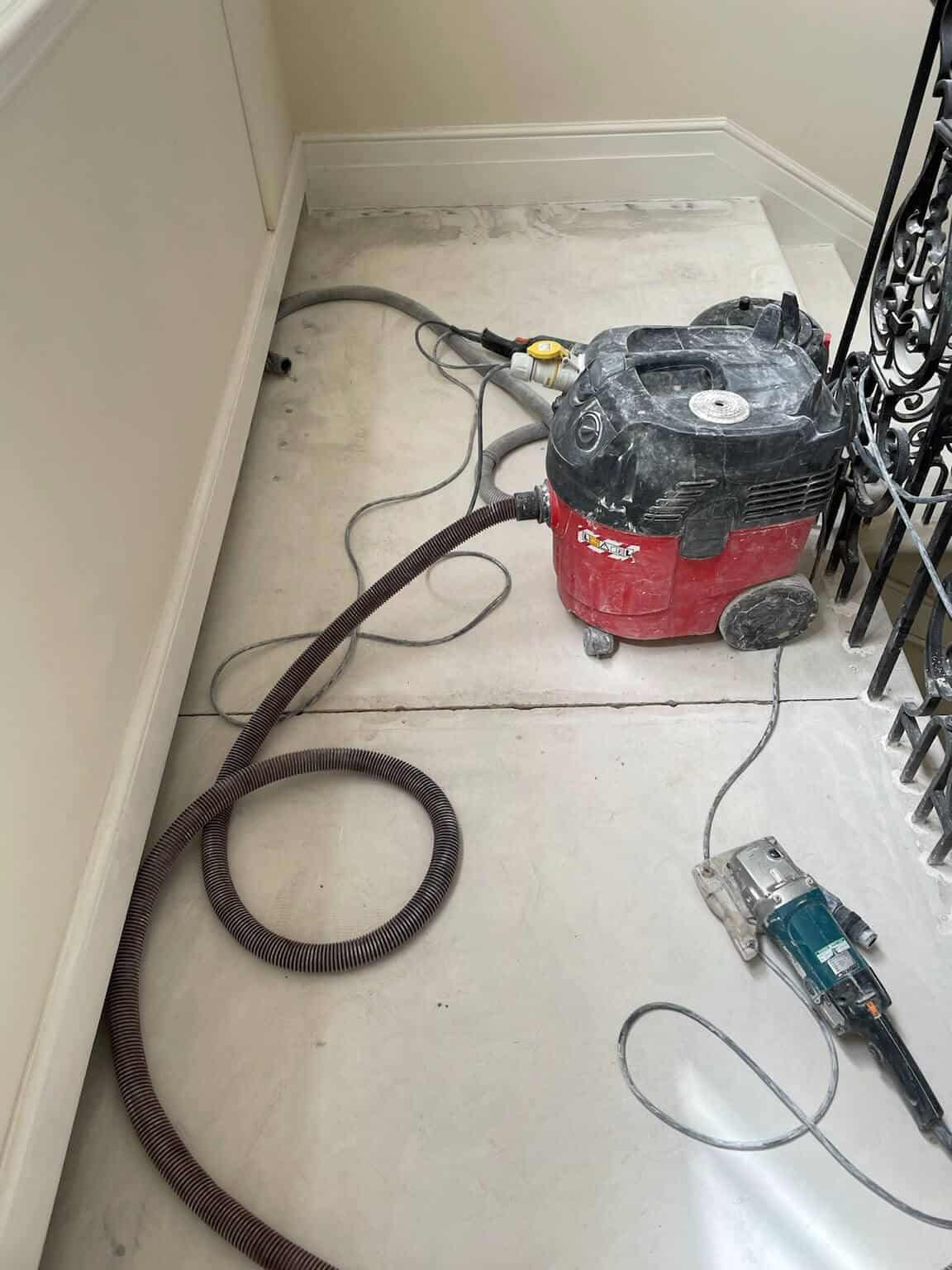
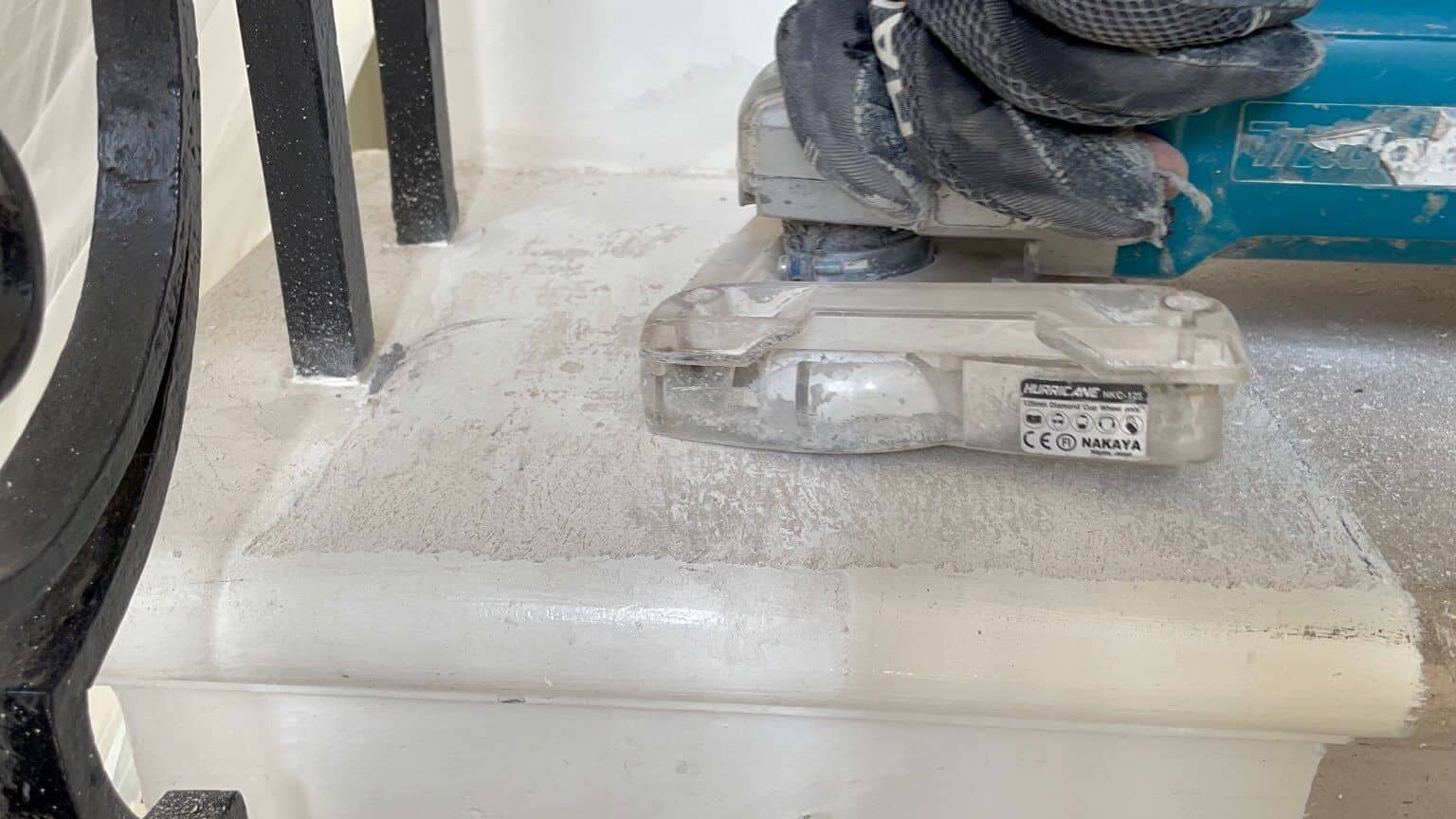
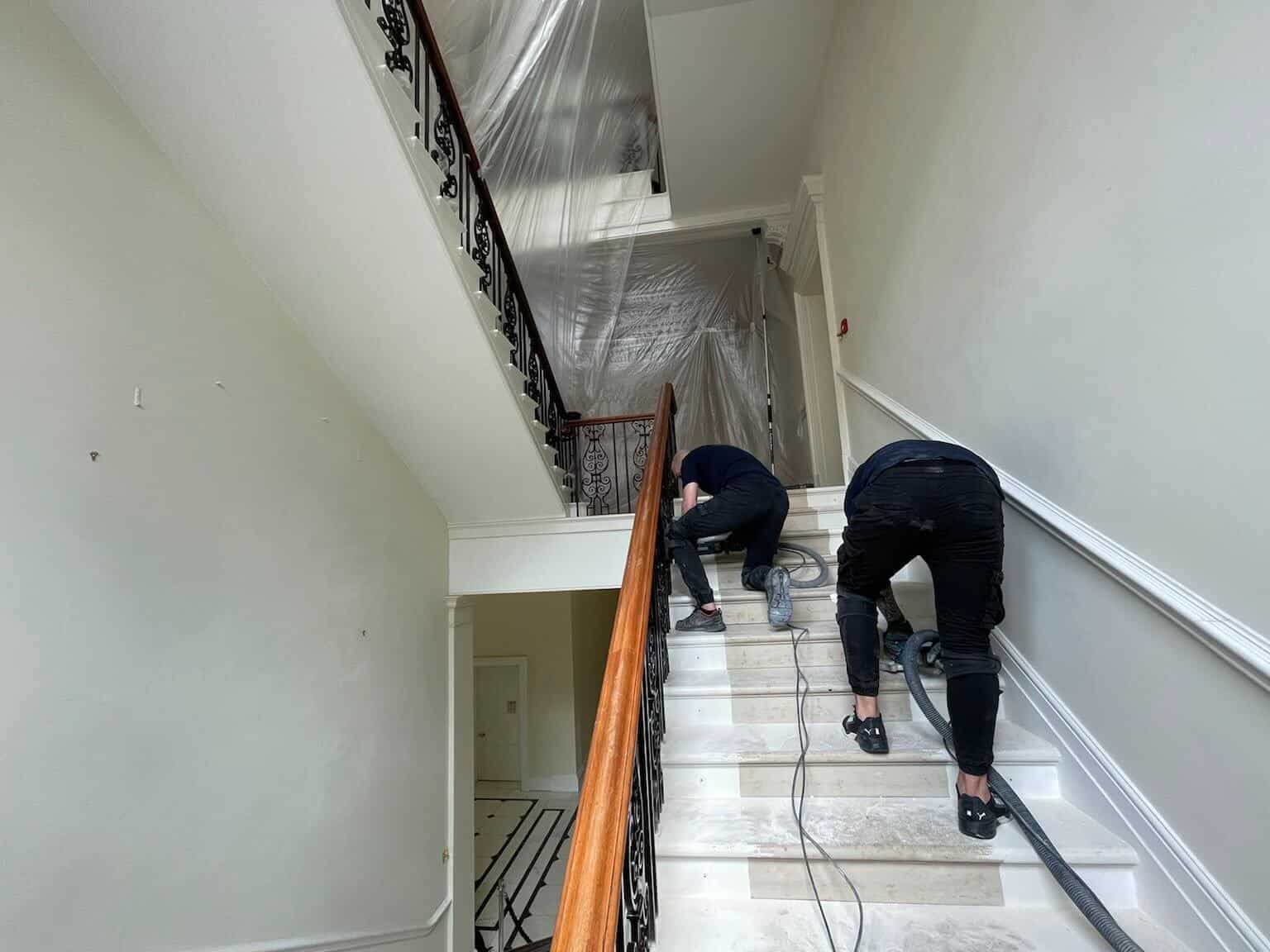
The team removed roughly three to four layers of paint from the staircase and refined the exposed stone by grinding and polishing. Much of this work was carried out dry, with dust-collection equipment used during the process.
Mechanical abrasion can produce hazardous dust, so the method and dust controls need to suit the stone and working area. The photographs show the team and equipment on this staircase project.

Finishing and protecting the steps
After paint removal and surface refinement, the team gave the staircase a matte finish. The steps were then treated with a water-based impregnating sealer as part of the restoration.
The finish of a staircase should be chosen for its material, use and any site-specific slip-resistance requirements. A visual finish or sealer does not, by itself, demonstrate that a particular slip standard has been met.
See the project photographs below, or contact Stone Rescue about restoring a stone staircase.
Pictures with Sandstone/Portland stone staircase restoration process