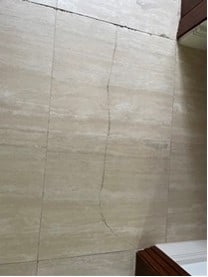
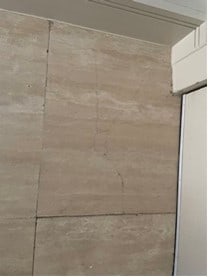
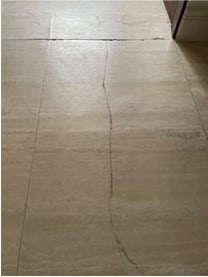
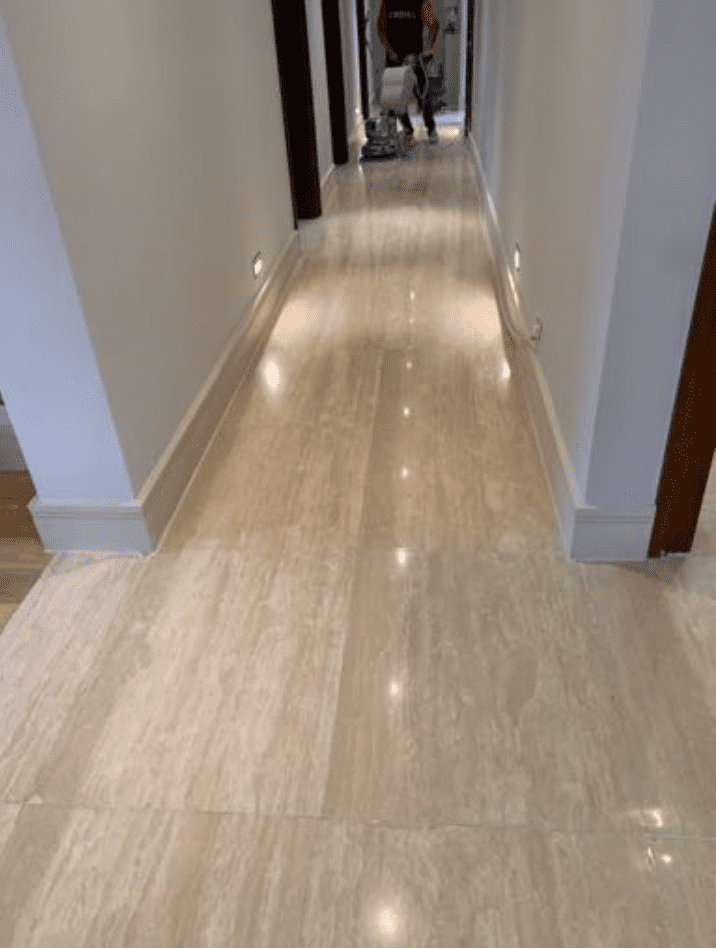
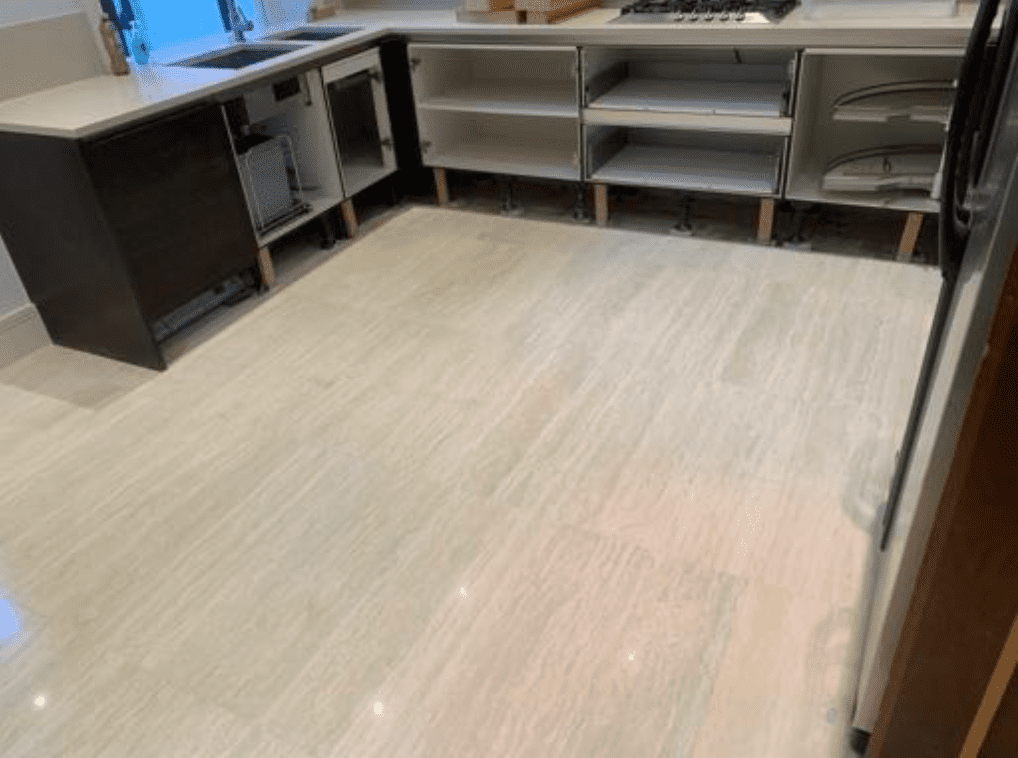
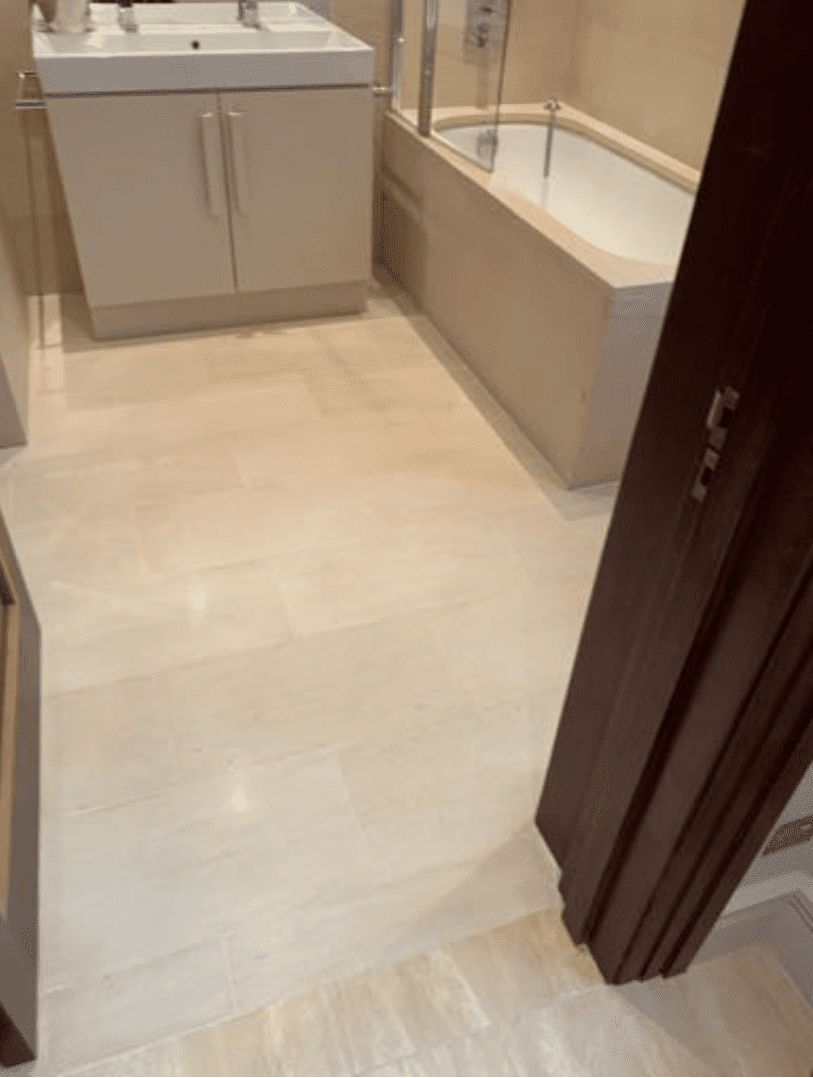
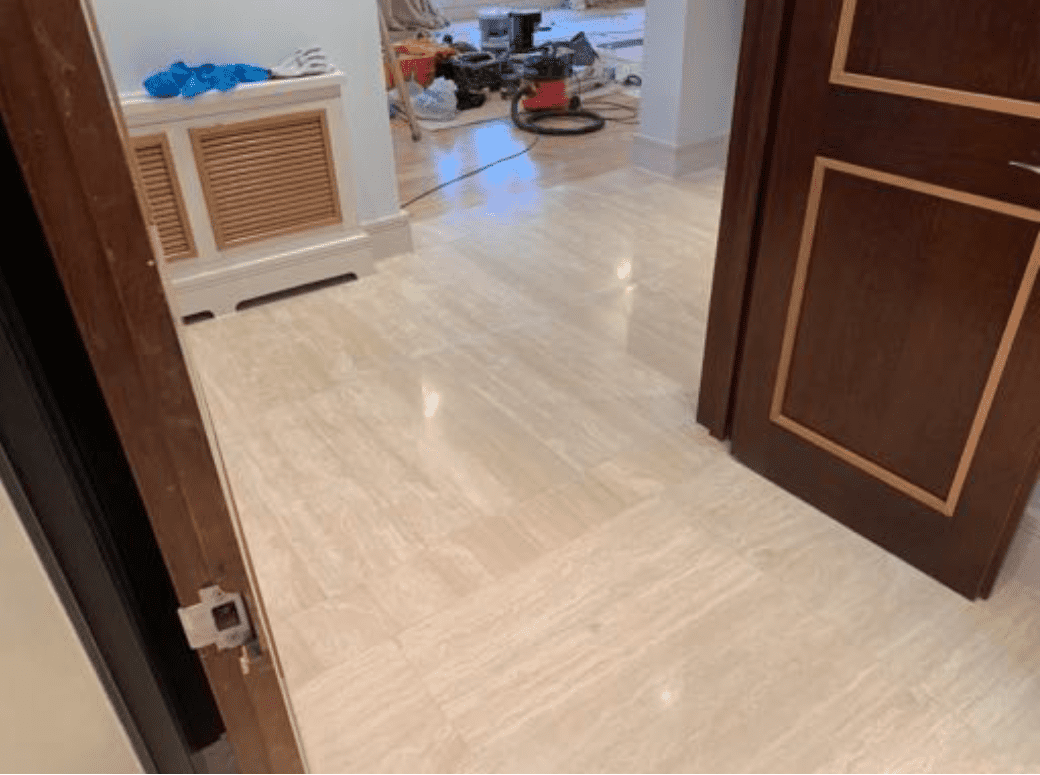
This travertine floor restoration took place in a London property on Campden Hill Road. The work covered the corridor, kitchen, W/C and utility room, where tiles and grout needed attention before polishing and sealing.
Travertine is a natural stone with variation in colour and texture. Dirt in grout lines, chipped tiles and a dull surface can make an existing floor look worn. An assessment helps determine which repairs and finishing steps are suitable for the particular installation.

Work carried out on the London floor
Stone Rescue repaired around 25 damaged tiles and addressed missing grout across the corridor, kitchen, W/C and utility room. The team then refined the surface, polished it and applied a water-based sealer.
- Carried out approximately 25 tile repairs using colour-matched polyester repair material.
- Cleaned the grout, filled missing sections and lightly ground the floor.
- Diamond-polished the surface to grit 400, followed by powder polishing.
- Washed and buffed the stone, then applied a water-based sealer.
- Inspected the floor and completed any final snagging needed.

For day-to-day care, remove loose grit from a restored travertine floor and use a cleaner suitable for natural stone. The right routine depends on the floor finish and sealant.
Our Campden Hill Road project included tile repairs, missing-grout repairs, polishing and sealing across the corridor, kitchen, W/C and utility room. If your floor has chipped tiles, worn grout or a dull finish, our team can assess the work needed.
For advice on travertine floor restoration in London, contact Stone Rescue, call 020 3100 2672 or email contact@stonerescue.co.uk.
Pictures before and after with the Travertine floor