Location:
North London area
Black granite full restoration
Black granite restoration in North London
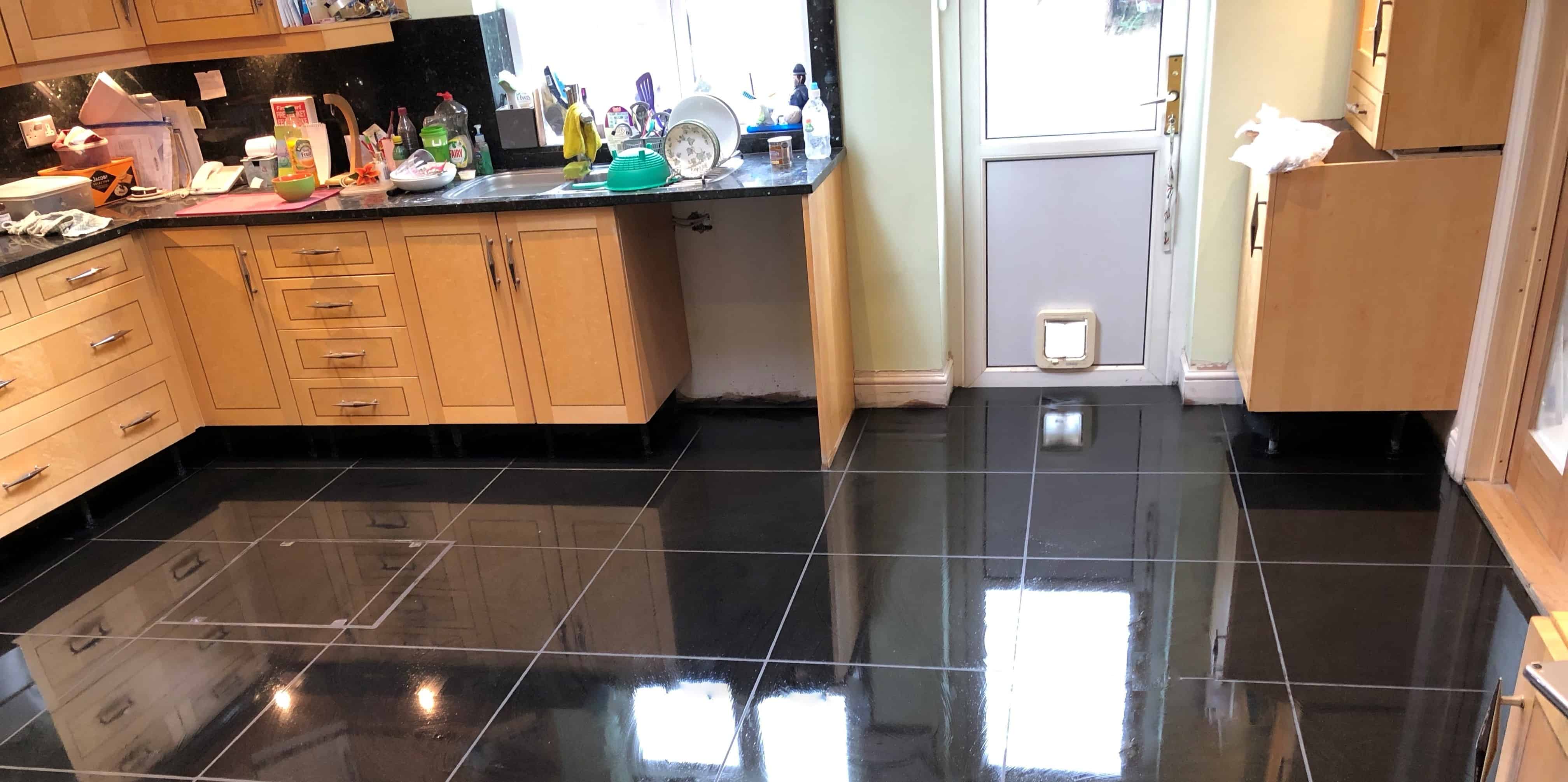
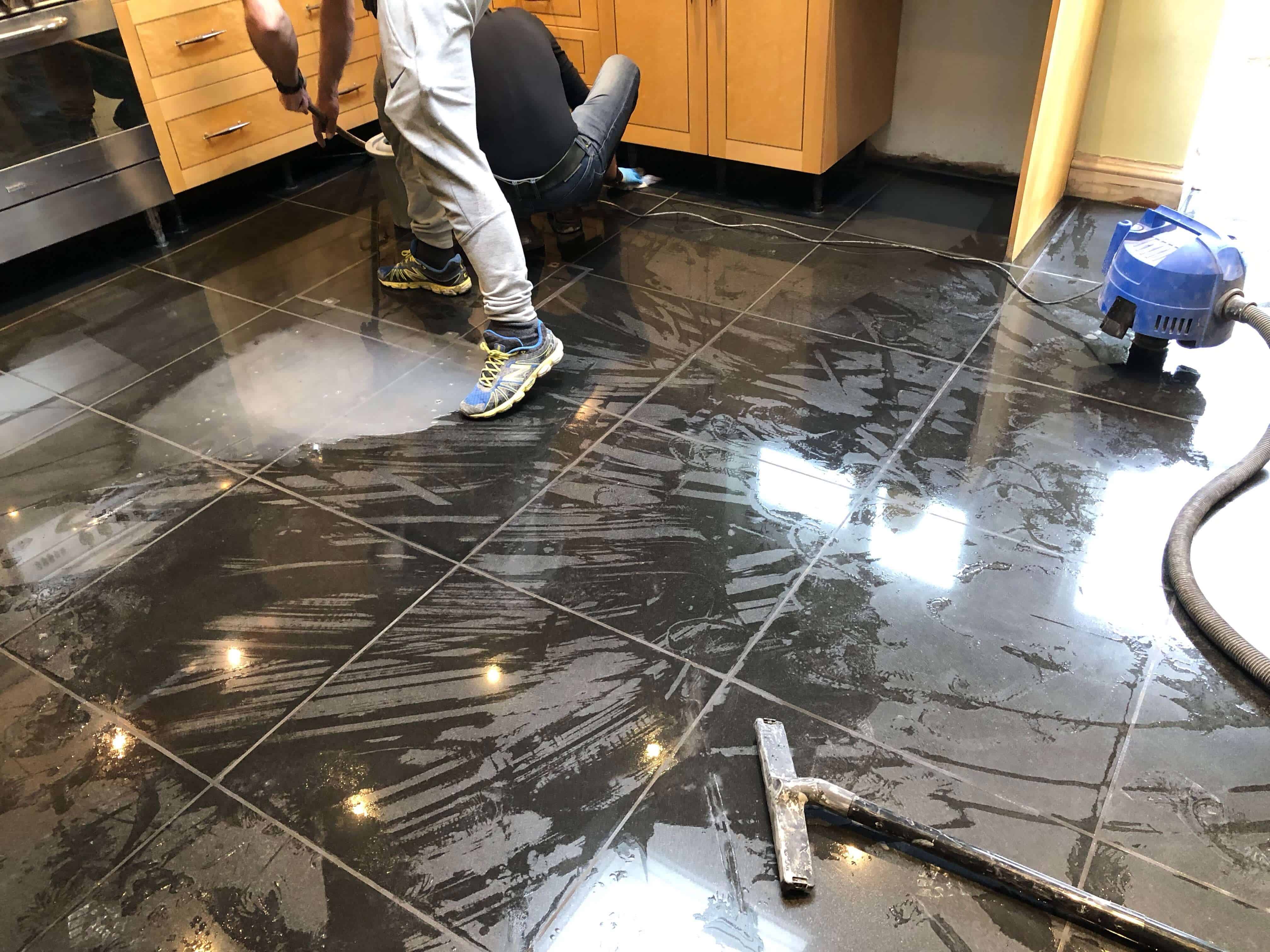
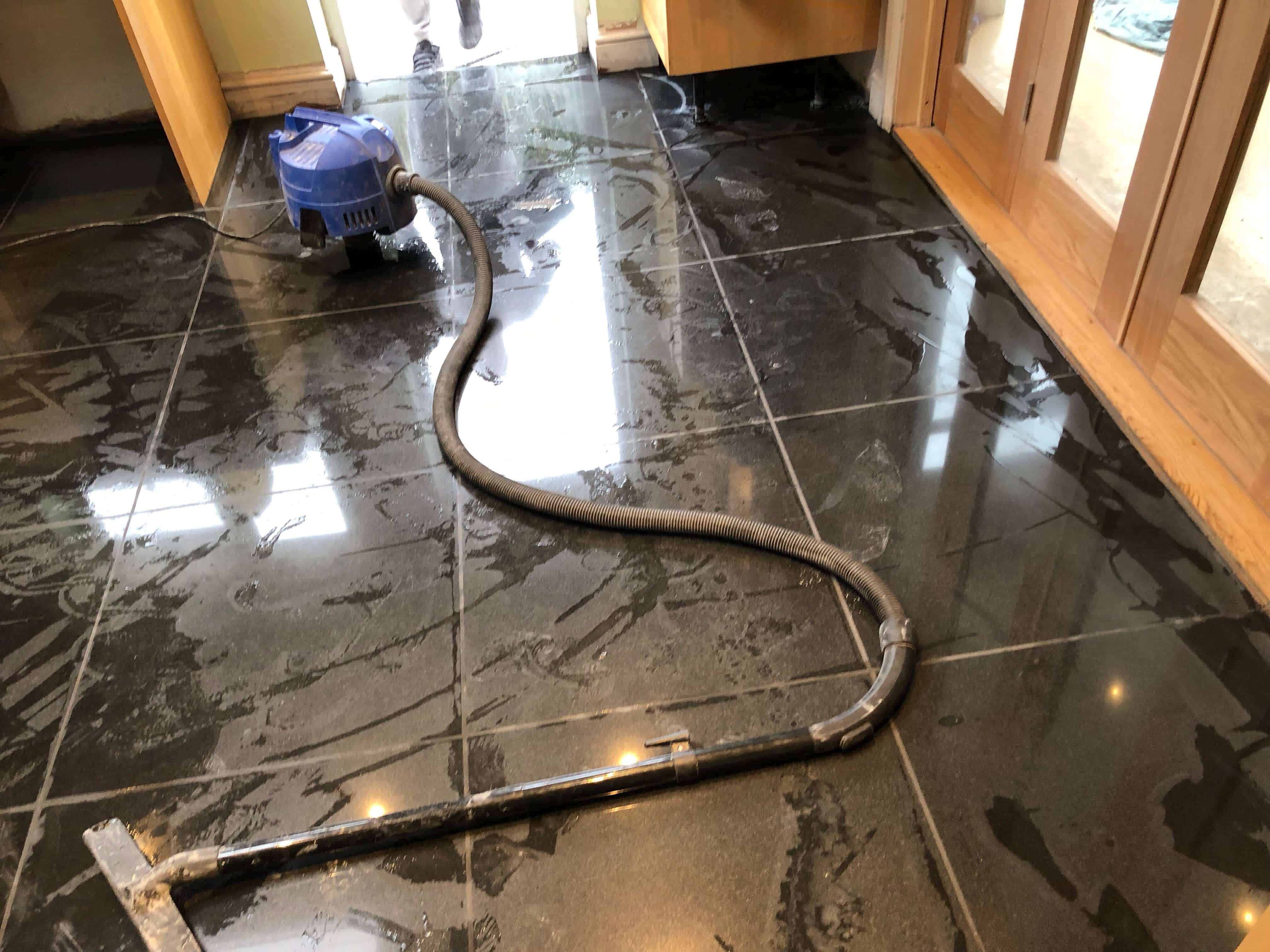
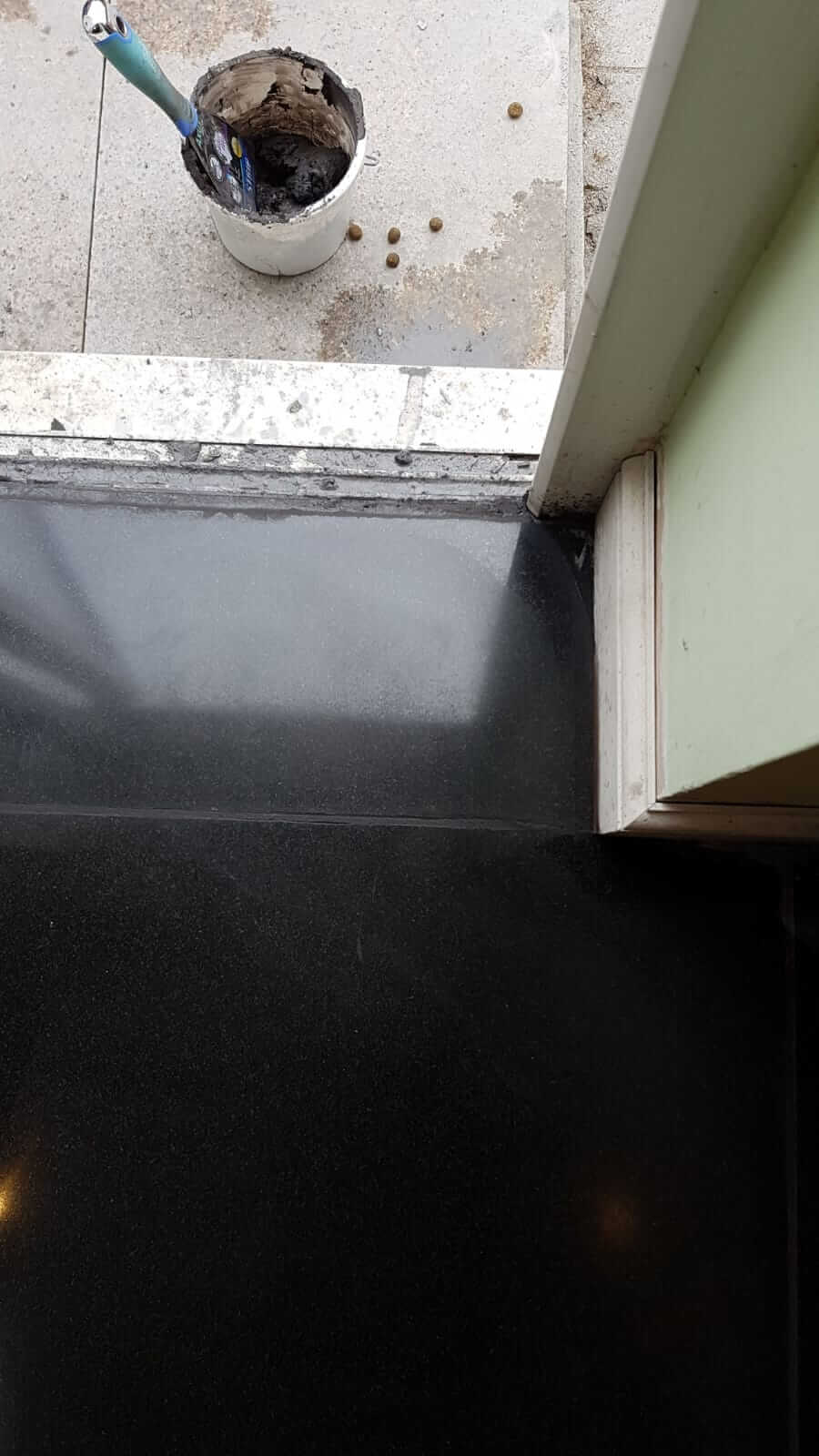
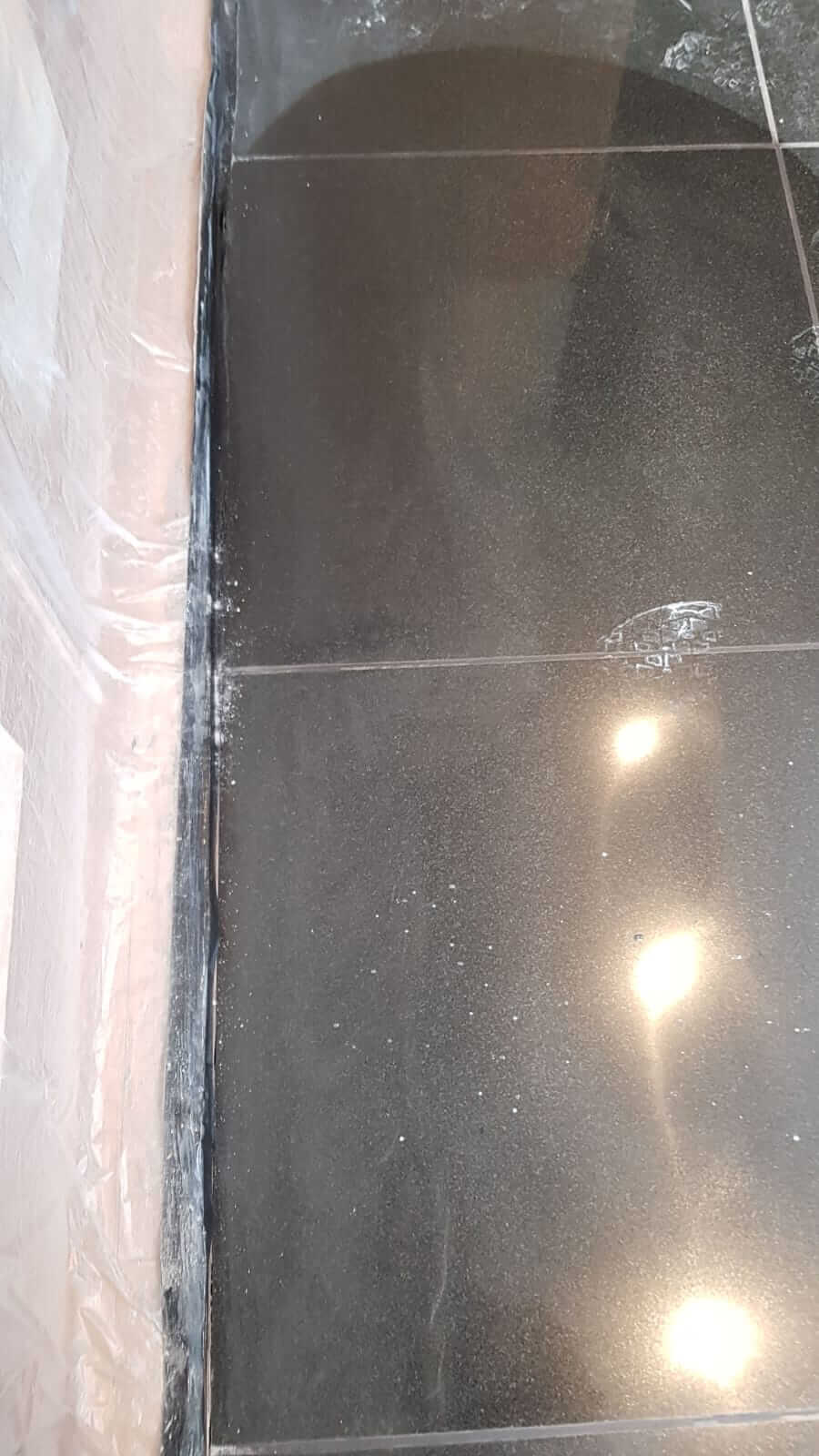
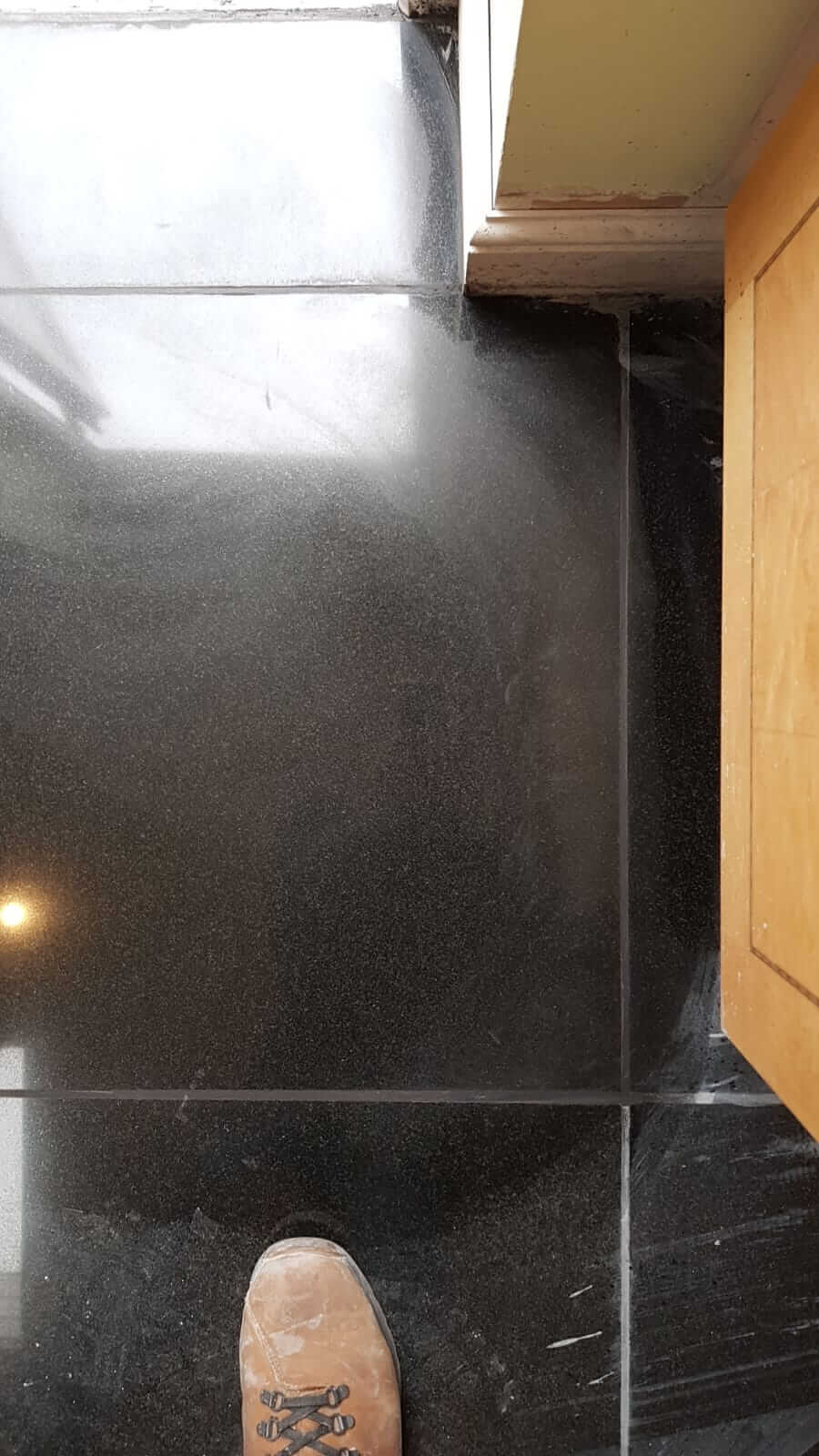
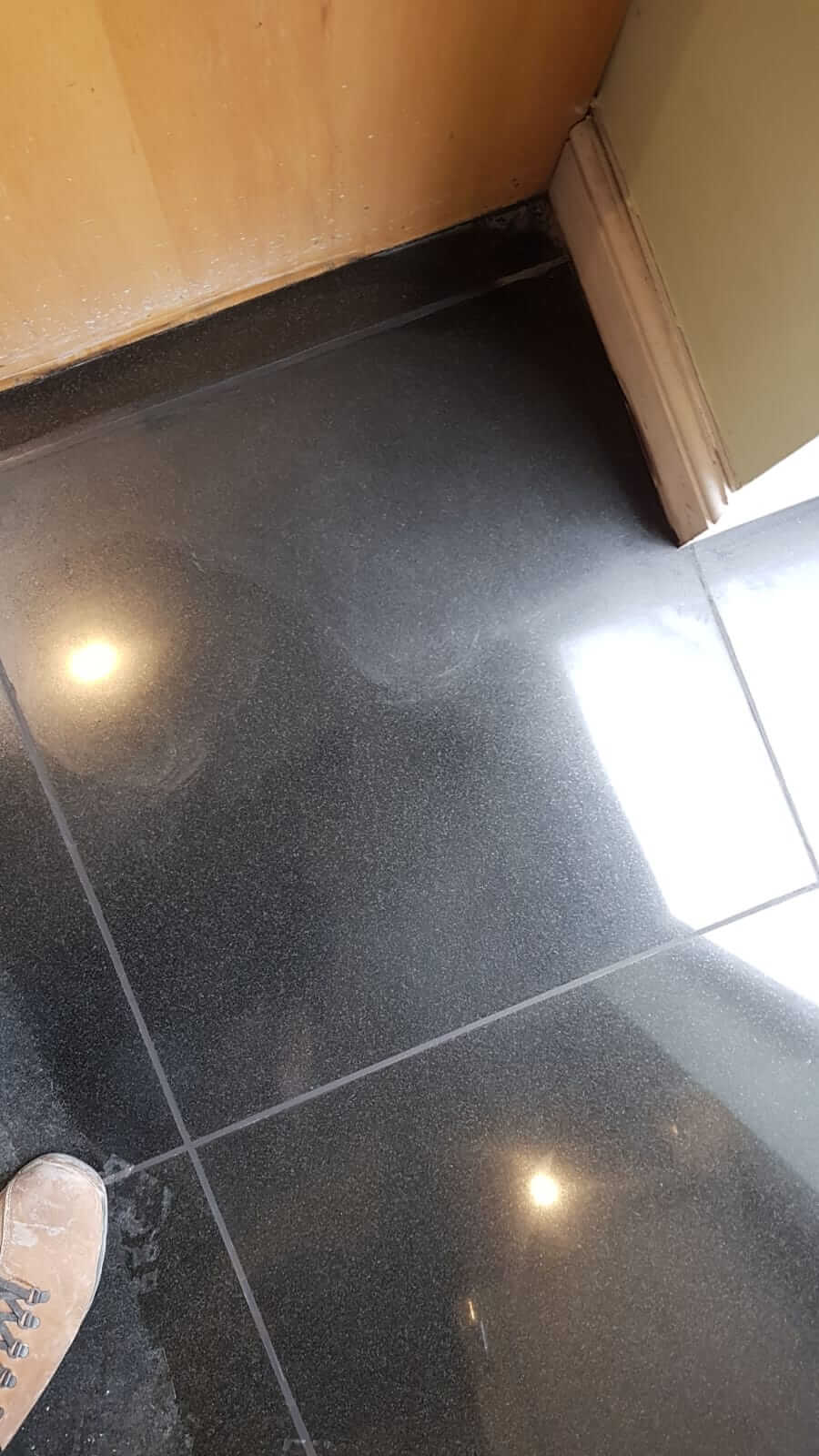
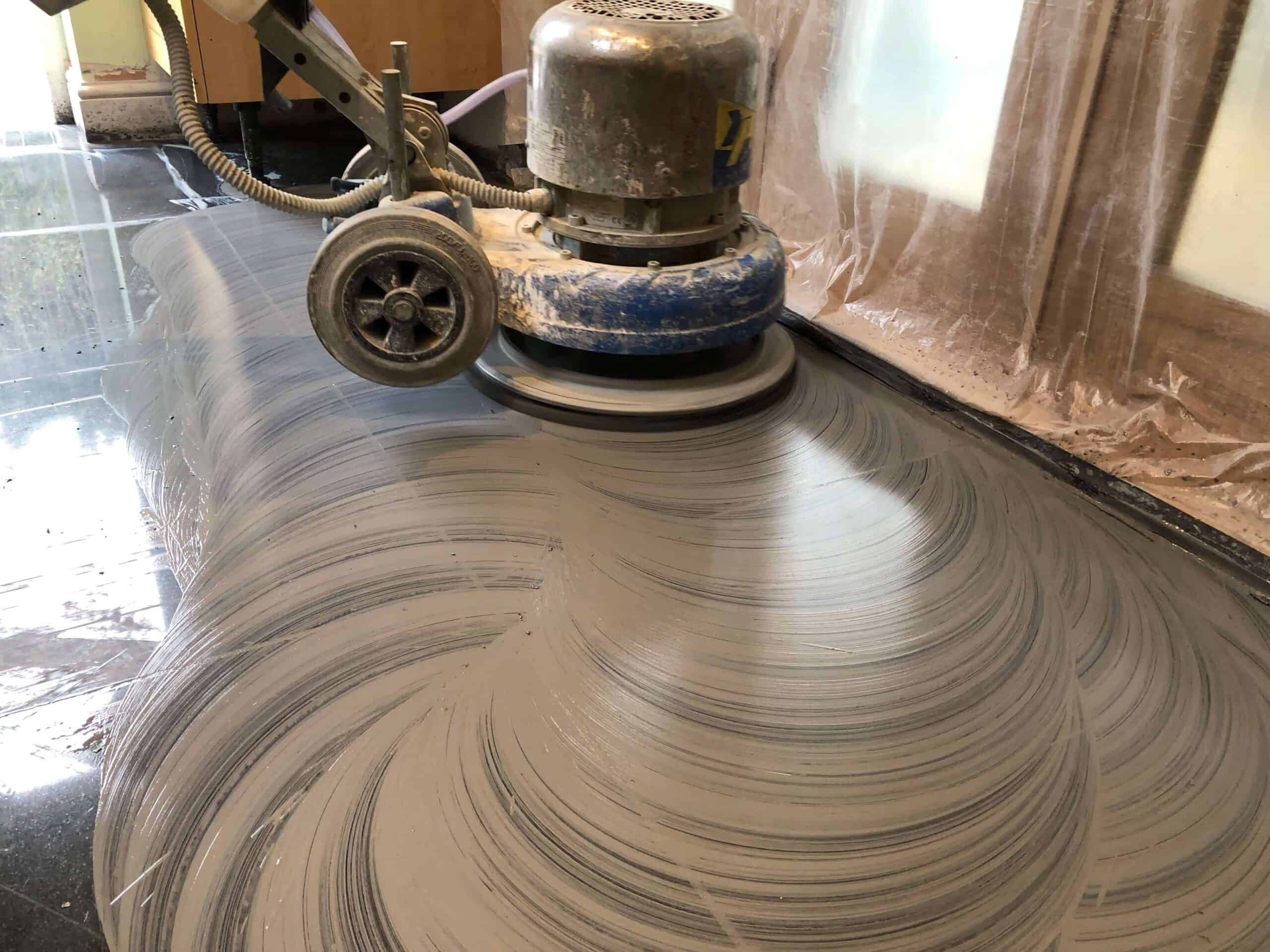
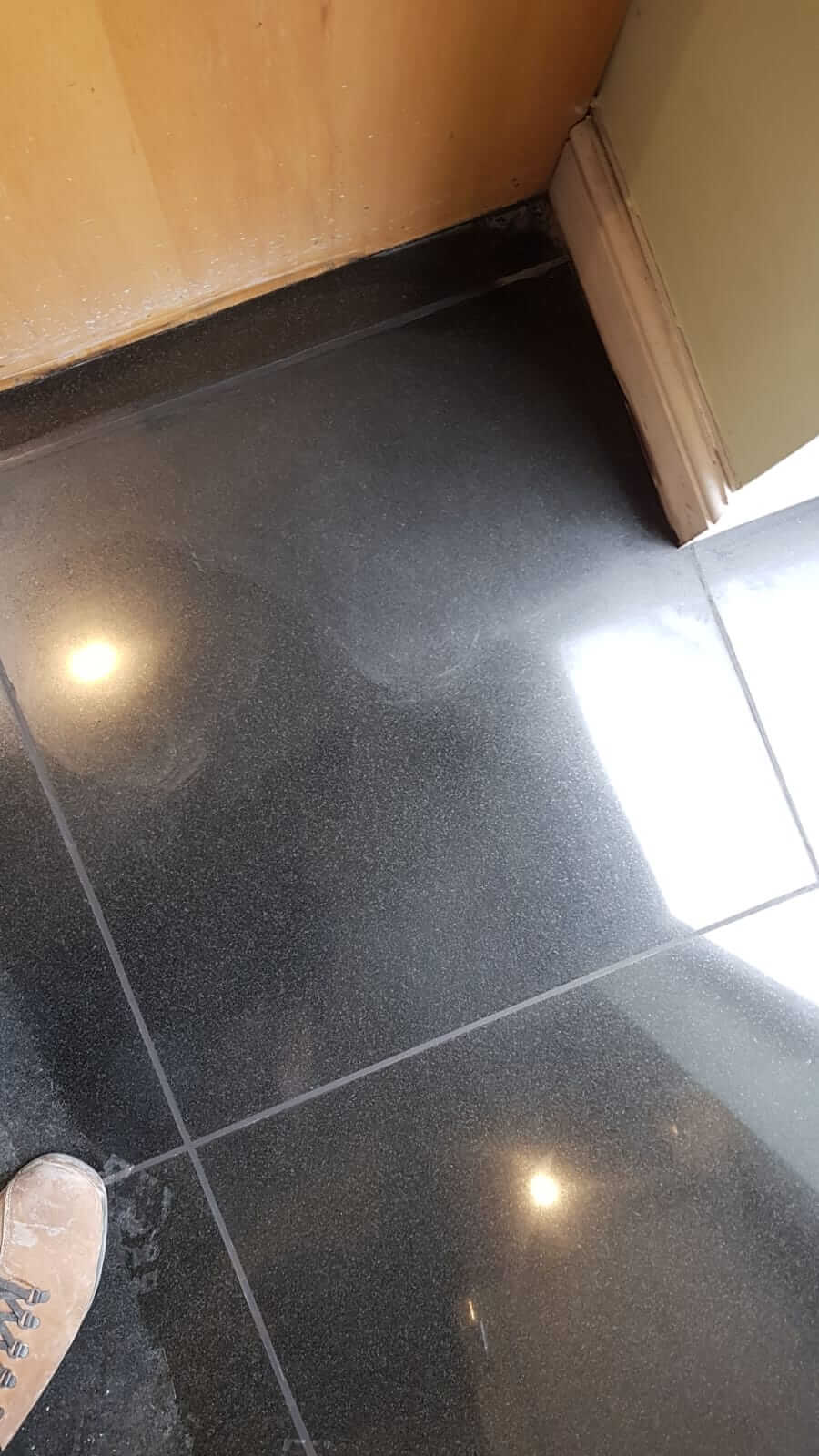
This black granite full restoration project involved a worn floor in a private property in North London. The recorded work included replacing grout, grinding the surface, diamond polishing, enhancing the dark colour and applying an impregnating sealant. The photographs show the floor and the restoration work.
Scratches and uneven tile edges can make a dark, reflective floor look patchy. However, cleaning alone cannot remove damage within the stone surface. This project therefore combined mechanical refinement with treatment suited to the existing granite.
Black granite full restoration: the work carried out
Replacing the existing grout
First, the team removed deteriorated grout and replaced it with epoxy grout. Sound joints help support a consistent appearance across the floor. The grout choice must suit the installation, joint width and conditions of use; it does not remove the need for regular cleaning.
Grinding uneven edges and scratches
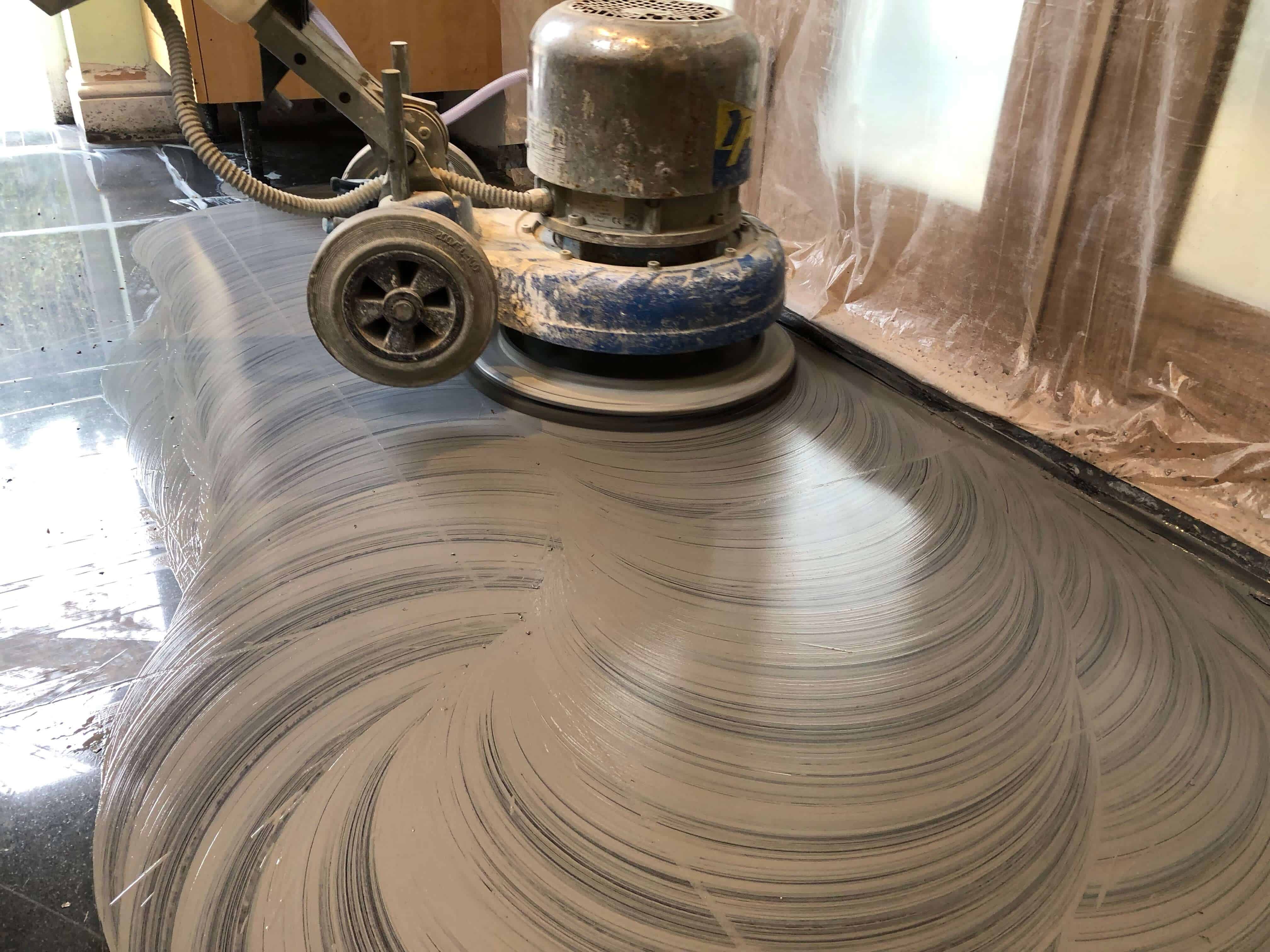
Next, diamond grinding addressed scratches and lippage, where neighbouring tile edges sit at different heights. The existing project record describes approximately 3 mm of surface removal. This was a project-specific treatment, rather than a standard depth for every granite floor. Stone thickness and installation condition need assessment before comparable work.
Developing the polished finish
The team then worked through finer diamond abrasives to develop a reflective finish. This sequence refines the surface after the earlier grinding stages. For more information on the material and available treatments, explore our granite cleaning, repair and polishing services.
Colour enhancement and sealing
The recorded black granite full restoration also included a black stone tint and a solvent-based impregnating sealant. Colour enhancement and sealing require compatible products and a trial where appropriate. A suitable impregnator can help reduce absorption of some spills, but it does not make stone stain-proof, scratch-proof or acid-proof.
Caring for the restored granite
After restoration, remove loose grit regularly and use a cleaner compatible with the stone and treatment. Blot spills promptly and avoid abrasive pads or unsuitable chemicals. In addition, entrance mats can help reduce dirt carried onto the floor. Follow product instructions and the advice given for the actual surface.
Our daily stone cleaning and maintenance service explains ongoing care. For independent background information, see the Natural Stone Institute’s care and cleaning guidance. This general resource does not prescribe the treatment used on this particular project.
Discuss a similar granite restoration project
Browse the Stone Rescue project gallery to compare other surfaces and finishes. Each floor needs its own assessment, because wear, previous coatings and loose tiles can change the scope of work.
For advice on black granite full restoration, send Stone Rescue photographs and request an assessment. Include your postcode, approximate floor area and the main problems you have noticed so we can discuss the next step.